
High Risk: Rotten, Unstable & Split Trunks
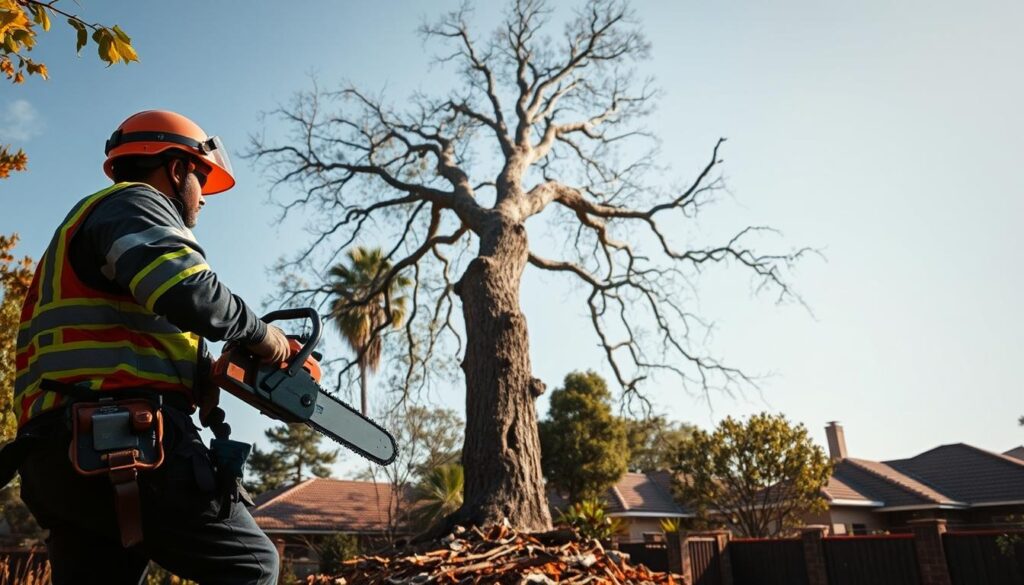
If a large limb threatens a roof near Irene or leans over the fairways of Centurion Lake Golf Course, our dangerous tree removal Centurion services explain why haste and the wrong approach can cost you dearly.
Tree Felling Centurion are the local specialist we call on for risk assessments and precise work, and we handle site evaluation, controlled removal and full clean-up so you do not lift a finger.
We work across the Centurion area between Pretoria and Midrand. Our professional tree crews use PPE, set controlled work zones and operate under full insurance to lower your liability.
We take a safety-first approach for high-risk jobs near roofs, walls, fences and vehicles. Each job starts with an evaluation and finishes with rubble removed and a tidy site.
What this page covers: hazards, methods such as directional felling versus sectional dismantling, emergency storm response, pruning to prevent problems, stump work and palm care.
As a trusted company we promise qualified crews, clear plans and insured work so you can feel confident while we manage the risk – Get My Free Quote
Why We Are Centurion’s Trusted Experts for Hazardous Tree Removal
Homeowners, estate managers and businesses need clear guidance when mature trees pose a risk to property. We focus on safety, fast risk reduction and minimal disruption for estates and body corporates.
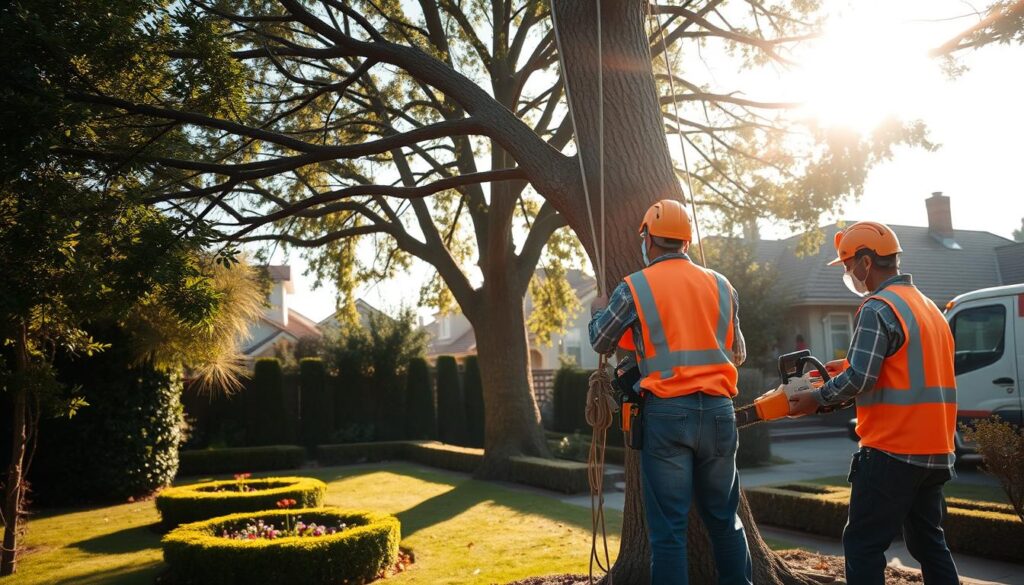
Removal vs. Pruning: When is a Tree Too Dangerous to Keep?
Removal is usually the right call when a tree is dead, badly diseased, structurally compromised or repeatedly threatens buildings. Small, low-risk branches can often be managed with tree trimming pruning, but repeated cutting is a short-term fix for a failing specimen.
Zero-Damage Guarantee: Protecting Your Walls, Roofs & Fences
“We plan each job, protect sensitive areas and keep communication clear from start to finish.”
- Who we serve: homeowners with garden trees, estate managers with narrow access, and businesses needing quick action.
- Risk controls: exclusion zones, spotters, controlled lowering and step-by-step dismantling in tight spaces.
- Property protection: shielding sensitive areas, planned drop zones and traffic/parking management inside complexes.
- Liability reduction: documented processes, insured crews and clear briefings so owners and bodies corporate stay protected.
Common Tree Hazards in Centurion: Signs You Need Help
Local weather and urban change create risk fast. Summer thunderstorms, wind corridors beside major routes and saturated soil can turn a healthy specimen unstable. We monitor these conditions because they raise the chance of sudden failure.
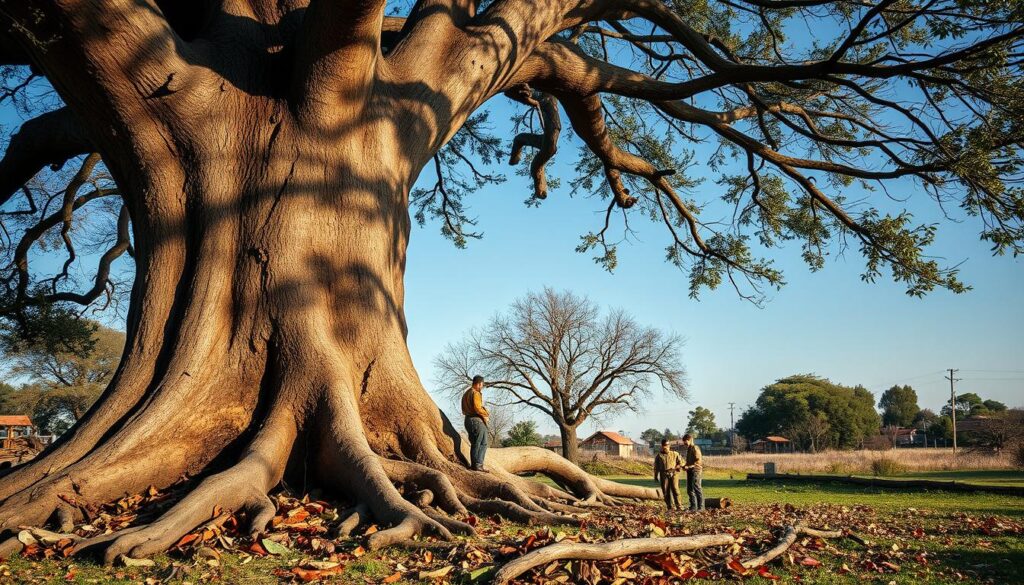
Emergency Storm Damage: Handling Fallen Limbs & Wind-Blown Trees
Gusts after rain can overload branches. Heavy limbs with hidden decay may fail without warning. That sudden limb drop leads to urgent calls and immediate danger to people and parked vehicles.
Disease, deadwood and weak bark warning signs
Look for deadwood, fungal fruiting bodies, cracked unions and peeling bark. Hanging branches or cavities often mean internal decay. Our professional tree assessment flags these so we can act before harm occurs.
Overgrowth near neighbouring properties and boundary lines
Overhanging crowns often cross fences and roofs. This causes disputes and raises liability when branches fall on shared driveways, carports or walls.
Leaning Trunks & Root Rot: Identifying Imminent Tree Failure
Construction, paving and service trenches can sever roots. Erosion or persistent damp near lawns can make trunks lean. These root-zone issues are common in built-up pockets and need prompt attention.
- Visible signs we inspect: dead/broken branches, cracked unions, fungal growth and weak bark.
- Consequences: damage to property, blocked access and increased emergency tree call-outs after storms.
- Our approach: we use experience to decide if trimming pruning suffices or if safe removal is the wiser long-term choice.
| Hazard | Common cause | Immediate risk |
|---|---|---|
| Sudden limb drop | Internal decay or heavy crown | Injury, vehicle and roof damage |
| Leaning trunk | Root loss, soil wash-away | Whole-stem failure, blocked access |
| Boundary overgrowth | Unchecked canopy expansion | Neighbour disputes, property harm |
Complex Removals: Working in Tight Spaces & Near Glass
Working around pools, patios and estate gates requires calm planning and precise action to protect expensive property and keep residents safe.

Precision Cutting Over Glass Roofs, Patios & Swimming Pools
Where glass roofs, solar panels or pool decks sit close to overhangs, we stage every cut to prevent breakage. We use sectional removal and slow, controlled lowering so nothing bounces or lands on fragile surfaces.
Working Safely Near Power Lines, Electric Fences & Streetlights
Cables and street fittings change a routine job into an electrical risk. We plan conservative cuts, keep safe distances and use rigging so wires are never contacted. DIY attempts risk electrocution and costly damage.
Driveways and narrow access in complexes and estates
Access gates and tight driveways need timing, parking control and liaison with security. In narrow lanes we rely on specialised equipment and precision tools and select the safest techniques based on lean, canopy spread and landing zones.
- Sectional dismantling and careful lowering for narrow driveways.
- Coordinated work windows to keep residents moving safely.
- Predictable outcomes through the right gear and experienced crews.
Local focus: working near Irene, Centurion Lake Golf Course and key routes
Our teams cover familiar areas from Irene through to the Centurion Lake Golf Course. We plan each visit so residents and businesses see minimal disruption.

Planning around the N1, N14 and R21 corridors
Major roads like the N1, N14 and the R21 shape how we arrive and work. We time jobs to avoid peak delivery windows and estate gate closures.
Traffic coordination keeps access clear for emergency services and scheduled deliveries. We set controlled work zones and liaise with security when needed.
Tree risks around greenbelts, the Hennops River and parks
Greenbelts and the Hennops River add density and wind exposure. After heavy rain, weakened roots and saturated soil raise the chance of falls onto paths and fences.
Parks and open spaces near routes often see stronger gusts. That increases the likelihood of emergency tree call-outs and the need for rapid, safe intervention.
- Site knowledge: local landmarks help us predict access limits and noise concerns.
- Safety first: clear exclusion zones protect pedestrians and property.
- Responsive services centurion: we mobilise quickly with planned loading and disposal points.
Fully Insured & Certified: Our Safety-First Felling Promise
Our priority is a controlled process that reduces risk and protects property before any cutting begins. We follow a clear checklist so residents and staff know the site is managed from start to finish.

Qualified crews, PPE and controlled work zones
We run a pre-job briefing to identify hazards, set exclusion zones and confirm rigging plans. Ground crews and a designated tree feller coordinate each lift and lowering line.
PPE matters: helmets, eye protection, gloves and harnesses reduce injuries and deliver predictable results on complex jobs.
Liability reduction for property owners and body corporates
We are fully insured. That cover protects clients when work happens near roofs, walls, shared driveways and communal spaces.
For body corporates, using a competent, insured provider shows due diligence. It lowers your risk and documents responsible action.
| What we do | How we protect you | Why it matters |
|---|---|---|
| Pre-job risk assessment | Exclusion zones and written plan | Clear evidence of safe practice |
| Qualified crews and PPE | Trained operators and proper gear | Consistent, safe outcomes |
| Insured felling services | Public and liability cover | Reduced client exposure to claims |
Our Dangerous Tree Removal Process: From Assessment to Clean-Up
A clear plan avoids surprises: we survey the site, assess risks and set out a safe sequence of work.
Site inspection and risk assessment before cutting
We start with a walk-around that checks health, lean, nearby structures and access. This lets us choose the safest approach and estimate the job time.
Choosing directional felling vs sectional dismantling
When space is open we favour directional felling — one controlled fall. In tight gardens or near structures we use sectional dismantling with rigging. Those techniques reduce risk and protect property.
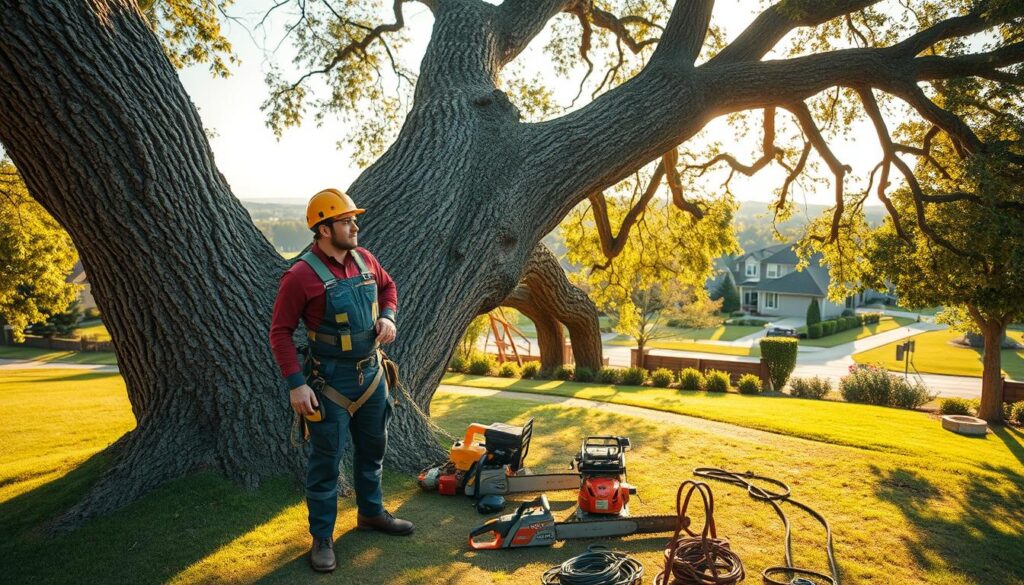
Protecting gardens, paving, irrigation and structures
We cover delicate plants, mark irrigation lines and protect paving. Ground crews place mats or boards to avoid scuffs. Small measures prevent lasting damage to lawns and features.
Rubble removal and leaving the site tidy
On the day we set up exclusion zones, cut in controlled sections and stack material for removal. Most straightforward jobs take between two and six hours. Complex dismantles can take longer depending on access and obstacles.
Clean-up standard: we remove branches and wood as agreed, clear debris and leave the area tidy rather than a construction-zone mess.
| Stage | What we inspect/do | Customer outcome |
|---|---|---|
| Pre-job survey | Health check, lean, access, hazards | Clear plan and time estimate |
| Method selection | Directional felling or sectional dismantling | Safest approach for site conditions |
| Protection | Cover plants, mark irrigation, protect paving | Minimal impact on gardens and structures |
| Execution & clean-up | Controlled cuts, stacking, loading, rubble removal | Site left tidy, waste removed or stacked as agreed |
Heavy-Duty Equipment: Cranes & Rigging for Massive Trees
We use well‑chosen equipment and proven techniques so each operation is predictable and safe. Our crews combine rope‑rigging, precision cutting and access solutions to move large pieces in a controlled way. This reduces damage to roofs, paving and neighbouring property.
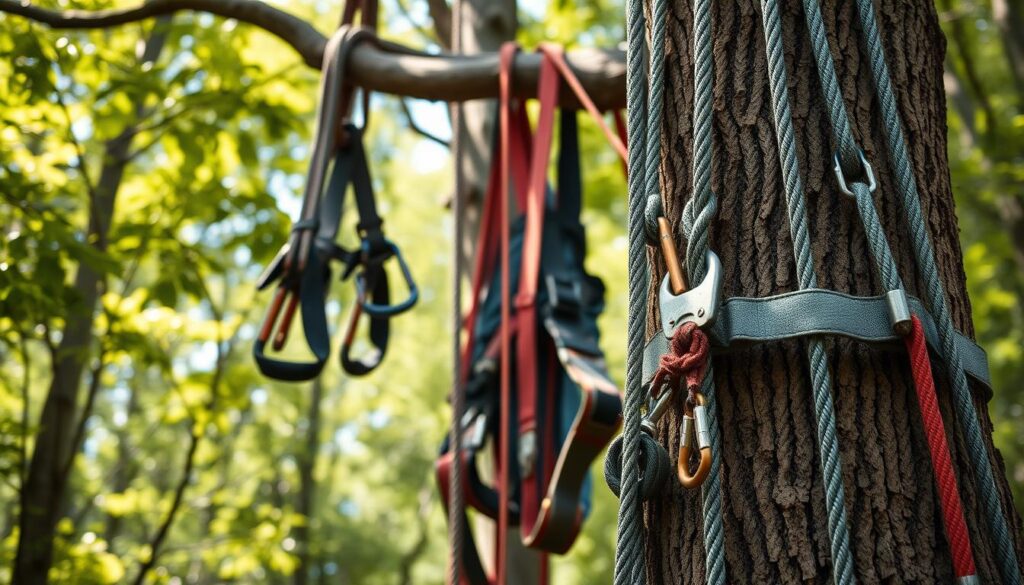
Rigging systems, ropes, harnesses and lowering methods
Why rigging matters: ropes and harnesses let us lower heavy sections slowly. Controlled lowering prevents free‑falls onto structures and gives us a clear drop path.
“Predictability is the goal: each lift and lower is planned so wood goes where we want it, not where gravity decides.”
Chainsaws, wedges and precision cutting techniques
Skilled chainsaw work and wedges guide falls when natural lean is unsuitable. We make small, staged cuts so large pieces rotate or slide safely before lowering.
Access solutions for tight spaces and hard‑to‑reach stems
In estates with narrow side passages or tight driveways we use compact cranes, block‑and‑tackle and sectional dismantling. Choosing the right tool avoids makeshift fixes and speeds site restoration.
Outcomes we deliver: fewer breakages, less collateral damage, and faster clean‑up so residents can return to normal quickly.
| Challenge | Equipment/technique | Benefit |
|---|---|---|
| Heavy limb over roof | Rigging + controlled lowering | Prevents roof punctures and glass damage |
| Unfavourable natural lean | Wedges + precision chainsaw cuts | Directs fall to safe zone |
| Narrow access/boxed-in specimen | Sectional dismantle + compact crane | Protects paving and neighbouring structures |
Emergency tree felling and storm response in Centurion
When storms topple large limbs onto driveways or leave heavy crowns leaning over homes, a rapid, calm response is vital.
We run an emergency tree felling service that prioritises safety and quick access restoration. First, we make the site safe by cordoning the area and stabilising hazardous sections.
Fallen trees blocking driveways or threatening structures
Qualifying emergencies include large stems across driveways, cracked trunks leaning over bedrooms, or suspended limbs above vehicles and entrances.
Making a site safe quickly while preventing further damage
Our steps are clear and methodical. We stabilise unstable pieces, use rigging to control drops and avoid sudden shifts that can damage walls or pull on nearby trees.
- Priorities: secure the scene, then carry out controlled removal to lower risk.
- How you can help: keep people clear, do not move vehicles under the canopy and treat any nearby cables as live.
- Context: many calls follow storms and saturated soil; we adapt methods but keep strict work‑zone rules.
Our rapid response services include debris clearing and restoring safe access so households and businesses can resume normal use.
Preventative Tree Trimming & Pruning to Reduce Storm Risk
Regular pruning keeps a canopy balanced and makes properties safer long before a crisis develops.
We focus on planned maintenance that reduces risk, limits leaf build-up and preserves the garden’s neat appearance. Preventative work is cost effective compared with urgent call-outs after a large branch fails.
Reducing canopy weight and wind resistance
Planned trimming and pruning lowers crown weight and improves balance. We remove selected limbs to reduce wind loading and help specimens stand up to storm season.
Clearance from roofs, fences and neighbouring properties
We create safe clearances over roofs, patios and boundary walls. Clearing rubbing branches cuts damp leaf build-up and reduces disputes with neighbours.
Managing leaf drop and improving property appearance
Timely trimming limits gutter blockages and leaf litter around pools. We shape crowns for a tidy look while keeping strong branch unions intact — we do not top indiscriminately.
- Benefit: fewer emergency interventions and lower long‑term costs.
- Advice: schedule routine assessments so small defects are fixed early.
- Outcome: safer specimens, improved kerb appeal and better neighbour relations.
Palm Tree Removal & Cleaning: Removing Heavy, Dangerous Fronds
Palms in suburban gardens often shed heavy, dry fronds that can fall without warning and create hazards near paths and parking. We prioritise practical solutions that keep estates safe and tidy.
Skirts are the dead fronds that hang around a trunk. They look untidy and raise the fire load near roofs and gutters. They also snag on structures and can drop large pieces in gusty weather.
Dealing with shedding fronds and skirts that can fall
We remove loose, dead fronds on a planned schedule to reduce sudden falls. Our teams clear skirts, trim hanging material and tidy crowns so walkways and parking remain safe.
Ongoing maintenance vs full removal
Routine care keeps a specimen presentable and lowers risk. Regular cleaning prevents debris build-up and reduces roof and gutter hazards.
Full removal is advised when a palm is poorly positioned, too tall, or causes repeated mess. When removal is the option, we work in tight suburban spaces with controlled methods to avoid damage to paving, garden beds and boundary walls.
- Benefit: improved safety and neat appearance for homes, estates and commercial entrances.
- Approach: scheduled care for most palms; careful removal where hazards recur.
“Regular attention to palms is a small cost that prevents sudden hazards and keeps gardens looking their best.”
| Issue | Service | Outcome |
|---|---|---|
| Hanging skirt of dead fronds | Strip and clear skirts | Reduced fire load and tidy trunk |
| Frequent falling fronds near parking | Planned maintenance | Safer access and fewer emergency calls |
| Palm too tall or badly sited | Controlled removal | Protects paving, beds and walls |
Stump Removal & Grinding: Eliminating Trip Hazards & Regrowth
A remaining stump can cause trips, regrowth and pest problems long after the cut work is done.
We offer two practical routes: stump grinding and full stump and root removal. Grinding is quick, less invasive and ideal for lawns and family gardens.
Stump grinding vs full stump and root removal
Stump grinding chips the visible wood to below ground level. It leaves roots in place but removes the hazard and most regrowth points.
Full root removal is more disruptive. We recommend it when foundations, paving or major landscaping are planned.
Preventing regrowth, pests and trip hazards
Removing the stump reduces shoot sprouting and discourages borer or fungal pests that feed on decaying wood.
We treat exposed areas and can apply follow-up measures to prevent resprouting and reduce insect attraction.
Preparing the area for lawn, paving or replanting
After work we tidy spoil and either remove grindings or leave them as mulch by agreement. This clears the site for turfing, paving or new planting without fighting old roots.
“A properly managed stump area speeds landscaping and cuts ongoing maintenance.”
| Option | When to choose | Outcome |
|---|---|---|
| Stump grinding | Lawns, simple landscaping, fast turnaround | Safe surface, chips optional as mulch, minimal disruption |
| Full stump & root removal | Building work, major paving, prevention of deep regrowth | Clear site for construction, roots extracted, more site repair needed |
| DIY (not advised) | Small stumps only, with proper equipment | Risky, time‑consuming and often incomplete |
Project timeframes and what affects the job duration
Knowing how long a job will take helps you plan access, parking and quieter windows for residents. We give realistic expectations so estates and homeowners can schedule around work without surprises.
Typical removal windows based on size and complexity
Most straightforward jobs take about 2–6 hours. Small specimens with clear drop zones and good access sit at the short end.
Complex jobs near roofs, narrow access routes or with heavy lean require staged cutting and extra rigging. That adds labour and safety steps, so the job can extend well beyond a half day.
- What extends a job: height, heavy lean, limited drop zones, narrow access and extra rigging.
- Estates: access approvals, vehicle movement control and noise windows also affect scheduling.
How stump removal changes the schedule
Stump removal adds its own setup, grinding or excavating and extra clean-up. When we include this, plan for additional hours or a separate visit.
We favour safe, controlled felling rather than rushing. Being thorough prevents damage and avoids delays later in a project.
| Scenario | Typical time | Notes |
|---|---|---|
| Small, clear access | 2–3 hours | Fast felling and tidy-up |
| Complex, near structures | Half day to full day | Sectional dismantle + rigging |
| With stump removal | Add 1–3 hours | Grinding or root extraction extends schedule |
“We prefer to be safely thorough — controlled felling reduces the risk of damage and saves time overall.”
Environmental responsibility and responsible tree care
Protecting gardens and public green spaces guides our choices for every job we undertake. We balance immediate safety with longer‑term landscape health so residents, parks and greenbelts benefit.
Minimising impact on surrounding trees and landscaping
We use controlled lowering and careful rigging to stop branches dragging across lawns and beds. Ground crews keep work zones tidy and protect irrigation, paving and planted borders.
- Controlled lowering prevents scuffing and plant loss.
- Site protection includes mats, covers and briefed spotters.
- Selective pruning aims to save healthy specimens where possible.
Handling invasive or alien trees thoughtfully
When non‑native species threaten local biodiversity we act thoughtfully. We remove invasive specimens to reduce spread and take care not to harm desirable neighbouring trees.
Options for wood chipping, mulch or firewood retention
Clients can choose chipping for mulch, off‑site disposal, or to keep cut wood as firewood. Chipping returns organic matter to gardens and supports healthy soil while tidy stacks serve domestic use.
“We favour solutions that protect the leafy character of local parks and estates while keeping people safe.”
Our services combine sensible techniques with practical care. That way the neighbourhood remains green and safe for everyone.
Areas we serve across Centurion neighbourhoods and estates
We cover the full sweep of Centurion suburbs, from quiet cul-de-sacs to gated estates, with practical, local services.
Our crews work under estate rules and tight access limits. We handle complex permits, narrow driveways and mature gardens with care.
Popular service zones
We regularly attend Highveld, Eldoraigne, Lyttelton and Doringkloof. These areas have older stands and varied access challenges that we know well.
Family suburbs and estates
We also serve Amberfield, Raslouw and Rooihuiskraal, where boundary walls, shared fences and parked cars raise the stakes for safe work.
- Wide coverage: we operate across Centurion and adapt to estate protocols.
- Flexible response: scheduled maintenance and urgent call-outs are both part of our offering.
- Real outcomes: felling Centurion searches often lead to safer yards, clearer driveways and lower storm risk.
| Area type | Common issues | What we provide |
|---|---|---|
| Gated estates | Strict access, narrow lanes | Planned visits, permits and precise methods |
| Family suburbs | Boundary overhang, parked cars | Careful sectional work and protective measures |
| Greenbelts & parks | Mature specimens, storm risk | Rapid hazard response and maintenance |
“We match local knowledge with practical services to keep neighbourhoods safe and tidy.”
Dangerous Tree Removal Prices in Centurion: Get a Free Quote
Understanding what drives a quote makes it easier to compare felling prices and choose the right approach for your property.
Height, lean, access constraints and proximity to structures
We base most quotes on site risk and complexity, not just size. An on-site evaluation gives an accurate figure.
Key on-site variables: height, trunk diameter, canopy spread and lean toward roofs, walls or pools. Close neighbours or parked vehicles usually raise felling prices.
Equipment needs, labour intensity and disposal requirements
When we need specialised equipment, more crew or rigging, the job takes longer and costs more. Complex work uses compact cranes, ropes and extra safety gear.
Disposal options affect the total: off-site removal, chipping for mulch or leaving wood on-site each change the final price.
Bundled services: tree felling, trimming and stump removal
Bundling felling with pruning and stump removal often reduces repeat setup time and disruption. We can quote combined services for better value and a single visit.
“An accurate on-site quote is the fairest way to reflect risk, access and required equipment.”
| Pricing factor | What it means on site | Why it changes cost |
|---|---|---|
| Height & canopy spread | More sections to manage | More labour and rigging time |
| Lean & instability | Higher risk control needed | Slower, controlled cuts |
| Proximity to structures | Roof/wall/pool nearby | Extra protection and lowering methods |
| Access constraints | Narrow lanes or estate rules | More manual handling and planning |
| Disposal & clean-up | Chip, remove or retain wood | Transport and processing time |
Contact Us for Safe Dangerous Tree Removal in Centurion
A measured approach to hazardous stems keeps people and property safe while preserving garden health. Our focus is clear: safety, insurance cover and predictable outcomes from the first survey.
We make hazardous tree situations safe through controlled tree felling and careful planning. Where possible we favour pruning and later maintenance over full removal and leave sites tidy after work.
If you see deadwood, weak bark, storm damage or a leaning specimen, a professional assessment is the safest next step. We offer options from targeted trimming and stump solutions to full tree removal when required.
We work across local suburbs and greenbelts near Irene and the Hennops River, so we understand access and risk patterns. Request an evaluation and a transparent quote from Tree Felling Centurion and we will plan safe, insured felling with minimal disruption.

