
Dry Rot & Collapse Risks: Remove Before it Falls
Dead Tree Removal Centurion is handled by our local crew that homeowners and businesses trust for safe, efficient felling and clearance, bringing years of skill to every job.
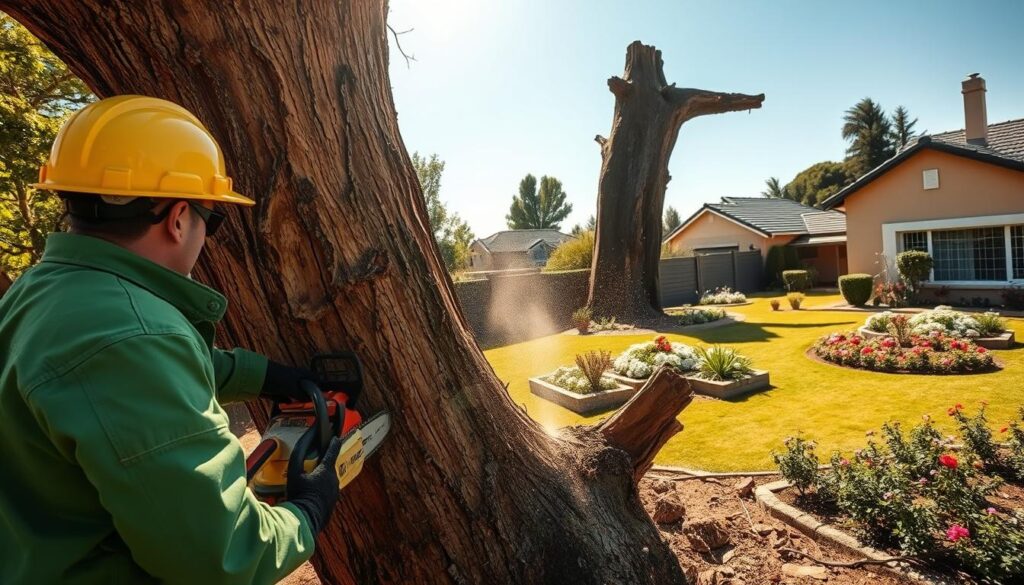
We offer felling, stump work, palm care, pruning and emergency calls. We are fully insured and qualified, and we always clean up afterwards.
What you will learn here — clear warning signs, the main risks, how we work on-site, what drives cost and what happens to stumps and rubble. We focus on controlled techniques and strict safety to leave your garden neat.
Centurion sits between Pretoria and Midrand near the N1/N14 interchange, with estates, complexes and busy routes where fallen branches can become an urgent hazard. This page is for people ready to compare providers, understand process and cost drivers, and book a professional service – Get My Free Quote
Dead tree risks on Centurion properties and why fast action matters
When limbs go brittle and bark peels, fast action protects people, parked cars and property.

- Thinning canopy and sudden leaf loss.
- Brittle limbs, cracks or hollow sounds when struck.
- Fungus, rot or loose, peeling bark.
- Leaned trunks and sudden branch drop.
How failing branches threaten structures
Broken branches can pierce tiled roofs, glass carports and boundary walls. They smash parked vehicles and jam electric gates.
Safety in shared spaces
In complexes and estates, falling limbs put driveways, visitor bays, pavements and play areas at risk. Wind increases the wind-sail effect, so weakened branches fail without warning.
“Neglected maintenance often turns a minor defect into a serious liability for neighbours and owners.”
We assess risk, plan the job and apply careful tree care to protect people and structures. Acting quickly reduces damage and neighbour disputes.
| Risk | Likely target | Urgency |
|---|---|---|
| Brittle limbs | Cars, roofs | High |
| Leaning trunk | Boundary walls, gates | High |
| Fungal rot | Play areas, pavements | Medium |
| Peeling bark | Neighbouring yards | Medium |
Dead Tree Removal Centurion
Unsafe, decaying specimens demand precise work — our crew uses sectional techniques to prevent damage.
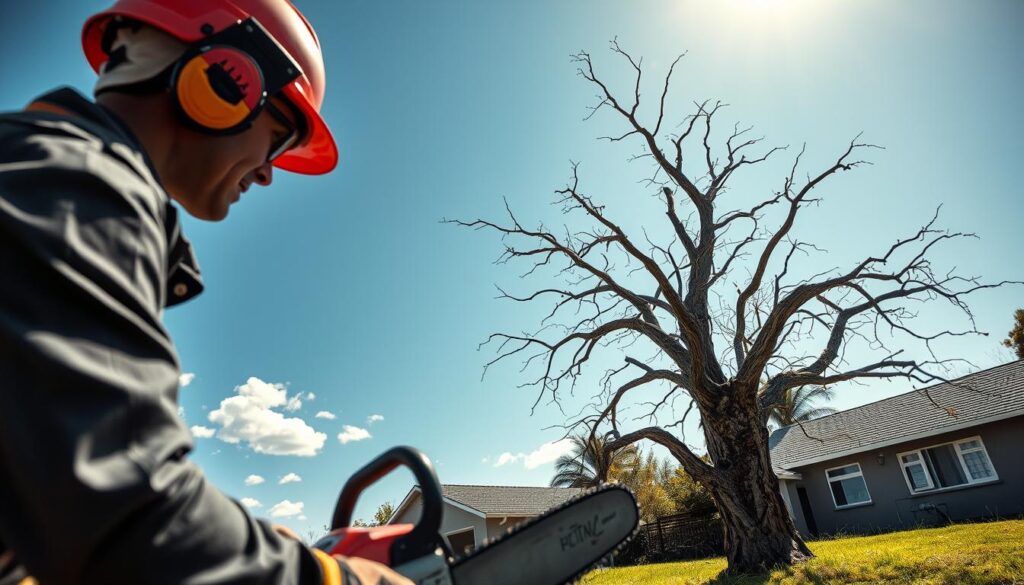
What’s included in our service
We remove hazardous trees safely, manage fall risk and leave gardens tidy. Our standard services include a site assessment, planned cutting and controlled lowering of large limbs.
Safe sectional dismantling for trees close to homes and structures
Sectional dismantling reduces risk in tight spaces near homes, patios, carports and walls. We use harnessed access, winches and precision cuts so sections come down without damage.
Rubble removal and tidy clean-up after the job
Rubble removal means clearing branches, logs and smaller debris from the site. Clients can keep timber if they wish, or we haul it away.
- Assessment and risk plan
- Sectional cutting and controlled lowering
- Debris handling and final clean-up
Typical time for most jobs is two to six hours, depending on size, access and whether a stump is included. We arrive with the right equipment and tools and work neatly — clean-up is part of our promise.
Local, landmark-aware work across Centurion
We plan every job with local landmarks and access in mind to keep work efficient and low-impact.
Working near Centurion Golf Club, Irene and the N1/N14 interchange
Near the golf club and Irene, mature gardens need careful, low-impact methods to protect lawns and features. We coordinate with estate managers and watch traffic at the N1/N14 interchange so projects are safe and swift.
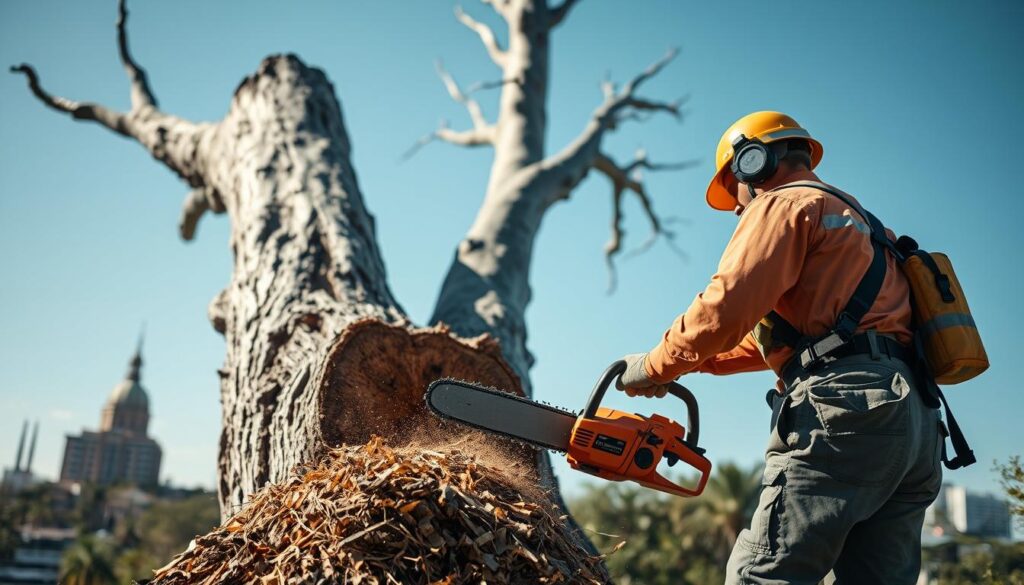
Considerations near Rietvlei and Groenkloof nature reserves
By nature reserves we adopt strict debris control and minimise disturbance to nearby vegetation. We respect habitats and limit noise and dust during felling operations.
Residential coverage: Eldoraigne, Highveld and The Reeds
In close-set suburbs we use sectional methods to protect walls, roofs and neighbouring gardens. Each area gets a tailored access plan that suits boundary constraints.
Access planning for Amberfield, Raslouw and Copperleaf estates
We schedule work, plan parking for equipment and create safe work zones for complexes. Our team delivers consistent tree services across areas and projects of all sizes.
“Local knowledge makes the job safer and keeps disruption to a minimum.”
| Location | Key concern | Our approach |
|---|---|---|
| Centurion Golf Club / Irene | Mature gardens | Low-impact felling; turf protection |
| N1/N14 interchange | Traffic disruption | Rapid response; traffic control |
| Rietvlei / Groenkloof | Habitat sensitivity | Debris control; minimal disturbance |
| Eldoraigne / Highveld / The Reeds | Close boundaries | Sectional felling; protective rigging |
How we remove dead trees safely and efficiently
We start every job with a clear plan so safety comes first. Our process is straightforward: assess the situation, set controls, then carry out the work with care and skill.
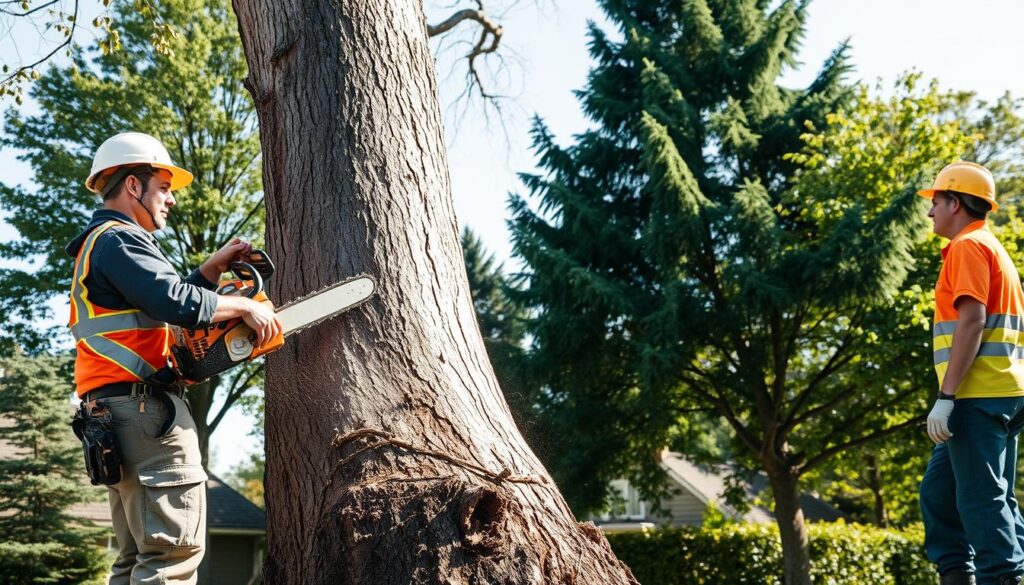
On-site assessment and risk planning
We check condition, lean, rot points, wind exposure and likely drop zones. We note nearby roofs, cables and garden features that need protection.
Risk plans identify how branches will fall and where workers stand, so everyone stays safe throughout the operation.
Rigging, controlled lowering and precision cutting techniques
Using rigging and controlled lowering we keep sections from swinging onto paving or glass. We make strategic cuts to control swing and reduce weight.
Sectional cutting means taking smaller pieces in tight spaces. This reduces impact and helps us manage complex tree felling near structures.
Specialised equipment and tools for hard-to-reach removals
We bring harnessed access gear, rigging kits and lifting lines. These tools let our team work high or over obstacles without risking property.
Our expertise with this equipment speeds the job and keeps disturbance to a minimum.
Protecting gardens, paving and surrounding trees during removal
We set designated lowering zones and use careful dragging routes to avoid compacting lawns or crushing plants.
We protect neighbouring trees and shrubs by placing barriers and choosing removal paths that preserve established gardens.
Safety is our culture: we plan first, cut second and keep the site controlled from start to finish.
When dead tree removal becomes an emergency
Severe storm damage can turn a garden hazard into an immediate, life‑threatening risk that needs fast action. We focus on practical steps that protect people and nearby property while we respond.
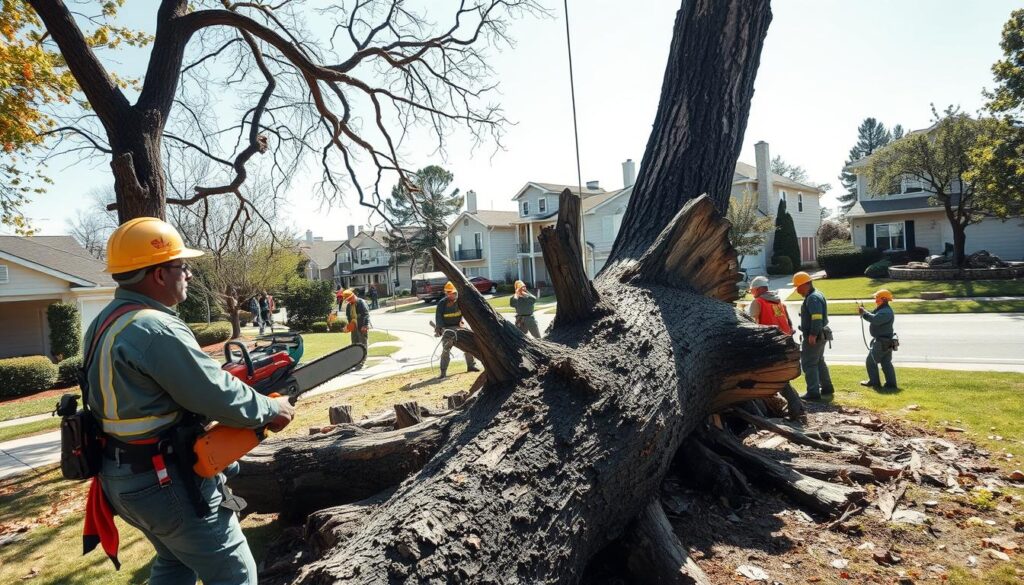
Storm‑damaged canopies and fallen limbs
Partially uprooted trunks, split stems or hanging branches that threaten roofs or driveways count as emergencies. High winds often make a small defect dangerous in a short space of time.
Danger close to power lines and cables
If a branch is touching or near live wires, do not attempt work yourself. Electrocution risk is real. Call a professional team to manage cordoning, isolation and safe cutting.
Keeping families, pets and tenants safe while we work
On arrival we set clear exclusion zones and safe movement routes. Our team uses controlled lowering and staged cuts to protect neighbours and buildings.
- What counts as an emergency: partially uprooted specimens, split trunks, hanging limbs, blocked access or contact with structures.
- Immediate homeowner actions: keep children and pets clear, avoid parking under the canopy and don’t move debris near cables.
- For complexes and bodies corporate: we work with site rules, seal public areas and coordinate access to speed safe resolution.
Common questions: What should you do first? Keep clear and tell us about access, cable locations and any fragile features. Expected time to make the scene safe is usually under a few hours, depending on complexity.
Fully insured, qualified service you can trust
Trust begins with cover and competence; we pair comprehensive insurance with skilled operators on every job.
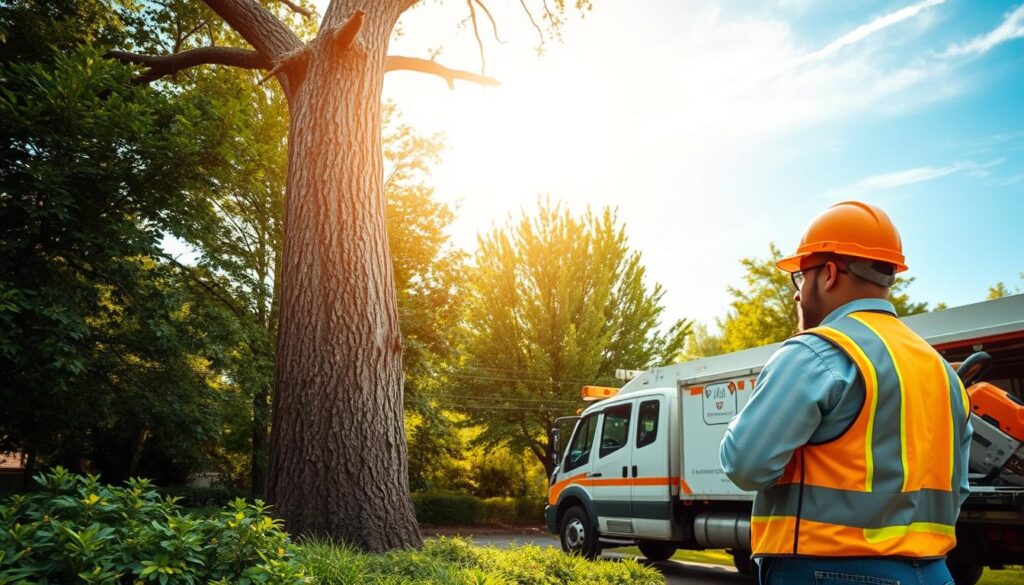
Why insurance and trained operators matter for tree felling and removal
Tree Felling Centurion carries full public liability and professional indemnity cover. This protects you when work happens near roofs, cars, walls or neighbouring gardens.
Our team are trained arborist-style operators. Their experience and expertise include hinge cuts, sectional dismantling and rigging loads to control weight and swing.
Site safety practices and responsible workmanship
We set controlled work zones, use clear communication and handle heavy sections with rigging and lifting gear. These steps reduce risk and keep the site organised.
We do not rush unsafe cuts. Instead, we sequence work to protect property and finish with a tidy, compliant clean-up that reassures homeowners and estates.
More than removal: complete tree felling and tree care services
We combine careful tree felling with proactive maintenance so properties stay safe year‑round. Our approach covers urgent work and planned upkeep to prevent repeat problems.
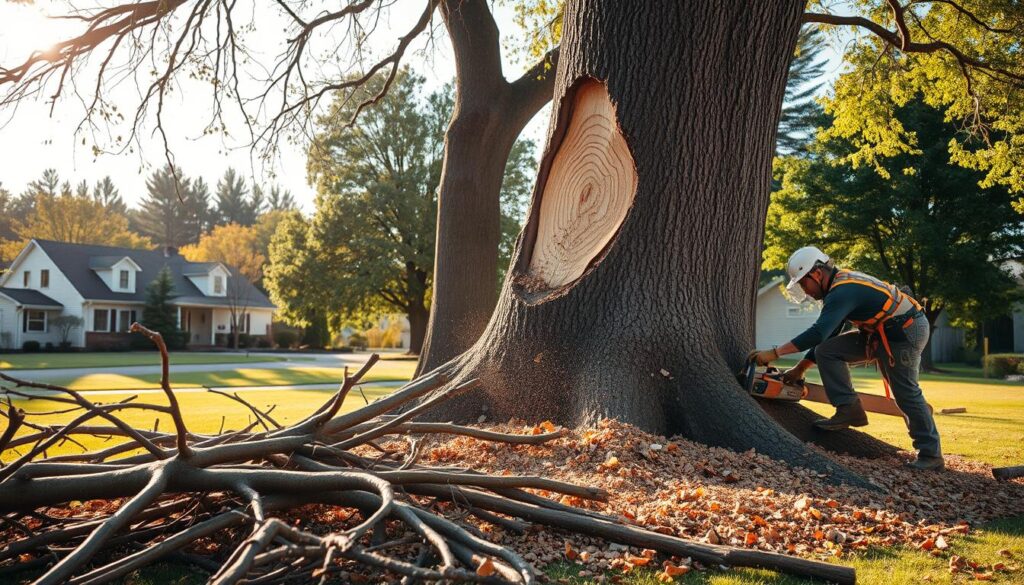
Tree felling and tree removal for problem or invasive specimens
When full felling is right: invasive or problem specimens, repeated limb failure, or structural conflict with buildings and cables. As a felling company, we assess and advise the safest course.
Tree trimming and pruning to prevent future hazards
Regular tree trimming and pruning reduces overhang and stops interference with roofs, walls and neighbours. Correct cuts support long‑term health and avoid ad‑hoc DIY chopping that causes damage.
Palm tree removal and palm trimming for safe, neat palms
Palms shed heavy fronds and skirting that look untidy and can fall unpredictably. Our palm tree removal and palm trimming services remove loose fronds and old skirts to protect driveways and people.
Branch removal to reduce weight, wind‑sail and breakage risk
Removing excess branches lowers canopy weight and reduces wind‑sail during storms. We stage work to fit small gardens, driveways and estate rules so disruption is minimal.
Our services cover planned care, emergency work and ongoing tree care programmes. We deliver professional tree work that keeps gardens safer and looks better for longer.
Stump removal options after a dead tree is cut down
Deciding what to do with a remaining stump shapes how quickly you can reuse garden space.
Why stump decisions matter: exposed stumps are trip hazards, can sprout new growth, attract pests and block planting or paving.
Full removal (including roots) or grinder work
Full removal digs out roots and eliminates regrowth. It is best where you need a clear area for paving or replanting.
Stump grinding uses specialised equipment to grind the tree stump below ground level. It is quicker and less invasive but leaves roots to rot.
How this improves safety and frees up space
Removing a stump clears the ground for new lawn, patios or paths. It reduces trip risk and removes places rodents or termites can shelter.
Finishing touches: levelling and wood chip clearance
We level the hole, remove or spread wood chips and compact soil so the property looks neat and is ready for the next step.
| Option | Best for | Pros | Cons |
|---|---|---|---|
| Full stump removal | Paving, replanting | Removes roots; no regrowth | More invasive; longer time |
| Stump grinding | Quick clearance; gardens | Faster; less disruption | Roots remain; slow decay |
| DIY (not recommended) | Small stumps only | Lower cost | Requires heavy tools and risk |
Our process from first contact to final clean-up
From your initial enquiry to the final sweep, we guide every stage so the job is clear and controlled.
Scheduling and flexible booking in Centurion
Free evaluations and quotes set expectations. We offer flexible booking to suit homeowners, complexes and businesses with restricted access hours.
Our team arranges times that work for morning or afternoon access and for estate rules. This helps larger projects and small jobs alike.
Estimated timelines for typical removals
Many jobs finish within 2–6 hours, depending on height, access, rigging needs and any stump work.
Time varies with complexity; we set realistic windows so you can plan the day.
Final site inspection and leaving the property neat
On completion our team conducts a final inspection. We check for remaining debris and confirm the agreed scope is complete.
Clean-up is included: we sweep, remove rubble and leave your property safe and tidy so areas are usable straight away.
- Request service and get a free quote.
- On-site evaluation with clear scope and schedule.
- Scheduled work, safe execution and staged lowering.
- Final inspection, tidy-up and client sign-off.
“We aim to leave each site orderly so homeowners can enjoy their gardens without delay.”
| Stage | What we do | Client role |
|---|---|---|
| Quote & booking | Free evaluation; fixed scope | Confirm access times |
| On-site work | Safe execution by our team | Clear driveways; secure pets |
| Finish & clean-up | Debris haul-away; final sweep | Inspect and approve |
What affects dead tree removal pricing in Centurion
We explain how we price work so you know what drives costs and what to expect when booking a service. Quotes are based on risk, time and resources — not guesswork. This keeps pricing fair and transparent for homeowners, complexes and businesses across the area.
Tree size, height and access constraints
Large specimens need more labour, time and specialised equipment. Height and trunk diameter directly influence the hours on site and the team size required.
Access limits — narrow side passages, townhouse parking layouts and shared access roads — increase complexity. These constraints often require sectional cutting and extra rigging, which affects final prices.
Proximity to buildings, glass roofs, walls and fences
Work near buildings or glass roofs demands controlled lowering and precision techniques to avoid damage. Where roofs, patios or boundary walls are close, we use extra safeguards and trained rigging crews.
This proximity raises the risk profile, so quotes include additional planning and protective measures to keep property safe.
Stump removal, rubble haul-away and additional trimming work
Stump removal or grinding adds time and machinery to the job. Haul-away of branches and logs is another cost driver, especially for larger volumes.
Extra trimming to make neighbouring trees safe is offered as an add-on and will change the total quote. We itemise these options so you choose what you need.
| Cost driver | Why it matters | Typical effect on prices |
|---|---|---|
| Size & height | More labour, longer time, larger equipment | Moderate to high |
| Restricted access | Sectional techniques; manual handling in tight areas | High |
| Nearby structures | Protective rigging and controlled lowering | High |
| Stump work & haul-away | Additional machinery and disposal time | Low to moderate |
We assess each site and provide a clear, itemised quote. That quote reflects condition (brittle limbs change handling), logistics and any estate rules that affect access. Where specialised equipment or advanced techniques are needed, we note these in the estimate so clients understand the cost drivers before work begins.
Residential and commercial dead tree removal
We deliver tailored services for homes and businesses so work is safe, swift and unobtrusive.
Homeowners, complexes and estates
For private gardens we protect lawns, pools and boundary walls and plan safe exclusion zones for families and pets. Clean-up is included, so the garden is usable as soon as we finish.
In complexes and estates we coordinate controlled access, parking and visitor bays. We schedule work to reduce noise and keep driveways clear.
Businesses, schools and public-facing properties
On commercial sites we prioritise safety and minimal disruption. We mark clear work zones and stage operations so staff and pupils can carry on safely nearby.
Our aim is to reduce liability for high foot‑traffic areas by planning lifts and lowers that avoid hazards and protect property.
- Consistent standard: same professional approach for every job, whether a home or public site.
- Experienced, insured operators: our team works to health and safety rules throughout.
- Tidy finish: we remove debris and leave the property presentable and safe.
“We plan each job to protect people and property while keeping disruption to a minimum.”
As a trusted company, we tailor our service to suit the site and hand back a neat, secure space once our work is complete.
Why choose Tree Felling Centurion for professional tree removal
You want clear quotes, swift scheduling and a team that treats your garden like their own. Our approach centres on safety-led planning, efficient execution and a reliable clean-up standard.
Experienced team and reliable workmanship
We bring real experience and proven expertise to work on tall specimens and tight drop zones near buildings. Our crew are trained, fully insured and use rigging and sectional techniques for safe outcomes.
Affordable, hassle-free service focused on satisfaction
We provide transparent quotes and options so clients choose what they need. Clean-up is included, and we manage permits or estate rules to keep the process straightforward.
Fast response for urgent jobs across local suburbs
As a trusted felling centurion operator, we respond quickly to urgent calls and schedule planned work with minimal disruption. We prioritise safety and speed when access or weather increases risk.
| Key advantage | What it means for you | Result |
|---|---|---|
| Safety-led planning | Site assessment, exclusion zones, rigging | Lower risk to property and people |
| Efficient execution | Right tools, trained crew, staged cuts | Jobs finish faster with less disruption |
| Reliable clean-up | Debris hauled, site levelled | Ready-to-use outdoor space |
“We focus on neat, safe work that respects your time and property.”
Secure Your Property – Book Your Centurion Tree Felling Expert Today
Prompt assessment and skilled felling stop hazards from turning into damage. Weak specimens and loose branches pose real risks to people, cars and roofs, so quick, professional action reduces injury and property loss.
What you get — a planned approach to tree felling, controlled lowering, optional stump or stump removal and a tidy finish. Our services include pruning, tree trimming and palm care to limit future failures.
Regular tree care and pruning cut the chance of emergency call-outs. Palm maintenance also limits falling fronds that blemish gardens and create hazards common across local areas.
We work across Centurion areas and nearby estates, so we understand access, neighbour proximity and landmark‑adjacent rules. If the job seems urgent or high risk, request an on‑site assessment and quote today to secure safety and peace of mind.

