
Surge Pricing: Understanding After-Hours Fees
When a late-night storm strikes, understanding emergency tree removal cost Centurion can stop surprises and help protect your home near Centurion Mall or the Centurion Golf Club.
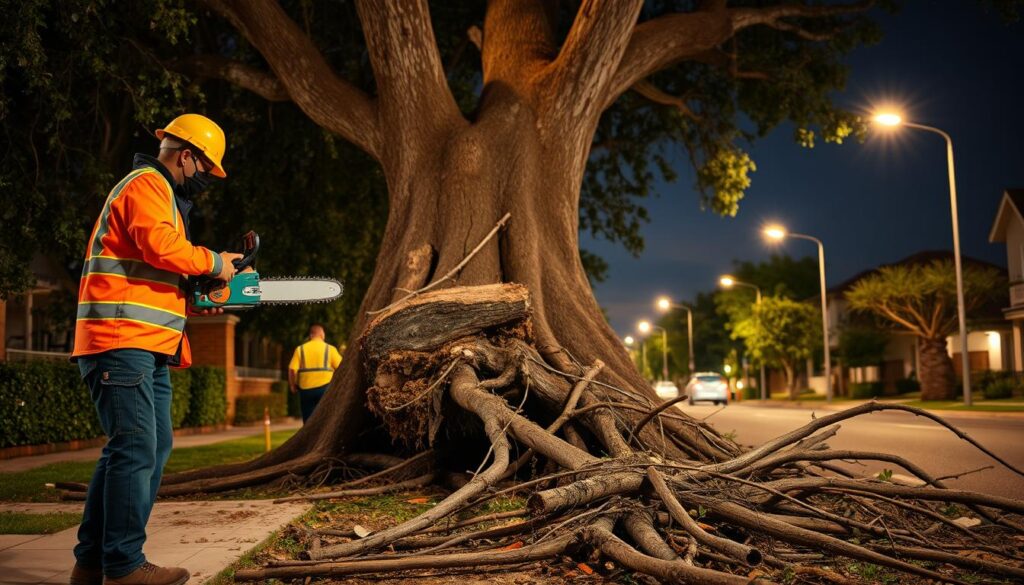
We are Tree Felling Centurion and from here on we explain what matters. We set clear expectations for 24/7 services around busy nodes where safety and traffic flow turn urgency into a priority.
In this short guide we outline realistic price bands (roughly R850 to R15,000), typical premiums for call-outs (about 20–50%), the main cost drivers, and what should be included in a proper quote. We also flag when hourly billing makes sense and when a fixed quote is safer.
Safety first: urgent work aims to prevent damage and injury, not just to cut and haul. Read on to learn how to compare prices and avoid nasty surprises when you request a site visit – Get My Free Quote
What counts as an emergency tree removal in Centurion
Immediate risk guides our decisions. We classify a call as an emergency when a major limb or trunk creates imminent danger to people, vehicles or buildings and waiting raises the chance of injury or greater damage.

Storm‑damaged and fallen trees after high winds
After heavy rain and strong winds in this location, we often find blocked driveways, crushed garden walls and unstable trunks that can roll or shift. These situations need rapid staging and controlled work to protect adjacent structures.
Dangerous leaners and split trunks
Fresh cracks, a sudden lean or soil heave at the base are visual cues we treat as high risk. These removals require sectional dismantling and rope work rather than quick cutting to keep our crew and your property safe.
Trees near power lines, boundary walls and busy routes
Proximity to live cables, neighbour structures or school‑run routes changes the job. Tight drop zones, extra rope control and traffic staging add time and specialist procedures to maintain public safety.
Urgent call‑outs around Centurion Mall and Centurion Golf Club
We prioritise incidents near major landmarks because access, traffic and timing affect how we position equipment and crew. These public areas often need faster mobilisation and more rigorous safety controls.
How we define an emergency
- Immediate danger to people, vehicles or buildings.
- Waiting increases risk or likely increases final works.
- Location and accessibility affect priority and methods.
| Scenario | Typical hazard | Key response factor |
|---|---|---|
| Storm‑fallen trees | Blocked access, structural impact | Access, debris clearance |
| Leaning or split trunks | Sudden collapse risk | Sectional rigging, rope work |
| Near power lines / buildings | High containment risk | Specialist crew, tighter drop zones |
Emergency tree removal cost Centurion: typical 24/7 price ranges
When a job needs immediate attention, prices reflect quicker crew travel, extra safety steps and longer hours.
Below we give clear 24/7 bands so you can budget quickly. These are baseline ranges and site specifics can shift the final figure.

| Tree size (metres) | Non-urgent price | Estimated 24/7 price range |
|---|---|---|
| Up to 5 metres | R800–R1,500 | R960–R2,250 |
| 5–10 metres | R1,500–R3,500 | R1,800–R5,250 |
| 10–20 metres | R3,500–R7,500 | R4,200–R11,250 |
| Over 20 metres | R7,500–R15,000 | R9,000–R22,500 |
Small to medium jobs
Small jobs up to 5 metres are usually quicker and sit near the lower band unless access is tight or the tree is hung-up on structures.
Larger and extra-large works
From 10 metres plus, sectional dismantling, rigging and protection for roofs raise the price. Over 20 metres, cranes or cherry pickers often apply and the rate climbs.
“Always check a 24/7 rate lists what is included: cutting, lowering, haulage and clean-up.”
Billing models: hourly charges apply when scope is uncertain (debris clearance per hour). Fixed quotes suit full removals where scope is clear.
- Buyer tip: ask for a written list of inclusions to compare true tree removal prices.
Key factors that change your tree removal cost in South Africa
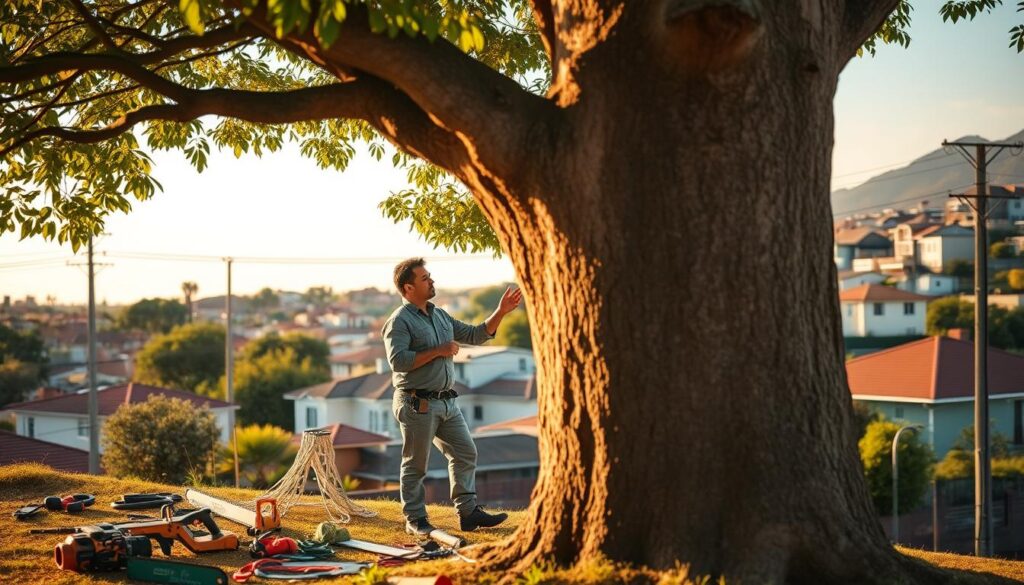
A simple height measurement rarely tells the full story of a job or its final price. We break down the main factors so you can see why two similar jobs can end up very different on a quote.
Tree size, height and canopy spread
Size matters, but shape does too. A tall, narrow specimen is quicker than a shorter one with a wide canopy over a roof. Metres alone do not predict the full effort.
Species and wood density
Denser species chew through our equipment and take longer. That adds labour, blade wear and fuel—so the species and density show up in the final figure.
Condition, location and proximity to structures
Dead, cracked or uprooted stems behave unpredictably and need more safety controls. Tight side passages, steep slopes or limited accessibility increase time on site.
Risk profile and safety controls
Work near buildings, pools or neighbouring property calls for sectional dismantling, rope rigging and spotters. Hazardous jobs carry higher pricing because of extra safety steps.
| Driver | What it affects | Typical impact |
|---|---|---|
| Size (metres) & canopy | Time, lowering method | Low to high |
| Species / density | Cutting time, equipment wear | Moderate |
| Condition & stability | Safety controls, unpredictability | High |
| Location & accessibility | Labour, crew size, haulage | Moderate to high |
Summary: we price each job on size in metres, species, condition, access and nearby buildings to give a fair, transparent quote for clients across South Africa.
Special scenarios that can increase costs fast
Some scenarios demand specialised techniques that stretch time, gear and permits. We walk through the real cases that push a routine quote higher so you can give accurate details when you call for a site visit.

Near buildings: sectional dismantling and controlled rigging
When a specimen sits against walls, roofs or patios, we use sectional dismantling and rope lowering. This approach protects structures but takes more labour and specialised equipment.
Trees by power lines: specialist procedures
Work close to live cables requires extra safety steps and co‑ordination with utilities. Permits, insulated gear and slower lifts all increase the complexity and final price.
Storm debris and blocked driveways: quick clearance versus full felling
Rapid clearance restores access and is priced as a targeted service. A full felling and haul-away is broader in scope and therefore higher. Tell us if you need access cleared now or a full site clean later.
Multiple stems and dense stands on small plots
Intertwined stems need many more cuts, more lowering points and longer clean-up. Tight estates and boundary walls common in Centurion reduce drop zones, so we prioritise control over speed.
Practical rule: pruning can make a specimen safe short‑term, but a split trunk or failed root plate usually means full felling is the responsible option.
Emergency add-on services and what they typically cost
Immediate hazard control is only the start; add-on services decide whether a site is simply safe or fully cleared. We list typical extras so you can budget and avoid surprise fees.
Stump removal and grinding price ranges
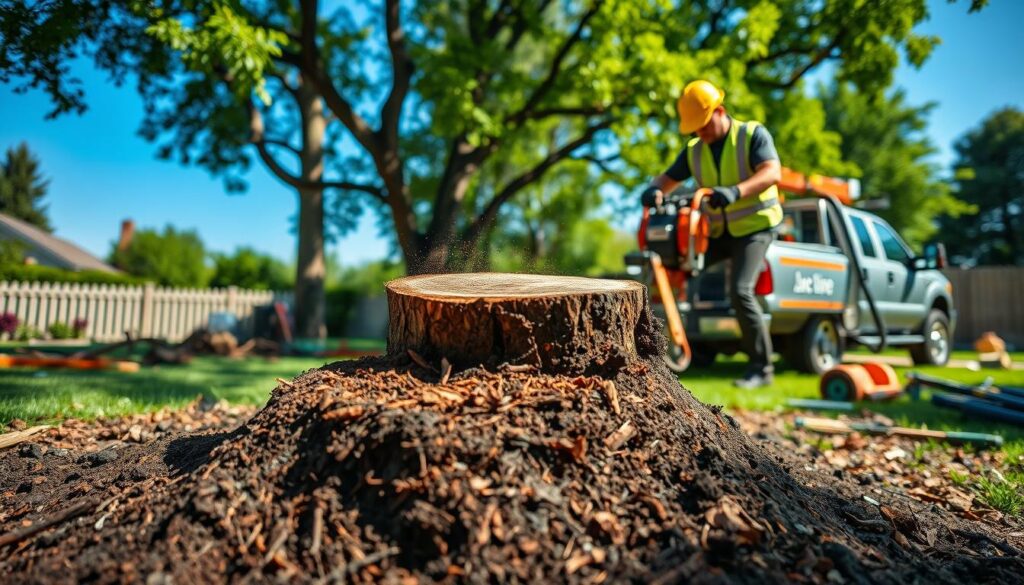
Stump removal or stump grinding runs roughly R900–R4,500 depending on diameter, access and underground obstacles.
Large stumps or restricted access add time and gear. Removing a stump makes future paving or replanting easier, but grinding is often quicker and cheaper.
Debris clean-up billed per hour
When clean-up is not included, we typically bill R150–R250 per hour for debris clearance.
Carry distance, sorting and loading affect the total hours. Ask for a maximum cap or a fixed quote to limit surprises.
Wood chipping, log removal and green-waste disposal
Chipping reduces volume and can lower haulage fees, but the chipping machine needs space. Log removal may cost more if heavy pieces must be carried out manually.
Disposal quotes differ: on-site stacking is cheaper than full haul-away. Confirm which option is written into your quote.
Pruning and trimming as an alternative
Pruning or trimming can make a specimen safe after a storm and is often charged per hour or by size. This is usually cheaper than full tree removal when only a limb is hazardous.
“We advise clients to get each add-on listed separately: stump work, debris per hour, chipping and pruning.”
| Service | Typical price range | Notes |
|---|---|---|
| Stump removal / grinding | R900–R4,500 | Depends on diameter, access, roots |
| Debris clean-up (per hour) | R150–R250 / hour | Carry distance and sorting affect hours |
| Pruning / trimming | R200–R1,200 | Per hour or by tree size; single-limb work cheaper |
| Wood chipping / log removal | Variable (ask for quote) | Chipping reduces volume; haul-away extra |
Buyer tip: we recommend a written list of included add-ons and any per-hour caps. That keeps the final invoice predictable and fair.
Equipment and safety standards that should be included in your quote
We set out the kit and checks a professional quote must list so you can compare like for like. A clear scope saves time on site and protects your property.

Essential equipment and crew PPE
What good looks like: a properly equipped crew uses chainsaws matched to the timber, certified rigging systems, lowering ropes and full PPE for every member.
Expect to see saws, spare chains, harnesses, helmets, eye and ear protection, gloves and steel‑toe boots named in the quote.
When mechanical aid is required
Large specimens, unstable leaners or tight drop zones often need a crane, cherry picker or winch. These machines reduce the risk and speed up complex felling or sectional work.
If a quote omits mechanical options when access is constrained, ask why and request alternatives with their price implications.
Site risk assessment and protection measures
We carry out a written site risk assessment before the first cut. That includes planned drop zones, roof and paving protection, and methods for lowering over lawns or patios.
Good practice: temporary ground protection, spotters and communicated exclusion zones should be listed on the job sheet.
Insurance, accountability and vetting providers
Professional arborists must carry public liability and employer’s cover. The quote should state insurance limits and who accepts responsibility for accidental damage.
Compare providers by checklist: equipment, safety controls, access plan and insurance. If a quote lacks these, the lowest price is not the best value.
Buyer tip: the safest approach often reduces long‑term costs by avoiding property damage and rework.
Centurion-specific pricing realities and local access considerations
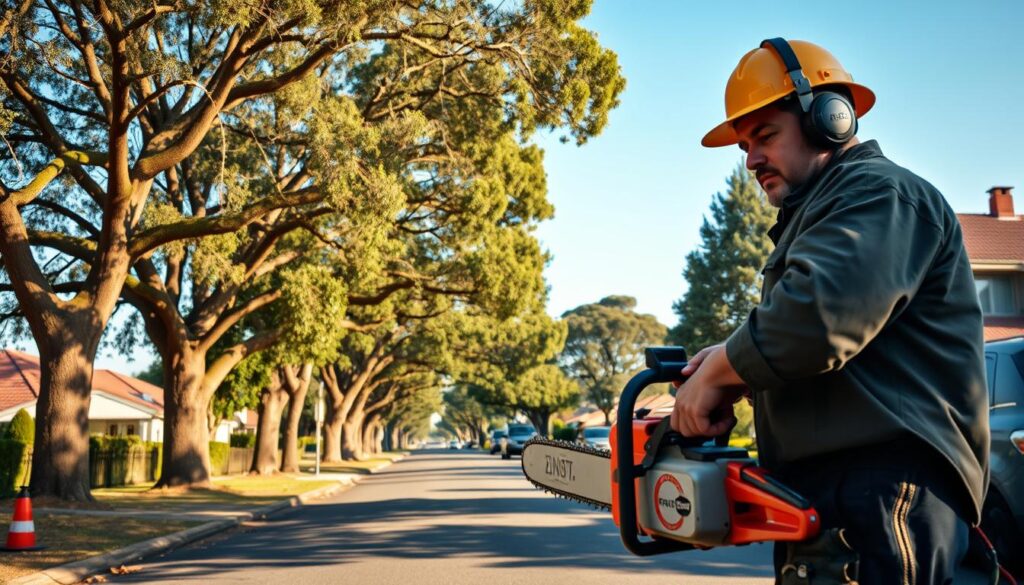
Local access quirks and suburb layouts often decide how quickly we can start and finish a job. Small differences in location change how we plan crew, gear and time.
Suburbs and landmarks that affect logistics
Areas such as Irene Village, the Hennops River corridor, Die Hoewes, Eldoraigne, Wierda Park, Monavoni, Erasmia and the CBD nodes each present different challenges.
Riverside and sloped gardens need more rope work and controlled lowering, which raises labour and prices.
Why tight complexes and estate rules add time
Narrow streets, gated estates and body corporate rules mean we often book access, protect communal paving and carry material through tight passages.
Those extra steps add measurable time and, therefore, higher removal and clean-up charges.
Noise, traffic and timing near business nodes
Work near busy routes or shopping hubs forces us to adjust schedules, arrange traffic control and speed up clearing to reduce disruption.
Buyer tip: tell us gate widths, parking options and any body corporate rules before we arrive so the service runs smoothly and prices stay accurate.
| Factor | How it affects service | Typical impact |
|---|---|---|
| Access & parking | Setup time, crew size | Low–high |
| Riverside / slope | Rope work, lowering | Moderate–high |
| Estate rules | Permits, carrying distance | Moderate |
How to compare quotes and avoid hidden costs with Tree Felling Centurion
A quick, accurate quote starts with clear photos and a simple site description. Send images that show the full specimen, its base and any roofs, pools or walls nearby. Note the estimated height and any tight access so we can plan crews and kit.
What we need to price accurately: photos, tree size, and proximity to structures
Provide clear photos, a measured or estimated height and the exact location of neighbour structures or cables. Tell us if a passage is narrow, sloped or gated.
Those factors change crew size, equipment and the time on site. Accurate detail reduces padding and gives fairer prices.
What a transparent quote should list: removal, clean-up, stump, and disposal
A good quote breaks out each line: method of removal, level of clean-up, stump options and disposal or green‑waste fees. It should say whether the price is fixed or time‑based.
Ask: what happens if hidden decay or tangled limbs add extra hours. We list per‑hour caps and additional services so you know the final invoice risks.
Red flags to watch for when choosing a “cheap” service
Beware offers that omit rigging, skip written safety checks or cannot name insurance limits. Cheap quotes that pressure you on site often add surprise charges.
“Compare scope, inclusions and safety controls — the cheapest headline rarely tells the whole story.”
| What to check | Why it matters | What we include |
|---|---|---|
| Method of removal | Determines time and kit | Sectional work, lowering ropes |
| Clean-up level | Labour and hours | Basic sweep or full haul-away |
| Stump / stump removal | Future landscaping | Grinding or extraction options |
| Insurance & safety | Liability for damage | Public liability, site plan |
We act as your benchmark experts for transparent services. Give accurate details and ask for a written, itemised quote so you compare apples‑to‑apples and avoid hidden charges.
Ready to Remove Your Palm Tree? Get a Free Quote
Smart decisions start with a simple site assessment and an itemised quote. We recap the practical takeaway: pricing follows risk, access and control, so accurate scoping beats guessing and prevents delays when safety is at stake.
Remember the size bands: baseline work often starts near R800 for small specimens and can rise to R15,000+ for extra‑large, complex felling. Measurements in metres matter, and add‑ons such as stump work and debris clean‑up change final totals.
Expect premiums for 24/7 call‑outs and always ask for clear, itemised tree removal prices that list removal, clean‑up, stump removal and disposal. For fair, safe outcomes, request a site assessment and a written quote from a professional tree service.

