
Cost Breakdown: Size, Location & Complexity
Curious whether a safe, clear quotation is possible for your property near Centurion Mall? If you’re asking how much does tree felling cost, this practical buyer’s guide will set realistic expectations rather than offer a fixed pricelist.
We explain SA typical ranges for small, medium and large jobs and show why on-site complexity shifts a final quote. Stump work and waste removal often appear as separate line items, so compare itemised prices.
Tree Felling Centurion is our local baseline for clear, itemised pricing. We treat removal as a risk-managed service where safety planning, crew time and equipment drive the final figure, not only the number of cuts.
Throughout this guide we preview factors that change Centurion quotes — access, obstacles, disposal choices — and we flag permission and safety issues for suburban estates and jobs around the Centurion Mall area.
Safety first: cheapest offers can compromise insurance and controlled dismantling. Read on to learn typical ranges, key cost drivers, stump grinding options and how to compare quotes like-for-like – Get My Free Quote
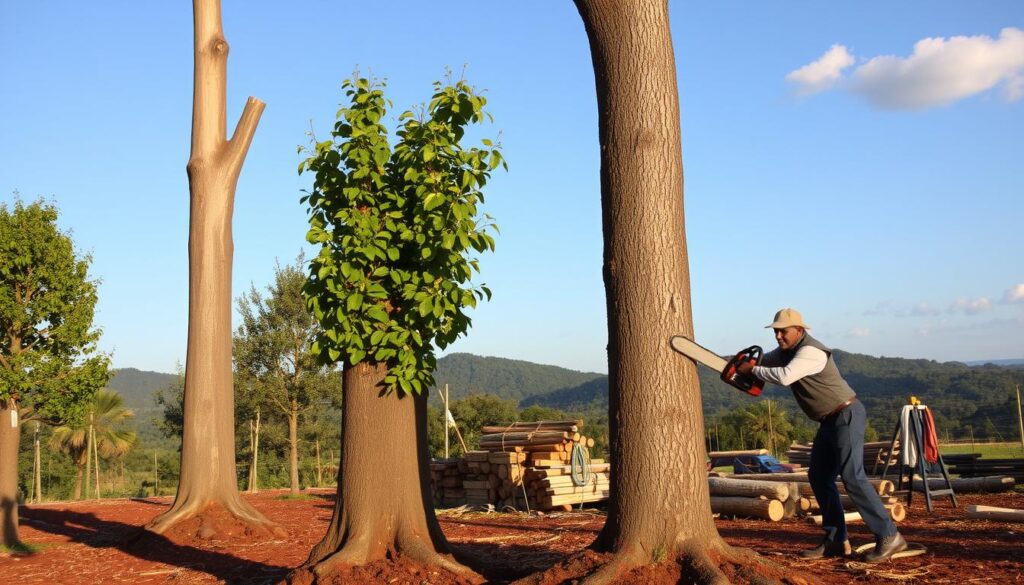
Tree felling cost expectations in Centurion right now
We recommend budgeting with a range rather than a single figure. Quotes in Centurion shift because controlled work, access and cleanup drive final prices more than raw size alone.
Why prices in Centurion can differ from broader Gauteng averages
Centurion has many estate living pockets and townhouse complexes near busy routes and shopping centres. These locations often need controlled dismantling and extra safeguards.
Shared driveways, tight side passages and estate rules increase labour time and permit checks. That is why local costs often sit above broader Gauteng averages.
What is usually included versus optional extras
Standard service generally covers cutting down and removing the above-ground material and basic site tidy-up.
- Optional items are stump grinding, full debris hauling, chipping and timber splitting.
- Waste removal choices—leaving wood for firewood or full haul-away—change truck time and disposal fees significantly.
Location and access are major drivers. Back gardens, narrow passages or slopes add labour even for a small job. We’ll next break down ranges by size, then zoom into risk, equipment and compliance that shift the final number.
how much does tree felling cost for small, medium and large trees?
We use a simple by-size framework so readers can place a job quickly and set a realistic budget before site-specific factors take effect.

| Tree size band | Typical height | Typical tree felling prices | Notes (access/risk can shift) |
|---|---|---|---|
| Small | Up to 5 m | R1,000 – R3,100 | Simple drop, easy access. Stump work extra. |
| Medium | 5 – 10 m | R3,100 – R8,100 | May need sectional lowering near roofs or walls. |
| Large | Over 10 m | R8,100 – R19,000 | High reach, rigging and more crew time raise the price. |
Johannesburg comparison: Johannesburg guide ranges run lower for small jobs (R500–R850+), rising through medium (R800–R2,500+) to large (R3,000–R7,500+) and huge (R7,000–R15,000+). These are guides, not fixed quotes; travel, workload and complexity explain differences between metros.
As size increases, expect longer cutting time, greater debris volume, heavier handling and higher risk. A medium specimen can cost like a large one if it overhangs a roofline or needs careful sectional lowering.
Use these figures as budgeting anchors. Next we examine the specific factors that push a quote up or down.
Key cost factors that change your quote
Practical pricing comes from tallying measurable dimensions and the extra controls a job demands. We check visible metrics first, then assess risk features that change time and crew size.
Tree size, height and trunk width
Height, trunk width and crown spread determine cutting time and the number of sections we must lower. Wider trunks and large branches need extra labour and handling. That raises the final figure more than simple height alone.
Condition: dead, storm-damaged, leaning or hollow
Dead or hollow specimens have unpredictable fibres and weak anchors. Storm damage or a lean increases the chance of uncontrolled breakage. We slow the operation, add rigging and take extra safety steps to protect property and crew.
Species and structure
Species matter: a palm can be tall and fibrous, awkward to dismantle, while heavy hardwoods add weight and handling time. These biological factors drive complexity and labour needs.
Complexity, risk and controlled dismantling
Controlled dismantling means removing a specimen in small, rigged pieces to protect roofs, walls, pools and neighbours. It is more time‑consuming than a straight drop and often bundled with light pruning or maintenance. A good quote lists those extras clearly so you know what affects the felling cost.
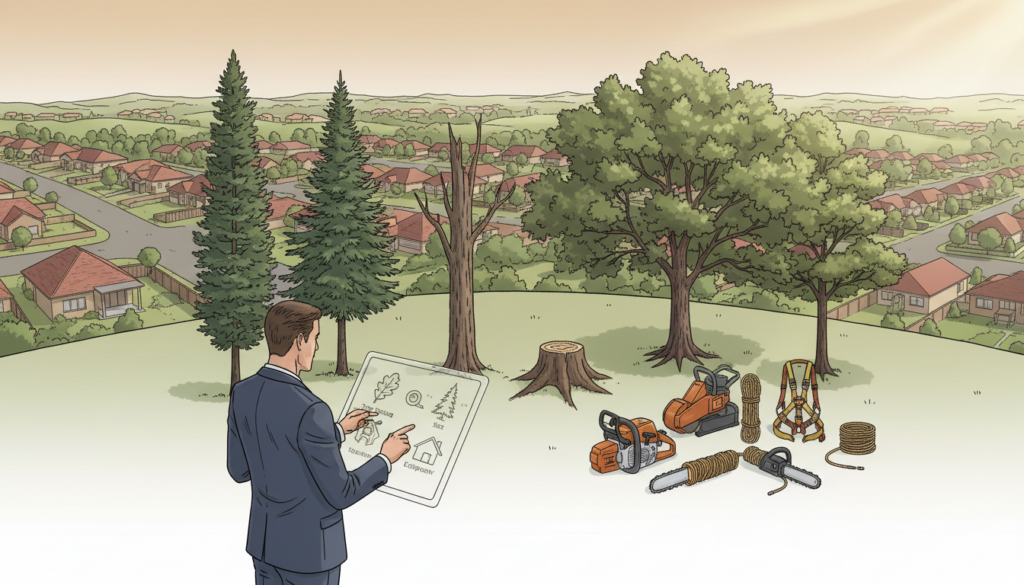
Location matters: access, obstacles and local risk points in Centurion
Location defines the work we plan. A tight site changes crew size, equipment choice and the time a job requires. That matters in estates and townhouse complexes where vehicles cannot get close to the specimen.

Tight access in Eco Park and Highveld-style estates
In Eco Park and Highveld, narrow gates and shared driveways often prevent trucks and chippers from parking near the work. We then carry cut sections by hand, which raises labour and extends the schedule.
Working near walls, pools and outbuildings in Lyttelton Manor and Zwartkop
Where a tree sits close to boundary walls, pools or carports, we use rigging and controlled lowering to protect finishes. These high-consequence areas need slower, precise cuts to avoid damage to your property.
Power lines and municipal services
Branches near overhead power lines or municipal service points require extra exclusion zones and safety controls. Coordination with utility providers can be needed and this affects timing and the final quote.
Buyer tip: before our visit, photograph any access gates, overhead lines, nearby structures and staging areas. Pointing these out helps us give a more accurate quote and plan for debris removal.
Equipment and crew requirements that influence tree felling prices
We match kit and crew to site risk. Our quote reflects the safeguards we plan, not guesswork. That keeps work safe and efficient in tight Centurion properties.
Rigging, ropes and sectional lowering to protect your property
Controlled dismantling often uses rigging and ropes so large sections can be lowered safely near roofs, walls, pools or neighbour boundaries. We pick this method when a straight drop would risk damage.
Chainsaws, chippers and trucks for debris handling
Our teams bring chainsaws sized to the job, rigging kits, blowers and chippers to reduce volume. Trucks collect chips and logs for removal.
- Crew size and equipment are driven by safety and efficiency; more kit and hands reduce on-site time but raise the quoted figure.
- Chipper-and-truck logistics change waste removal fees: fewer trips save time if machines can reach the work area.
High-reach access and when specialist gear may be required
For tall or unstable specimens we use high-reach platforms or specialist rigging. This reduces risk when climbing is unsafe, but it is a clear line item in any quote.
Buyer check: confirm whether the quote assumes manual carry-out or machine access. That single assumption can shift a price meaningfully.

Stump removal and stump grinding costs in Centurion
We treat stump work as a distinct service. Tree cutting clears the canopy and trunk above ground; stump removal or stump grinding tackles what remains and often appears as a separate line on the quote.
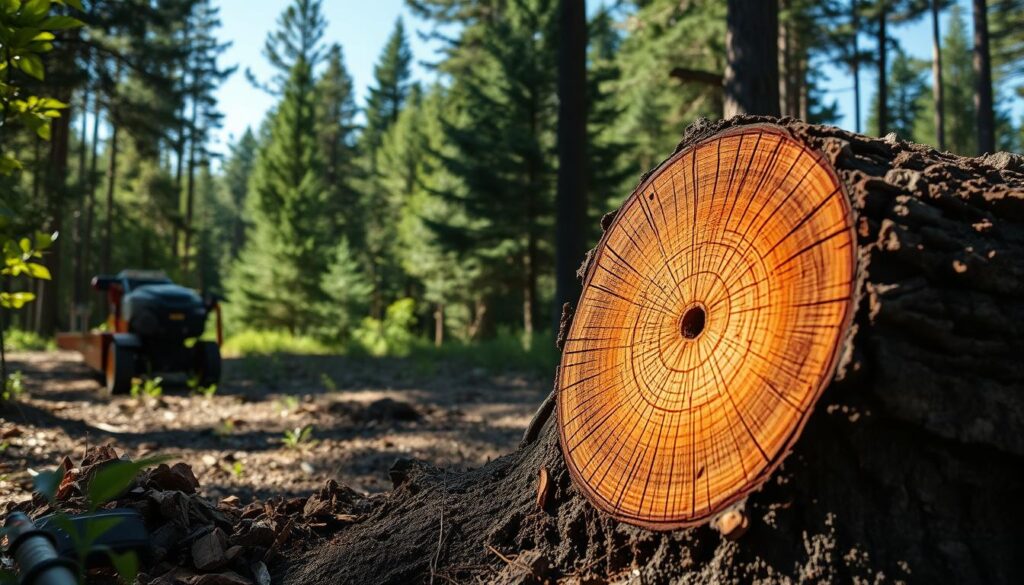
Typical stump removal pricing: R800–R4,400
In Centurion, stump removal prices typically range from R800 to R4,400. This band reflects stump size, root complexity, access and the time required for safe extraction.
When stump grinding is worth it
We recommend grinding when you plan to pave, re‑turf or replant. Grinding:
- levels the area for a new paving base;
- prevents regrowth and removes trip hazards;
- creates mulch that can be reused on-site.
Root spread, access and soil conditions that push prices up
Costs rise if roots run under paving or into foundations. Rocky or compacted soil increases labour and wear on equipment. Tight gates or no vehicle access mean manual work, which also raises the price.
| Stump size / access | Key cost drivers | Indicative price band |
|---|---|---|
| Small, easy access | Shallow roots; machine reach | R800–R1,600 |
| Medium, moderate access | Deeper roots; partial manual work | R1,600–R2,800 |
| Large, tight access or complex roots | Extensive roots; manual removal; rock | R2,800–R4,400 |
“Specify the finished level you want — just below soil for lawn or deeper for a paving base — so quotes are comparable.”
Buyer tip: tell us the intended finish when you request a quote. That single detail changes the equipment we bring and the final price.
Waste removal, debris clean-up and what to do with the wood
Disposal choices—full haul‑away, chipping on site or leaving stacked firewood—shape final scheduling and charges. We price clean‑up by counting crew time, chipper hours and any extra truck loads needed for removal.
How clean‑up is typically itemised: labour to gather and load, chipper time if chipping, and disposal or transport fees for each truck trip. Ask for these line items so quotes are comparable.
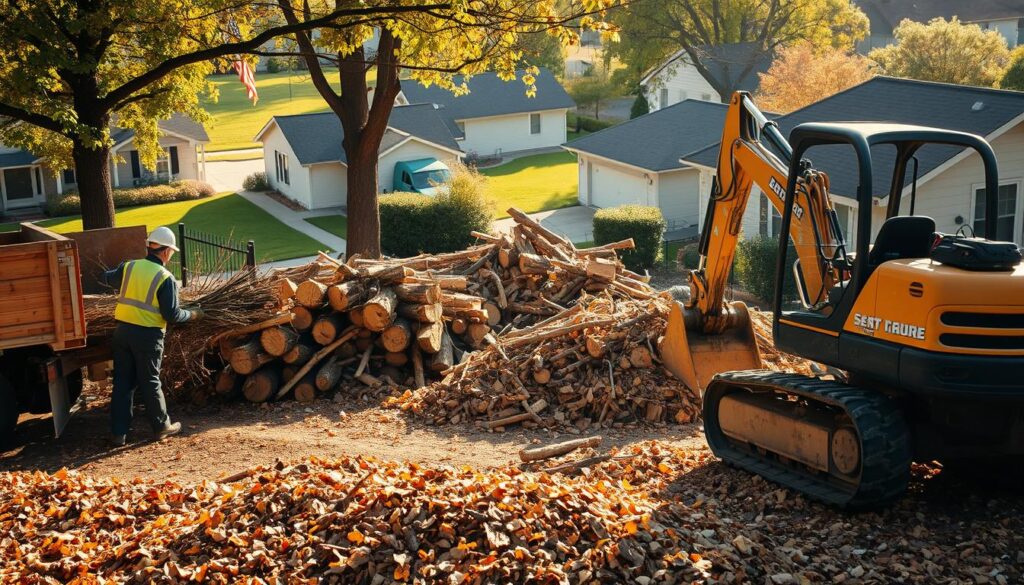
Debris removal versus leaving firewood on-site
Clients often choose full debris removal for a spotless finish. This reduces on‑site mess but adds haulage and disposal time to the price.
Alternatively, leaving usable logs stacked for a braai can lower fees. We recommend stacking clear of driveways and shared gates to avoid neighbour disruption.
Chipping for mulch and garden reuse
Chipping cuts volume dramatically and creates mulch you can reuse for garden maintenance. It usually lowers truck loads but adds chipper time on site.
Professional clean‑up normally includes raking, blowing, stacking or loading and final sweep. Ensure the quote states which of these services are included.
“Specify whether the finish is ‘leave‑it‑spotless’, ‘stack usable wood’, or ‘chip on site’ so there are no surprises.”
- Stack wood clear of shared access and communal parking areas.
- Request chip depth and whether mulch stays on site or is removed.
- Note that municipal rules and protected species approvals can affect scheduling and removal options.
Permissions, protected trees and compliance in South Africa
Before any work begins, we check legal and estate rules that may affect the project. Certain indigenous or protected species need municipal approval. Estates and homeowners’ associations often have their own permission processes too. These layers can change timing and the final quote.
When municipal approval may be needed
Municipal bylaws and provincial regulations sometimes require permits for removal of protected specimens. If a species is listed or the tree sits in a conservation zone, the council may ask for an application and assessment.
Estates may require written consent or an on‑site inspection by their manager. We advise clients to flag potential restrictions early so we can include any admin steps in the plan.
How approvals and scheduling can affect turnaround time and price
Approvals add waiting periods, site visits and paperwork. That can delay scheduling or force work into restricted time windows such as non‑bird breeding months or estate‑approved days.
These requirements influence costs through:
| Compliance factor | What it adds | Typical effect on quote |
|---|---|---|
| Municipal permit | Application time; possible inspection | Administrative fee; minor labour uplift |
| Protected species assessment | Specialist report or arborist visit | Extra site visit fee; possible mitigation measures |
| Estate approvals | Booking windows; liaison with managers | Scheduling constraints; potential premium for weekend or approved slots |
“Raise permission questions early in your quote request to avoid last‑minute delays.”
Buyer tip: tell us about any estate rules or visible tags on the specimen when you request a quote. We will clarify likely approvals, map the timeline and show any compliance items separately on the final quote so you see what drives the price.
How we price tree felling services in Centurion
Our pricing starts with a hands-on inspection, not a flat rate. We visit the site and build an itemised plan so the quote matches the work your property actually needs.
What we assess during a site visit near Centurion Mall, SuperSport Park and Rietvlei
On site we check access routes, drop zones and obstacles close to garages or pools. We note overhead services and neighbour boundaries around Centurion Mall, SuperSport Park and the Rietvlei area.
Risk assessment covers tree condition, lean and crown weight distribution. We confirm whether controlled dismantling and rigging are required and record any manual carry‑out limits.
What a professional quote should clearly list
A solid quote names the exact scope: fell versus dismantle, any pruning, safety kit and crew hours, and the planned clean‑up level.
Optional items such as stump grinding and waste removal always appear as separate line items so you can compare offers fairly.
“A clear, line‑by‑line quote prevents surprise add‑ons and lets you compare providers on an equal basis.”
Buyer checklist: confirm who removes debris, whether chipping is included and whether the final site is left rake‑clean. This protects you from vague wording and unfair on‑the‑day extras.
How to compare quotes and avoid false “cheap” pricing
We recommend lining up quotes by what they actually include, not by the headline price. A clean, itemised proposal shows the real value and highlights omissions.
Like‑for‑like scope checks: felling, trimming, stump work and clean‑up
Ask each provider to confirm these points in writing so you can compare apples with apples.
- Is it straight felling or sectional dismantling near structures?
- Is tree trimming or maintenance part of the job or extra?
- Is stump grinding or full stump removal included or listed separately?
- Exactly what level of clean‑up and disposal is provided?
Risk management: why complexity can outweigh size
Smaller specimens over garages or boundaries can need controlled lowering and extra rigging. That increases crew time and the final price more than raw height alone.
We price for safe exclusion zones, certified rigging and insurance cover — not shortcuts that leave you liable for damage.
Protecting your property and neighbours: boundaries, garages, and shared driveways
Share site details with bidders: parked vehicles, shared gates and noise restrictions change how a job is planned.
“The best value quote names scope, safety steps and clean‑up clearly, with no ambiguity.”
Get a Fast, Itemized Quote for Your Property Today
A simple size guide helps you plan, but on‑site realities decide the final figure for any Centurion job. Use size bands as anchors and expect the main factors to change the result.
Budgeting anchors: small R1,000–R3,100; medium R3,100–R8,100; large R8,100–R19,000. Stump removal typically runs R800–R4,400 when required. These numbers show typical ranges, not fixed quotes.
Access, risk, species and your chosen removal and clean‑up level drive real costs. Paying for planning and controlled dismantling often costs less than repairing walls, roofs or paving after a rushed job.
Request an on‑site assessment so we can confirm size, obstacles and the safest method, then deliver an itemised scope and clear prices for fair comparison. For confident decision making in Centurion, choose clarity over a cheap, vague offer.

