
The PSHB Crisis: Protecting Centurion’s Oak & Maples
We help property owners spot risk early, and our promise is simple: with shot hole borer treatment Centurion we identify, assess and respond before valuable shade trees decline beyond saving.
Centurion streets, gardens and business parks face the same threat seen across south africa‘s urban canopy. A tiny pest creates pin‑prick entry points, tunnels into living wood and introduces fungi that starve a tree of water and nutrients.
We explain the problem plainly. The insect and its fungal partner form a destructive species complex that drives canopy decline. Real-world control depends on timing, correct ID and a consistent plan — not a once‑off quick spray.
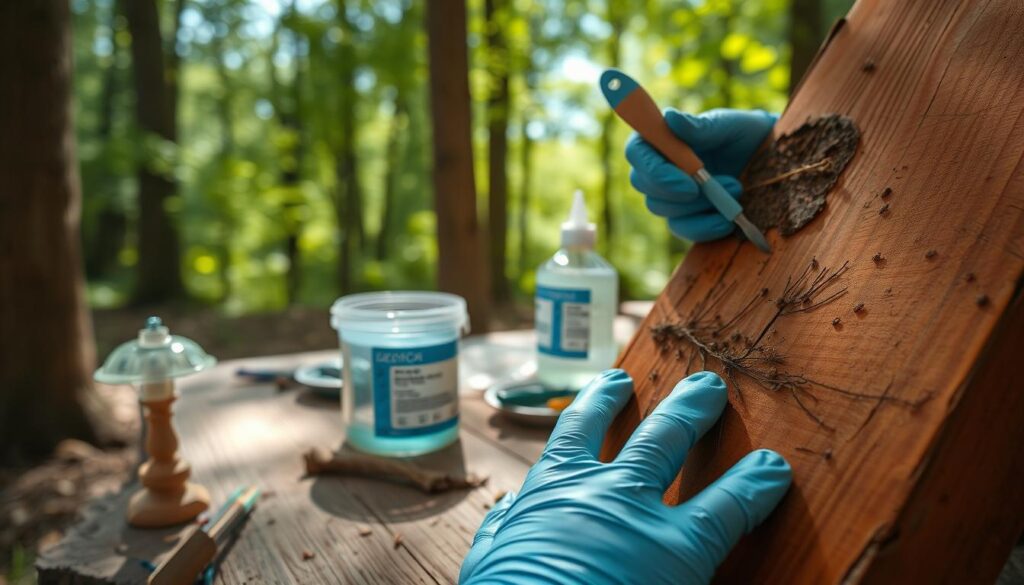
Our approach prioritises deep penetration to reach larvae and fungus, and we advise when removal is the responsible option. Around areas near SuperSport Park and mature green belts, higher tree density raises the risk of spread.
We offer clear next steps for assessment, ongoing care and measures to reduce cross‑infestation. If you need urgent advice, our team at Tree Felling Centurion can inspect and guide the right course of action – Get My Free Quote
Understanding the Polyphagous Shot Hole Borer threat in Centurion
Across Centurion’s green corridors a tiny beetle is quietly undermining tree health and resilience. We explain how this pest and its fungal partner convert living trees into breeding sites and why that matters for homeowners, estates and facilities teams.
Why this invasive beetle is so destructive
The polyphagous shot hole borer attacks living wood, establishing galleries where adults and larvae breed. These borer beetle galleries are not just surface marks — they become internal nurseries that expand with each generation.
How tunnelling disrupts sapwood
Deep tunnels cut through sapwood and create a plumbing failure. When sapflow is interrupted, the tree cannot move adequate water and nutrients, so dieback often appears first in the upper canopy.

The Fusarium fungus and canopy‑down decline
The beetle carries Fusarium spores into the tunnels. The fungus colonises the wood, further blocking flow and accelerating canopy decline from the top down.
Local risk and why early action matters
Female beetles can travel nearly a kilometre. In high-density zones near Centurion Lake, around SuperSport Park and by the Rietvlei Nature Reserve, a single breeding hotspot raises the infestation risk for neighbouring trees.
“Once a site becomes a strong breeding point, nearby properties and street trees face higher risk.”
- Key point: Out-of-sight damage makes control hard; early inspection and an evidence-based plan are essential.
shot hole borer treatment Centurion for gardens, estates and commercial sites
For gardens, estates and commercial grounds we offer a practical programme that targets both insect and fungus. We aim to reduce beetle pressure, slow fungal progression and support recovery where trees remain viable.
Our approach uses a deep‑penetrating liposomal delivery concept designed to move through bark barriers and into wood so active ingredients reach beetle galleries and larvae inside tunnels.
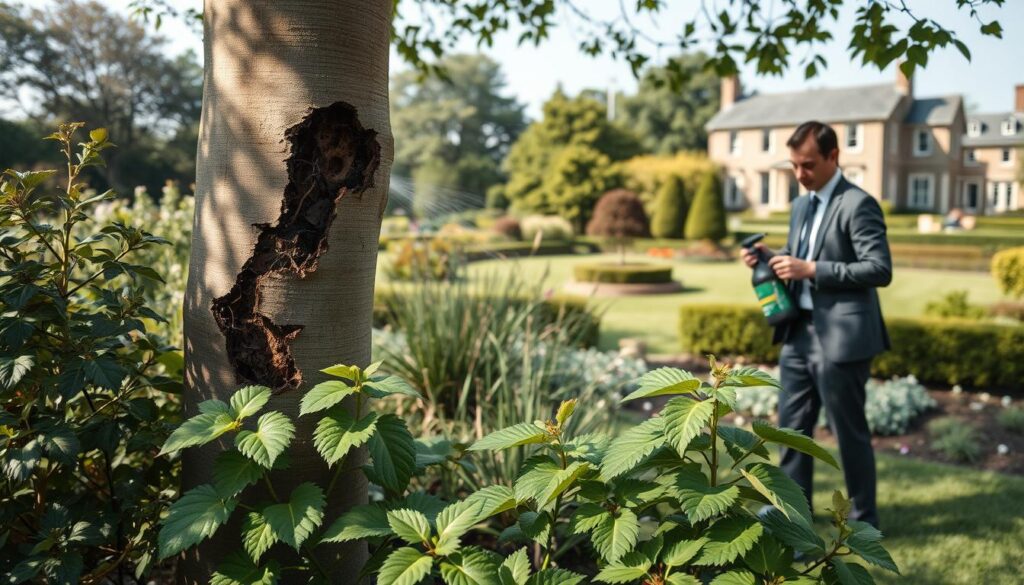
Two-problem control: beetle and fungus
Successful programmes must address both the borer beetle and the Fusarium fungus that fuels decline. The liposomal fungicidal actively penetrates tough fungal cell walls and disrupts structures within minutes.
Practical application standards
- Dilution: surfactant 1:50; fungicidal 1:200 with water.
- Schedule: direct surface spray on trunk and major limbs in Week 1, Week 3 and Week 5.
- Method: surface spray only — not injection or misting; use PPE and follow labels.
Trial evidence
Trials show insecticidal effect observed up to about 10 cm into trunks, with beetles and larvae found dead in wood and discharged around the base after treatment. These results indicate deeper penetration changes outcomes when compared with surface‑only products.
“Deep delivery into wood and tunnels is the way to reach the organisms that cause internal damage.”
| Product type | Dilution ratio | Timing | Application method |
|---|---|---|---|
| Surfactant mix | 1:50 | Week 1 | Direct surface spray |
| Fungicidal liposome | 1:200 | Week 1, 3, 5 | Direct surface spray |
| Insecticidal adjunct | As guidance | Week 1 | Direct surface spray |
Boundaries: these products are formulated for surface spray. They are not intended for injection. Always follow label instructions and local regulations in an emergency or routine work.
Signs of infestation, risk assessment and responsible control on your property
Knowing what to look for at the trunk and base makes a big difference. Check bark for tiny round entry points and fine, sawdust-like frass that collects at the base. Staining or wet oozing from small holes and thinning foliage starting in the upper canopy are clear signs a tree is under stress.
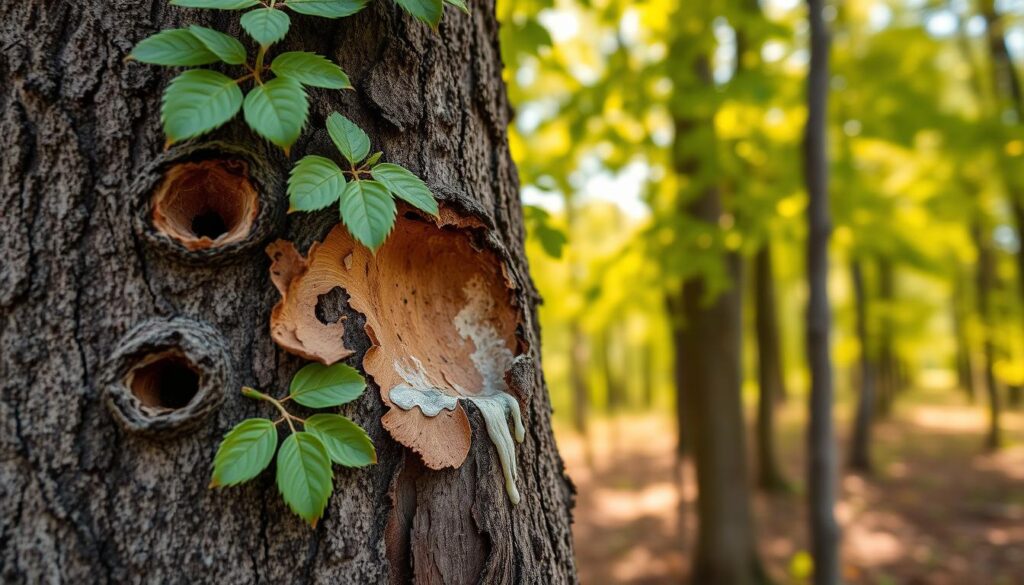
Visible symptoms to check on bark, at the base and around entry points
Inspect trunks at eye level and lower. Look for frass piles, small circular holes and discoloured sap. If you see multiple active holes and liquid staining, record photos and note the number of affected limbs.
Which trees are most at risk and how infestations spread locally
The pest is opportunistic and prefers trees already stressed by drought or poor soil. Where canopies are continuous, one infested tree can seed others. Female beetles may fly close to a kilometre, so proximity to Centurion Mall or the Gautrain station precinct matters.
When removal becomes the safer option to reduce cross-infestation
We assess severity by counting active holes, checking canopy decline and testing structural integrity. If a tree is heavily infested or unsafe, removal can lower the risk for neighbouring trees and public areas.
Disposal, handling and resilience steps
Cut wood can remain a breeding site. Do not store debris on-site; arrange prompt, responsible disposal aligned with municipal guidance. To strengthen trees, apply deep watering, mulch, and compost to improve soil and help restore water and nutrient flow.
“Early detection, sensible removal where needed, and community reporting protect streets and parks.”
Report suspect cases to local City Parks and raise neighbour awareness, especially near busy precincts like Centurion Mall and the Gautrain station precinct. A shared response reduces overall risk for our trees and green spaces.
Secure Your Trees Today: Book Your Shot Hole Borer Assessment
Early action is the single most effective way to protect trees from this hidden pest–fungus combination.
The polyphagous shot hole complex of beetle and fungus works inside wood, so visible damage understates risk. We must address both the insect activity within tunnels and the fungal colonisation that chokes sap flow.
Prompt inspection and risk grading keep neighbours safer and often prevent an emergency removal. Where trees remain viable, a scheduled, deep‑delivery approach offers the best chance to reach larvae and fungal structures.
When removal is needed, responsible disposal limits spread across gardens, estates and public sites in south africa. Our practical path is inspection, graded response, scheduled work where viable, and monitored follow‑up.
Next step: arrange a professional assessment so we can design a site‑wide plan that protects neighbouring trees and reduces future risk.

