
Methods Explained: Machine vs Manual Labour
Curious which option saves you money and hassle in Centurion or Pretoria? This practical guide on stump grinding vs stump removal helps homeowners and businesses weigh price and disruption when clearing a tree base from a garden or property.
We write from the local specialist view of Tree Felling Centurion, and then speak as we for the rest of the article. We explain why cost is more than a quote: it includes time, clean-up, future use of the space and how fast you need the yard usable again.
Later we will compare what happens to the stump and roots, how the finished surface looks, and how each choice affects your landscape plan. We will also cover safety, pests, method differences, cost drivers and a decision checklist for future building or planting.
Typical Centurion and Pretoria suburban stands, estates and commercial sites can change price due to access, paving and nearby structures. Read on to make a clear, local decision with minimal surprise – Get My Free Quote
Why You Should Never Ignore an Old Tree Stump
When a tree is felled, the remaining base can undermine safety, planting plans and paving if we ignore it. In Centurion and Pretoria this is a practical issue for every household.
Safety and mowing — old bases snag mower blades and force awkward trimming. They are a trip hazard for children, visitors and pets moving through the yard. Quick removal makes maintenance easier and safer.
Pests and disease — decaying wood attracts insects and rodents. Fungi and pathogens can spread from rotting material into nearby garden beds and healthy trees, increasing long‑term care needs.

Hidden Dangers: Termites, Regrowth, and Root Damage
Even after the main tree is gone, the root system keeps searching for water and nutrients. This competition can stunt lawns and shrubs by changing soil moisture and nutrient levels.
Roots may heave paving, crack edging or disturb underground services. For homes near Rietvlei Nature Reserve, Centurion Mall or SuperSport Park, a tidy area matters for curb appeal and safe outdoor use.
Save Money by Acting Fast: The Cost of Delay
Warmer seasons speed decay and pest activity across South African yards. Delaying either stump grinding or stump removal often increases hassle and cost later.
| Issue | How it affects your yard | Outcome if left |
|---|---|---|
| Trip hazards | Mowing difficulty and accidents | Higher injury risk and odd mowing lines |
| Pests & disease | Attracts insects, rodents, fungi | Spread to nearby trees and beds |
| Root competition | Drains soil moisture and nutrients | Weaker lawn and plants |
| Property damage | Heaving, cracking, utility interference | Costly repairs and disruption |
In short: both options solve these problems, but they differ in cost and disruption. We weigh local site conditions and future plans before advising the best approach.
Pros and Cons: Stump Grinding vs. Removal Compared
Here we explain what each process actually does on the ground and why the choice matters for local yards.

Stump Grinding: The Fast, Budget-Friendly Option
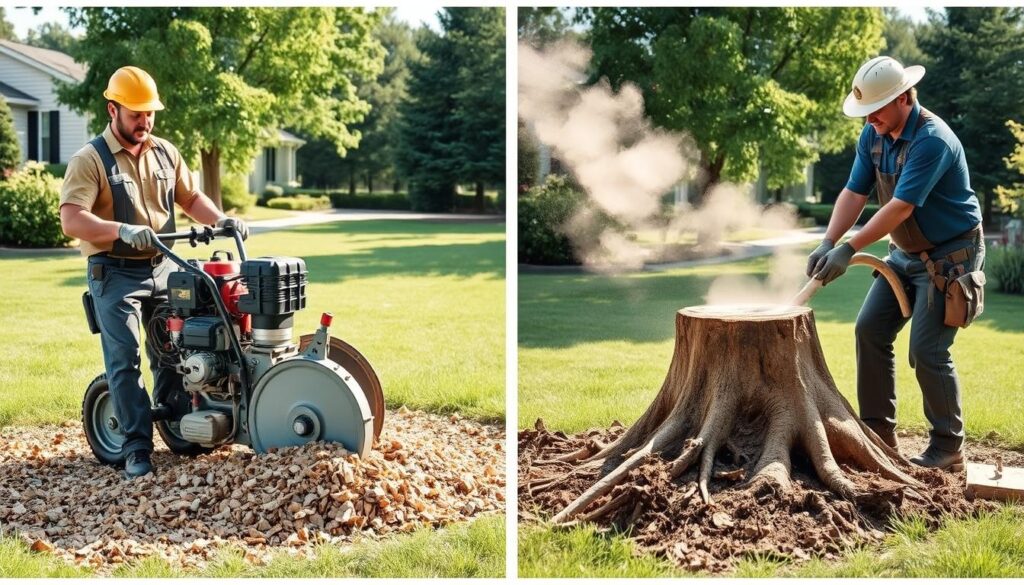
For grinding we bring a specialist stump grinder that uses a rotating disc with teeth to reduce the visible tree base below soil level. The machine turns the wood into reusable wood chips that we can spread as mulch or remove.
Deeper grind depths help level turf but increase the volume of chips and the time on site. We balance depth against future planting needs.
Do Roots Die After Grinding? (What Stays Underground)
The main root system stays in place and slowly decays. Roots will not regrow the trunk, but settling can form depressions later, so we advise how to backfill or lawn over the ground.
Stump Removal: The “Clean Slate” Solution for Building
Full extraction means we dig and cut to remove the tree base and as much of the root system as practical. This creates a larger hole and disturbs more soil.
Why Removal Costs More (Excavation & Heavy Machinery)
Removal is more labour-intensive and often more costly. Hard roots, tight access and nearby paving extend the time and require extra equipment or hand work.
| Aspect | Grinding | Removal | Best for |
|---|---|---|---|
| Finish on day | Level with chips/mulch | Open excavation, needs backfill | Quick reuse vs full rebuild |
| Soil disturbance | Low | High | Turf vs construction |
| Roots left | Yes, decay over time | No, mostly removed | Long-term planting or build |
| Labour & time | Lower | Higher | Cost-sensitive vs blank canvas |
Pro tip: an arborist assessment matters when walls, paving or other plants are nearby. These method differences drive the cost variations we cover next for Centurion and Pretoria quotes.
Price Guide: Cost of Stump Grinding vs. Removal in Centurion
Several on‑site factors steer the final price more than the initial estimate. We always scope the site so you know what the quote includes.

How Size, Tree Species, and Gate Access Affect Your Quote
Large trunks and dense wood take longer and wear equipment faster. That increases labour and parts cost.
Narrow gates, steep driveways or gated estates in Pretoria CBD add time and may need manual work.
Roots, soil and nearby structures
Compacted or rocky soil slows both methods and can mean more cutting of the root system near walls and paving.
Working close to irrigation, edging or utilities raises risk and adds safety steps that show on the invoice.
Site disruption, waste and time
Full extraction makes a bigger hole that needs backfilling and turf restoration; that raises the price.
Grinding produces wood chips you can reuse as mulch, cutting haul‑away costs. Removal creates mixed waste that often needs carting off.
Why Location Matters: Centurion Soil & Site Conditions
Older properties in Groenkloof or near the Voortrekker Monument often need extra care. Traffic and access around Pretoria CBD can add set‑up time.
We price from what we measure: size, access, risk and the finish you want, so there are no surprises.
Decision Checklist: Should You Grind or Remove?
Choosing the right approach for your yard hinges on what you plan next. We match method to outcome so your area is ready for planting, paving or play without surprise work later.

Choose Grinding If: You Want a Safe Lawns & Low Cost
Choose this option when you want a fast, low‑mess finish that lets the family use the garden again quickly. It is less invasive, cheaper and usually faster. The visible base is reduced below the soil so the area looks level and tidy on the same day.
Choose Removal If: You Plan to Pave, Build, or Replant
Opt for full removal where you need a genuine blank canvas. If you plan construction, replanting in the same spot or hardscaping, removing the whole base and major roots prevents future settling and interference with foundations or paving.
How we assess risk before making the decision
We inspect proximity to boundary walls, paving, underground services and nearby trees. Signs of root lift, cracked edging or shallow services make full extraction more likely. Our arborist-led check balances cost, time and future landscape goals.
What to expect on the day
We arrive with appropriate equipment and set up safe working zones. Work proceeds with clear safety measures and controlled waste handling. We finish the area level with the ground so you can top up soil, seed or lay turf.
“The best choice supports your next step — lawn recovery, paving, planting or construction — without surprise rework later.”
| Need | Recommended approach | Why |
|---|---|---|
| Quick yard reuse | Minimal disruption option | Faster, tidy finish; lower cost |
| Building or paving | Full clearance option | Prevents settling and root interference |
| Replanting same spot | Full clearance option | Removes competing roots for new tree |
Aftercare is simple. Reuse wood chips as mulch or we can remove them. Expect some settling as roots decay; top up soil after a few months if needed. In Centurion many homeowners choose the low‑mess option for day‑to‑day life, but we recommend full clearance when a renovation timeline requires it.
Working with Tree Felling Centurion — our arborists assess your property, advise the right service and match the method to your landscape plan, cost and timeline so you get the outcome you need.
Final Verdict: Get the Right Solution for Your Yard Today
Deciding how to clear a tree base shapes the next life of your yard. Stump grinding is usually the quicker, lower‑disruption and budget‑friendly option. Full removal is more intensive but gives a true blank canvas when you need total clearance. Choose the process that matches your timeline and goals.
Real cost drivers are simple: stump size and access, root behaviour, soil conditions and how pristine the finished area must be for your landscape plan. These factors affect time on site, equipment needs and the impact on your property.
Acting matters: leaving a base can create trip hazards, attract pests and fungi, and let roots compete beneath the soil. Start with what you want next — lawn, planting, paving or construction — and pick the method that prevents rework. We guide Centurion and Pretoria homeowners to the safest, most practical service for their area and timeline.

