
Access Restored: Fast Cut & Clear
After a storm near Lake Centurion or along the Hennops River, it is all too common to find a tree blocking driveway, leaving you unsure what to do next.
We at Tree Felling Centurion see this as more than a nuisance; it is a genuine safety situation that can stop safe exit, delay emergency access and disrupt school runs.
First, our aim is clear: assess hazards, manage any power line risk and restore safe access before any removal starts.
Safe access means no one stands under tensioned limbs, no cutting near live lines without specialists, and no rushed choices that add damage to paving, gates or vehicles.
In this guide we will speak as “we” and give practical steps for a fastest, safe fix — from a certified arborist check to controlled cutting that protects your property – Get My Free Quote
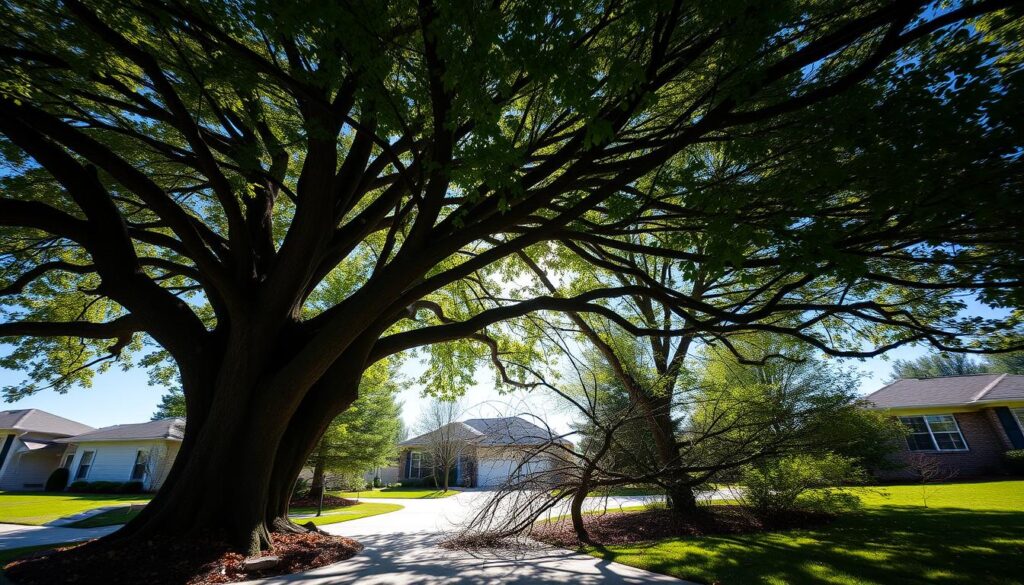
Immediate Steps: What To Do When a Tree Falls Across Your Driveway
On arrival after heavy winds near the Hennops River we focus on rapid risk control so residents regain safe access. Our first few actions are simple and proven.
What we prioritise first: safety, access, and preventing further damage.
Immediate priorities on site
We follow three clear steps on every call: make sure the area is safe, restore access without taking risks, and protect property from further damage. In the first ten minutes we keep people back, look for hanging limbs and decide if the entrance is fully impassable or partly usable.
Centurion’s storm patterns and wet ground near Lake Centurion can shift root plates. What starts as a minor branch problem can change into a structural hazard. If you are unsure about stability, call experts rather than improvising.
Typical constraints in local estates
Narrow entrances, close boundary walls and tight turning circles on many Centurion properties affect our plan. We adapt sectional removal and access-restoration steps to avoid scratched cars, broken gate motors or cracked paving.
“When you can’t confidently identify stability, treat the situation as a job for professionals.”
Safety First: Assessing Risks of Driveway Obstructions Before We Arrive
Before any cutting begins, we take a measured look at the whole scene to spot obvious and hidden risks.
How to spot an unstable trunk, hanging limbs, and hidden tension
We read the lean direction and check for fresh cracks or a lifted root plate. If branches are hung up in nearby trees, they can pull or spring unexpectedly.
Look for compressed fibres and bent wood — signs of hidden tension. Cutting the wrong place can cause a limb to snap back and injure someone.
When the driveway surface is compromised by roots or uplift
Uplifted pavers, new cracks, or a ridge across the surface mean roots have shifted. These signs tell us the root plate may be unstable and could cause further damage to paving and parked cars.
Why you should never stand under a loaded limb
Never enter the drop zone beneath a loaded limb or pull a branch with a vehicle. Keep people and pets well back while we assess and mark a clear no-go area.
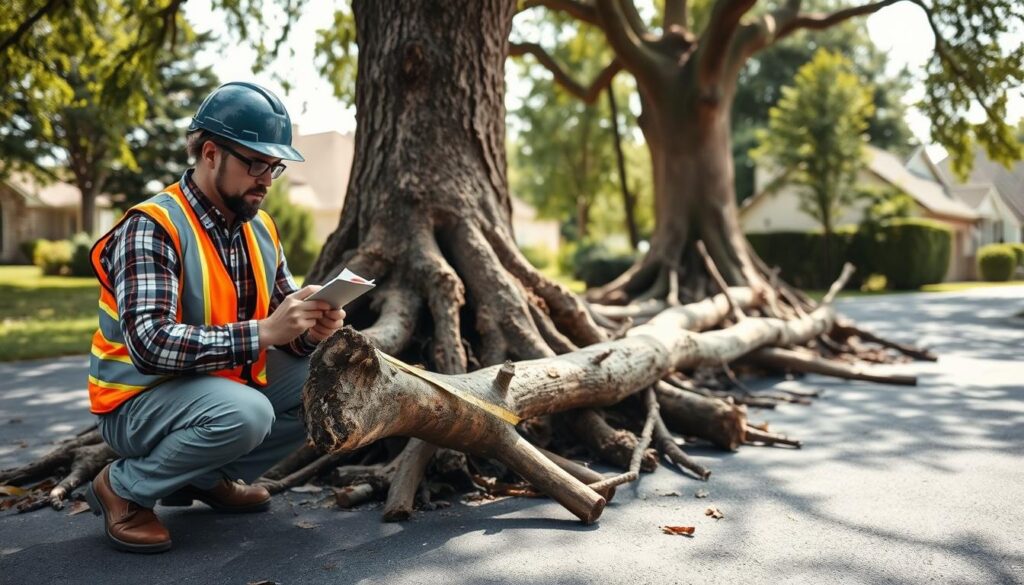
- Quick checklist for homeowners: hanging limbs, broken stubs, bark tearing, sudden new lean.
- Do not cut while someone is in the fall zone or attempt to drag large sections yourself.
- Early identification reduces the chance of secondary damage to paving, walls and cars, and lowers repair costs.
DANGER: Tree on Power Lines? Critical Safety Steps for Centurion Residents
We treat any entanglement with overhead cables as an immediate safety issue. If you find power lines caught in fallen vegetation or lying across an entrance, keep clear and do not attempt to move anything.
Safe distances and why utilities must handle entanglements
Why only authorised teams should touch lines
Keep at least 10 metres from any downed line and assume it is live even if it seems quiet.
Cutting or dragging an entangled cable can energise wet ground, metal gates, fences and tools. Only utility crews and authorised services have the training and equipment to make the area safe.
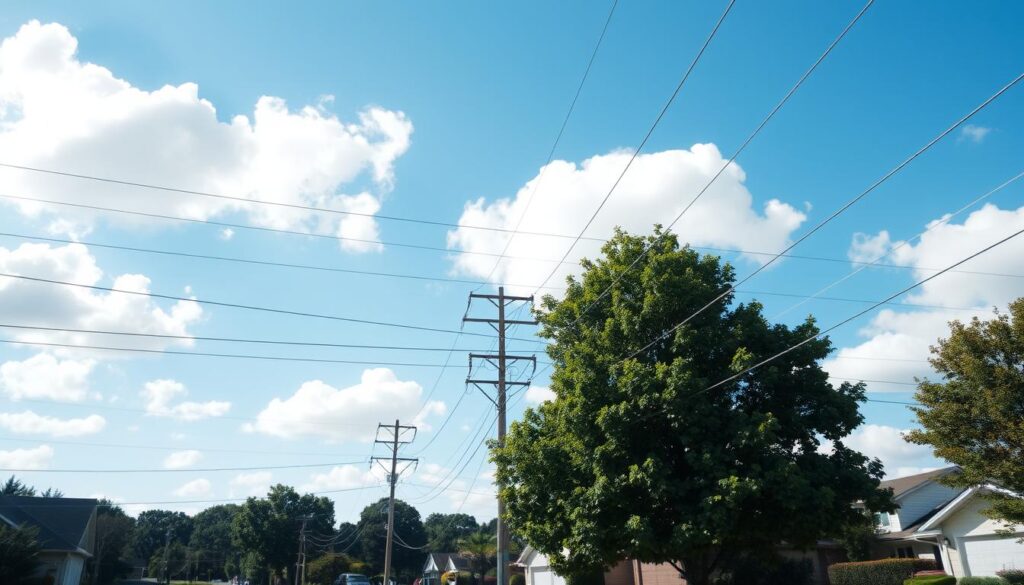
Vehicle safety when a line is down nearby
If a line rests on or near your car or across the gate, remain inside unless there is a clear, immediate life threat.
Stay put, keep others away, and wait for trained responders to make the scene safe before you attempt to move.
“Treat every fallen cable as live and keep bystanders well back until professionals arrive.”
| Risk | Action | Why |
|---|---|---|
| Downed cable over gate | Keep clear and isolate area | Cables can energise metal gates and nearby ground |
| Line caught in vegetation | Do not cut or pull; wait for utilities | Only authorised services can safely disentangle lines |
| Vehicle near fallen line | Remain inside and warn others | Exiting can create a shock path to ground |
- Isolate the area: keep children, pets and neighbours away.
- Warn delivery drivers and avoid trying to restore access yourself.
- Near the N1 and R21 corridors, roadside infrastructure means fallen branches can quickly reach lines; remain cautious.
tree blocking driveway: immediate actions to regain safe access
When a large limb falls across an entrance, quick, calm decisions make all the difference.
First, make sure there is no electrical risk. If any cable is involved, keep clear and call the utility. If safe, check whether the obstruction allows a narrow exit lane.
We advise clearing only light branches by hand. Move debris to the side, do not drag heavy timber across paving, and avoid rolling sections that might shift. If the section is heavy, under tension or leaning on a wall or vehicle, call professionals for an emergency removal.
Creating a temporary path without worsening the situation
Use hand tools and a spotter at the gate. Create a single-vehicle lane by removing loose material, not by cutting large pieces free.
Clearing small debris vs leaving large sections to experts
Light branches and leaves are safe to clear if you can lift them easily. Anything that needs a chainsaw, ropes or lifting gear should be left to trained crews.
Securing the area for children, pets, and passing vehicles
Mark off the hazard with cones, tape or a temporary barrier. Ask a neighbour or your guardhouse to let know others so no one drives into the risk.
“Fast should never beat safe — rushed cutting causes injuries and extra damage.”
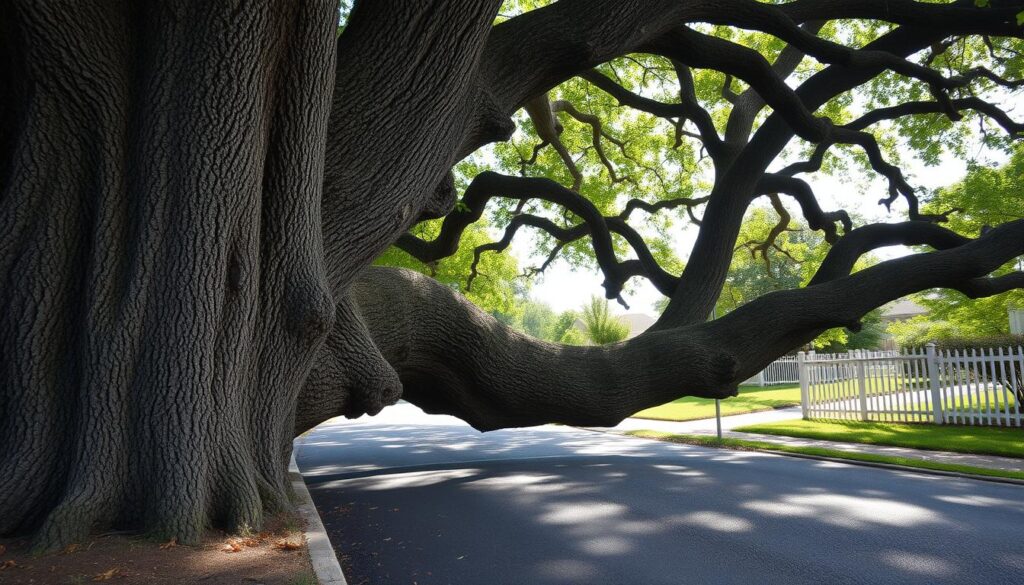
| Action | When to do it | Why |
|---|---|---|
| Confirm no power lines | First on arrival | Prevents electrocution and dangerous ground paths |
| Clear light branches by hand | If easily lifted | Restores limited access without tools |
| Establish temporary lane | If a single vehicle can pass | Allows safe exit for emergencies |
| Call professionals | Large sections, tension, or lean | Prevents injury and property damage |
Common causes in Centurion yards and complexes
Centurion yards often show the same tell‑tale signs after seasonal winds and heavy rains. We see patterns that explain why incidents happen and how to stop them becoming worse.
Storm winds, brittle limbs and rapid growth near boundary walls
Sudden gusts from a storm snap brittle limbs on older specimens. Saturated soil makes roots less secure and can turn a healthy canopy into a hazard.
In tight estates, fast growth close to boundary walls can create unbalanced crowns. Those crowns catch wind and drop branches onto paving, gates and parked vehicles.
Driveway damage from shallow roots and poor planting distances
Shallow root systems lift paving over months and eventually cause visible cracks. Poor planting distances are a common reason for repeated call‑outs and ongoing property damage.
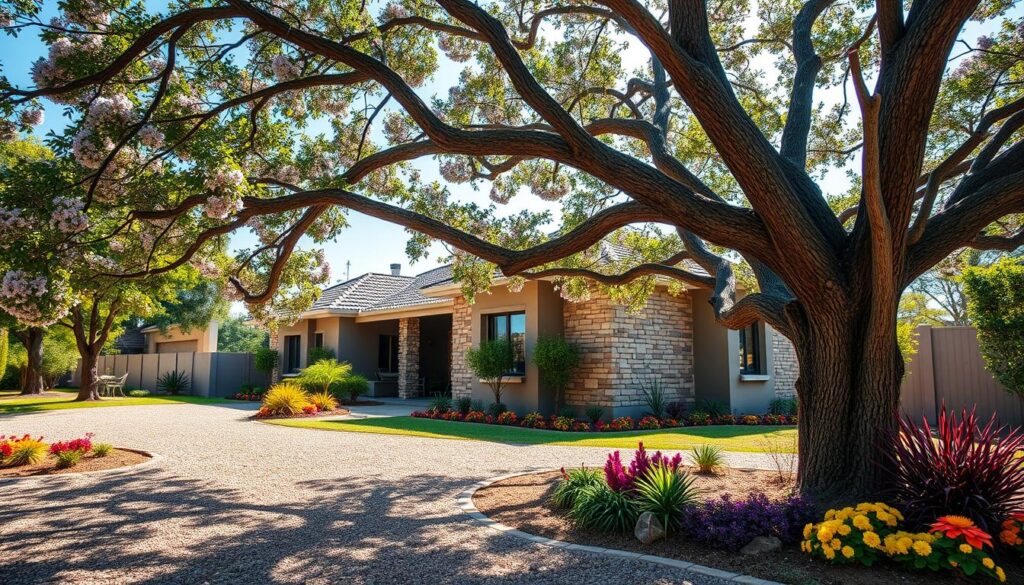
Spot early warnings: recurring small limb drop, rubbing branches on walls, and new cracks near the kerb. These small signs predict larger problems if ignored.
“Most problems build slowly; a little action now saves a lot of time and cost later.”
Prevention is straightforward: regular pruning cycles, sensible species selection and avoiding planting too close to walls or paving reduce the chance of future incidents on your property.
When we recommend emergency tree removal
If access is cut off or a lean worsens by the minute, urgent removal becomes necessary. We assess each situation fast and decide whether the scene is an emergency or a job for scheduled work.
Signs it’s an emergency
Call us immediately if any of these apply:
- Your only exit or entry blocks access and prevents evacuation or emergency vehicles.
- The trunk or large limb is actively leaning or you hear ongoing cracking.
- A fallen section rests on a structure, fence or vehicle and risks collapse.
- People, pets or property are in the potential fall zone and safety is at stake.
How emergency call-outs differ from scheduled work
Emergency work is all about immediate risk reduction. We prioritise making the site safe and restoring access first.
Full removal and tidy-up follow once hazards are stabilised. That means we may leave some non‑critical debris to remove later when conditions permit.
“Emergency decisions are based on hazard and safety, not on aesthetics or convenience.”
Typical emergency workflow
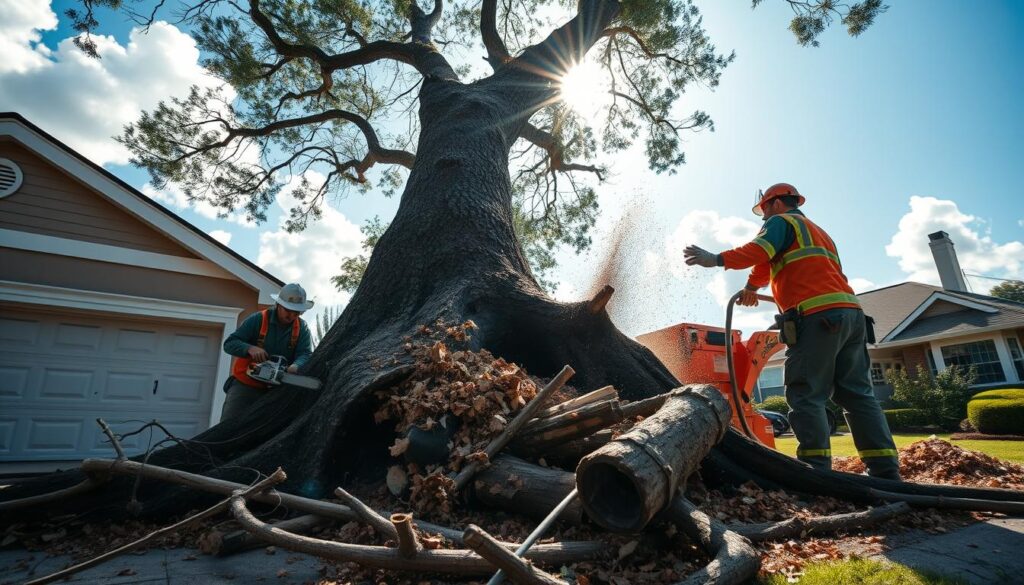
Our crews perform a rapid risk assessment, set exclusion zones and secure the scene. We then use controlled cuts to remove the greatest hazards in the safest sequence.
Expect realistic timing: during storms demand rises and we triage jobs by risk. Time to finish a call depends on complexity, access and safety needs.
Choosing the right help: certified arborist vs general tree service
In tight Centurion yards, who you hire matters. A measured choice between a certified arborist and a general tree service affects safety, long‑term health and the risk of property damage.
What a certified arborist checks before removal
We look beyond the obvious lean. A certified arborist inspects structural integrity, decay indicators, canopy balance and root stability.
They also assess how removal will affect nearby vegetation and the house. This assessment shapes the safest process and avoids unnecessary loss.
Equipment and methods to protect paving, gates and vehicles
Good crews use rigging and lowering ropes to control large sections. We place protective mats on paving and plan precise drop zones near gates and parked cars.
Such methods reduce the chance of cracked paving or dented garage roofs. Ask about rigging, lifting gear and cleanup scope before you hire a service.
Why topping is not a healthy solution
Topping may look quick, but it causes weak regrowth and higher future failure risk. We avoid topping and prefer structural pruning or specialist removal when needed.
“Quick cuts can create longer problems; choose a solution that protects safety and future stability.”
Tree removal process from inspection to clean-up
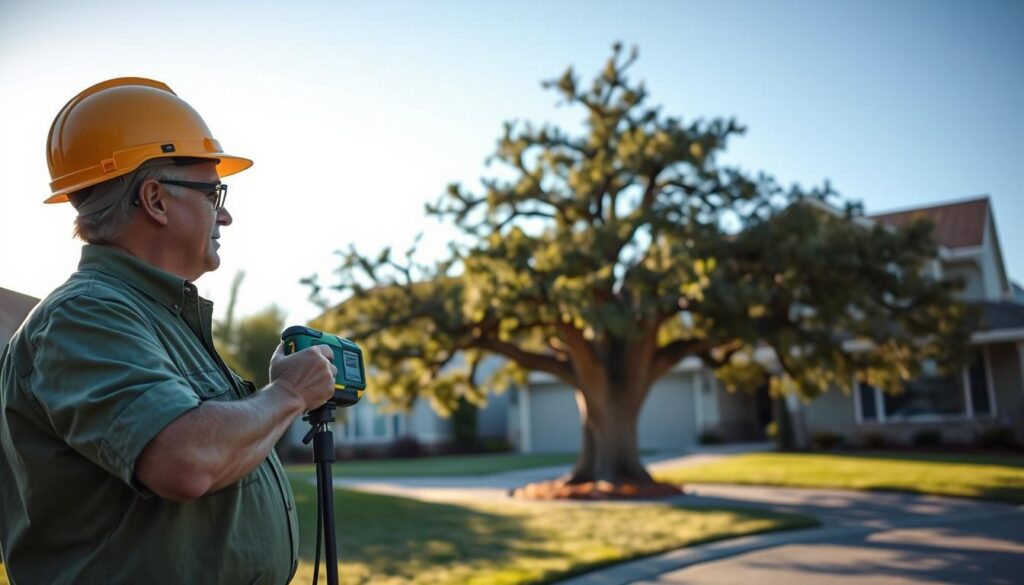
We start every job by walking the property to note hazards and plan the safest approach. A short inspection tells us how much equipment can reach the work area and what protections are needed for the house and landscape.
Site assessment and risk planning
Our crew records lean, root lift and any nearby cables. We then draw a simple risk plan that shows exclusion zones, lowering lines and gear placement.
We always prioritise safety: protect paving, gates and vehicles, and mark the area so neighbours and guards know to stay back.
Sectional dismantling for tight spaces near houses and garages
In narrow Centurion yards we never drop large pieces. We dismantle in sections and lower each piece with ropes or a crane if needed.
This method reduces the chance of damage to walls, roofs or a vehicle parked close to the house.
Stacking, chipping, and responsible green‑waste handling
Branches and cut sections are stacked safely, then chipped on site where permitted. We tidy the area to remove trip hazards and leave the property neat.
We favour recycling: mulch is offered back to the homeowner or taken to an authorised green‑waste facility.
Stump and trunk considerations when access is limited
If gates or narrow paths prevent machinery, we may leave stump grinding for a later visit. We ensure the site is driveable at the end of the work phase so you can use the property safely.
“A clear plan and sectional removal keep damage low and restore access fast.”
Who is Responsible for a Tree Blocking a Driveway in South Africa?
Assigning responsibility starts with locating the point where the trunk or limb finally settled. That simple fact often decides who arranges removal and who pays for repairs.
When it lands within your property boundaries
If a fallen tree comes to rest inside your property, we explain the baseline rule: the owner of that property typically arranges immediate safety control and removal.
Action steps: secure the area, photograph the scene and contact a qualified service to make the site safe.
Neighbour’s Tree vs. “Act of God”: Understanding Liability & Negligence
When a tree fell in a storm it is often treated as an Act of God. In such cases the affected owner commonly handles removal and any urgent costs.
Liability can shift if negligence is provable. Examples include clear prior decay, documented warnings, or a neighbour who ignored obvious instability.
Shared driveways and body corporate considerations
In estates and complexes, body corporate rules or common‑property status can change responsibility. If the section lies on common land, the managing body usually organises removal.
For shared private access, co‑owners should agree a quick plan so a crew can reach the site and restore access.
“Document early, communicate clearly and let know neighbours or management so disputes are reduced and safety comes first.”
Once responsibility is clear, insurance claims and scheduling become much simpler. If you have cover, notify your insurer and keep records of costs and correspondence.
Does Insurance Cover Tree Removal? Claims & Documenting Storm Damage
Before you hire a crew, checking your policy helps avoid surprises during claims for removal and repair.
When cover may help
Insurers commonly pay for removal and repairs if a covered structure on your property is damaged by a fallen tree or storm. In some cases they also cover costs when access to the home or driveway is blocked and safety is affected.
When claims may be declined
Claims can be refused if the insurer finds poor maintenance. Dead or diseased specimens left unattended are often treated as a preventable problem, not a sudden event.
What to photograph and record before work
Safety comes first. Do not stand under unstable limbs to get images — make sure the site is safe before you document.
- Wide shots showing the full scene and how the obstruction affects access.
- Close-ups of damage to walls, gates, vehicles and visible decay.
- Angles that show the point of impact and any root or trunk failure.
- A dated timeline: storm time, discovery time and any prior warnings.
- Obtain an estimate from a qualified crew if the insurer requests one.
| Estimate item | Why it matters | Typical detail |
|---|---|---|
| Scope of work | Clarifies what will be done | Sectional cuts, stump work, cleanup |
| Risk notes | Shows hazards insurer should consider | Lean, cables, access limits |
| Disposal plan | Proves responsible handling | Chip, haul, recycle |
“Document clearly, keep receipts, and record a simple timeline to support your claim.”
Public trees, sidewalks, and municipal rules that can affect you
Not all trees beside the road are owned by the adjacent property; this legal split changes what action you may take.
How to tell who is responsible
Public specimens on a verge or pavement are usually the municipality’s responsibility. If the stem sits entirely within your boundary, the property owner must arrange work.
Typical municipal response
Councils often cut and stack debris for later collection rather than removing everything immediately. This keeps pavements safe while the authority schedules collection.
Permits, protected specimens and why reasons matter
Removal permits are commonly granted for safety, disease or instability. Convenience reasons—shade, leaves or view—rarely qualify.
Do not remove a public specimen without permission. Unauthorised removal can lead to fines and neighbour disputes.
Practical notes on overhead lines and root work
Pruning near a power line is coordinated with utilities for safe isolation. Root pruning is discouraged as it can destabilise the specimen and create a larger hazard.
“Document the scene and show how access is affected when you report a public verge issue.”
When in doubt, photograph location markers, measure boundary edges, and report the hazard to the relevant municipal services. This helps us and the council act fast and fairly.
Future-Proofing: Prevent Trees From Blocking Your Driveway Again
A short maintenance plan can cut the risk of another sudden obstruction at your entrance.
We recommend a simple inspection schedule: check your yard before storm season and again after any major wind event. Look for deadwood, fresh cracks at the base, and canopy imbalance.
Routine inspections
Inspect limbs that overhang gates and parking bays. Note any split branches or new leaning stems and record the time and date for future comparison.
Pruning strategies
Property line clearance prevents neighbour disputes and reduces falling branches onto fences. Feathering up creates pedestrian clearance while keeping the crown balanced. Road clearance helps avoid vehicle strikes near main routes.
Planting distances and species choice
When planting small stands in Centurion, allow for mature canopy width and root spread, not just the sapling size. Choose species with less brittle wood to lower failure risk.
“Regular, targeted pruning prevents most sudden failures and reduces the need for emergency removal.”
| Action | When | Benefit |
|---|---|---|
| Inspect before/after storms | Seasonal and post-wind | Early fault detection |
| Feather up and clear roads | Annual or as needed | Pedestrian and vehicle safety |
| Plant with spacing | At planting time | Reduces root uplift and future damage |
Note: avoid aggressive root pruning on large specimens; this can destabilise the root plate. We suggest using qualified experts periodically so small problems are handled before they become major removal jobs.
Local, on-the-ground tips for Centurion homeowners
Working near busy Centurion landmarks needs careful timing and local knowledge. We share short, practical steps to reduce risk and avoid property damage in constrained spaces.
Navigating tight access near Centurion Mall and SuperSport Park
- Plan equipment access: confirm gate widths and turning space before arrival.
- Keep a clear staging area: park tools and wood off the main access so vehicles can move.
- Use compact kit and sectional removal when gates or narrow lanes limit crane use.
Traffic and safety near the N1, R21 and Centurion Gautrain Station
Time work outside peak commuter hours to reduce disruption. We cordon public walkways and use a spotter to control passing pedestrians and drivers.
Neighbour communication when branches cross property lines
“Hi neighbour — we plan to remove some overhanging branches on [date]. We will protect fences and agree the scope. Please reply to confirm.”
Get written agreement where possible to avoid disputes and to let know management or security in estates.
How Tree Felling Centurion approaches careful work near fences, pools and parking bays
Tree Felling Centurion inspects the site, uses controlled lowering, drop‑zone mats and assigns a spotter. After our initial mention of the company, we then act: we protect surfaces, keep walkways clear and leave the house area tidy.
Small choices prevent big problems: mats, a spotter and keeping vehicles out of the fall line save time and reduce the chance of costly damage.
Cost of Removing a Tree Blocking a Driveway: Transparent Pricing
When you ask for an estimate, we explain the elements that influence cost and time. Clear scope prevents surprises and helps you plan for any work on your property.
Size, complexity and proximity to structures or power
Large specimens and difficult access add labour and rigging. Sectional dismantling near houses or parked vehicles takes extra time and care.
When a tree is near a power pole or an overhead line, we coordinate with utilities. That coordination raises cost and extends the job time.
After‑hours emergencies vs planned removals
Emergency call‑outs need rapid mobilisation and extra crew safety measures. After‑hours work usually costs more because of response time and limited daylight.
How we keep pricing transparent at Tree Felling Centurion
At Tree Felling Centurion we list inclusions and exclusions, clean‑up scope and whether chipping or haul‑away is included. We give written scope so you know why a method is needed to avoid damage to your property.
| Price driver | What we check | Effect on cost | Example |
|---|---|---|---|
| Size | Height and trunk girth | More crew and time | Large specimens need sectional cuts |
| Access | Gate width, yard layout | Rigging or crane may be required | Narrow lanes increase labour |
| Rigging & safety | Proximity to buildings, pools | Higher due to protective gear | Lowering ropes and mats used |
| Waste handling | Chipping, haul‑away, stump options | Added disposal fees | On‑site chipping vs cartage offsite |
“Choose professionals who supply a written scope and explain why each method is needed.”
Get Unstuck Today: Contact Centurion’s #1 Emergency Tree Team
A fallen section at your gate calls for staged decisions: assess risk, isolate the area, and call for specialist help. Keep people clear and treat power lines as live — keep at least 10 metres back and wait for the correct crews.
Safety comes first. Document the scene with photos and a simple timeline to support any insurance claim and to record damage to your property or home.
Responsibility usually sits with the owner where the fallen tree lands, unless negligence shifts liability, and shared or municipal areas may follow body corporate rules.
Prevention matters: routine inspections, sensible pruning and correct planting distances reduce repeat incidents. If you face a tree blocking driveway in Centurion, we can assess the situation, explain options, and help with safe, controlled removal.

