Small Tree & Shrub Rates: Residential Pricing
tree cutting prices Centurion

Tree Cutting Prices Centurion often vary more than homeowners expect — curious which factors make your neighbours near Centurion Mall pay more than someone by the Gautrain station area?

For homeowners seeking clarity, tree cutting prices Centurion sits at the heart of this practical buyer’s guide. We are Tree Felling Centurion and, in the paragraphs that follow, we explain typical ranges and what drives those numbers.

Expect to see service types (felling versus pruning), price bands such as R850–R8,500 for felling and hourly pruning rates around R150–R250, and how emergency work can add 20%–50% to a quote.

We show the main cost drivers — size, species, access and risk — and how to compare quotes without overpaying. Use the quick “how to use this guide” note to jump to the table of typical rates, then return to the checklist that helps you spot hidden extras.

Our aim is simple: help you judge value and choose services with confidence, so you pay for work that is safe and completeGet My Free Quote

Residential tree cutting services in Centurion: what we do and what you can expect

Homeowners in suburbs like Irene, Die Hoewes and Eldoraigne often ask what services we offer and what to expect on the day.
A professional tree cutting service in action, focused on a skilled worker in safety gear, wearing a hard hat and gloves, wielding a chainsaw. In the foreground, the worker is trimming branches from a large, leafy tree with bright green foliage. The middle ground features a well-maintained residential yard, with a small house in the background, showcasing a cozy suburban environment. Soft, natural lighting filters through the leaves, casting dappled shadows on the ground. The scene conveys a sense of professionalism and precision, emphasizing the quality of tree cutting services. Capture a clear view with a slightly low angle to highlight both the worker and the tree, creating depth and focus.

Tree felling vs pruning vs trimming: choosing the right cutting service

We define each option plainly so you choose the correct service. Felling is full removal. Pruning keeps a specimen healthy. Trimming shapes hedges and clears lines.

Removal, palm trimming and crown reduction: common residential requests

Typical jobs include full removal after root uplift, palm trimming to remove dead fronds, and crown reduction to lower wind load. These solve safety, sunlight and clearance issues.

Stump removal and stump grinding: what’s included and what’s extra

Stump grinding is usually quoted separately and reduces the remaining wood to mulch to a typical depth. Complete stump removal is needed for paving or lawn reinstatement.

Storm damage clean-up and emergency jobs: when speed changes the scope

Emergency work often needs extra crew, after‑hours cover and stricter safety protocols. That can widen the scope and change the final quote.

What to expect on the day: noise and sawdust, controlled zones, chipping on site, and measures to keep children and pets safe. Once you know the service type, the next section makes the price bands much clearer.

tree cutting prices Centurion: typical ranges for homeowners

Before you sign a quote, it pays to see straight‑forward rate bands for residential jobs. Below we give clear ranges and short notes so you can budget confidently.

A serene suburban landscape in Centurion, South Africa, showcasing a variety of trees such as oaks and pines being trimmed by professional arborists in safety gear. In the foreground, two workers using a chainsaw and a pruning saw carefully cut branches, emphasizing precision and expertise. The middle ground features neatly stacked logs and freshly cut branches, while a charming residential home is visible in the background, surrounded by well-manicured lawns and blooming flowers, capturing the essence of a typical neighborhood. Soft afternoon sunlight bathes the scene, creating a warm, inviting atmosphere, highlighted by a slight golden hue. The image angle is slightly elevated, offering a clear view of both the workers in action and the peaceful residential setting they are enhancing.

Job type Small (height <8m) Medium (8–15m) Large (>15m)
Felling / full removal R850–R4,000 R2,500–R6,500 R6,500–R8,500+
Pruning / trimming (hourly) R150–R250 per hour
Palm species (per tree) R200–R300
Stump grinding / removal R900–R4,500 per stump
Debris & site tidy-up R150–R250 per man‑hour (haul & chip)

At-a-glance price bands

How we classify size: small is under 8 m with a compact canopy, medium is 8–15 m, and large is above 15 m or with a wide spread.

Hourly rates and species notes

We use hourly fees for routine pruning and multi‑tree maintenance. Fixed quotes are safer for complex removals that need specialist rigging or crane work.

Note: emergency jobs attract a 20%–50% premium due to risk and urgency, which will raise the final cost. Consider equipment and access when comparing fees; these often drive the biggest differences.

What drives the final cost tree owners pay?

What you finally pay depends on more than the number of cuts — it reflects risk, time and gear. We break down the main factors so you can read a quote with confidence.
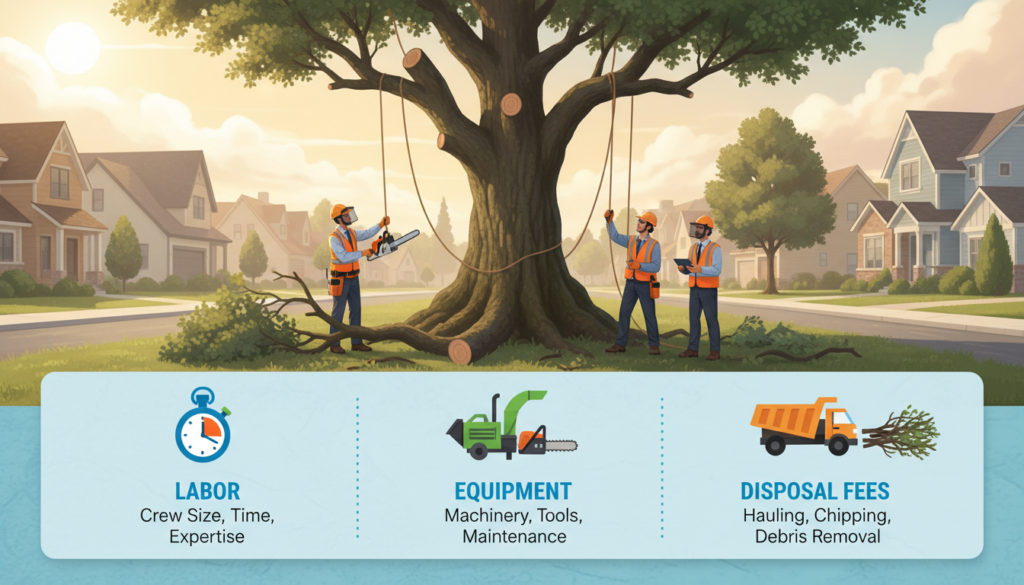
A visually engaging infographic depicting the various cost factors associated with tree cutting services. In the foreground, showcase a detailed breakdown of elements such as labor, equipment, and disposal fees, represented with icons or small illustrations. In the middle ground, illustrate a tree cutting scene with professionals in business attire using chainsaws and safety gear, concentrating on a large oak tree, emphasizing the scale of the task. In the background, depict different residential properties with varying tree sizes, under a bright, sunny sky, creating a welcoming atmosphere. Use vibrant colors for the cost factors and soft natural tones for the trees and homes. Natural sunlight should illuminate the scene, enhancing the details and providing a clear, professional look that resonates with homeowners considering tree cutting services.

Tree size, height and canopy spread

Large specimens take longer and need bigger drop zones. Sectional removal is common for tall or wide specimens, which raises labour and time on site.

Species and wood density

Hardwoods — oak and similar species — slow work, add weight to lifts and cost more to dispose of. The species affects equipment and crew size.

Health, condition and complexity

Dead, leaning or storm‑damaged items need careful planning. Working close to roofs, walls or shared boundaries increases risk and the final cost.

Equipment, safety and urgency

Rigging, rope systems, stump grinders and crane‑assisted removal all add expense. Emergency call‑outs normally add 20%–50% for rapid mobilisation and extra safety controls.

Driver Why it matters Typical impact
Size & height More time, sectional work Moderate–High
Species Density affects cutting and disposal Low–Moderate
Access & complexity Close to houses or fences High
Urgency After‑hours crews, fast response 20%–50% premium

Buyer tip: the best quote prices risk honestly. Underquoting often means corners are cut on safety or disposal, and that costs you more in the long run.

Location, access and local factors around Centurion that affect price

Location and site access are often the first things we check when preparing a quote for a suburban property.

Access and proximity to buildings, power lines or busy roads changes the equipment and labour we must plan for. Restricted gates, long carry distances or tight drop zones add time and raise the complexity of removal work. That affects both the method and the final costs.

A clear, inviting scene depicting the concept of accessibility in a suburban setting of Centurion. In the foreground, a well-maintained path leads to a residential home, showcasing wheelchair ramps and accessible features. The middle ground features a diverse group of individuals, including a person in a wheelchair and families of various backgrounds, all dressed in professional business attire, engaging with one another in a friendly manner. In the background, lush trees and local landscaping create a warm atmosphere, while gentle sunlight filters through the leaves, casting soft shadows. The angle is slightly elevated, providing a wider perspective of the area, emphasizing community accessibility. The overall mood is inclusive and harmonious, reflecting a welcoming environment for all residents.

Tight access and common obstacles

Narrow gates, steep driveways and limited laydown areas mean crews may carry logs by hand or use smaller machinery. Each extra hour of labour raises the final charge.

High‑risk zones near infrastructure

Working close to power lines or busy streets brings extra safety controls. We must employ traffic management, controlled lowering and wider exclusion zones to protect people and property.

Local neighbourhoods and what we see

Properties in Irene, Die Hoewes and Eldoraigne often have mature gardens and larger specimens. Wierda Park and Monavoni may present tighter suburban access. Erasmia sometimes needs careful planning for long carries and neighbour boundaries.

Landmarks that change logistics

Jobs near Centurion Mall or SuperSport Park can face limited parking and loading windows. The Gautrain station area often requires extra pedestrian controls. Properties bordering Rietvlei Nature Reserve tend to have bigger, established specimens and different wind exposure, so our safety plan adapts accordingly.

Before we arrive: unlock gates, clear a parking spot, keep pets indoors and confirm boundary lines. These simple steps can reduce avoidable delays and lower costs.

Factor Typical impact Example area What we do
Restricted access Higher labour, smaller gear Wierda Park, Monavoni Use smaller crews, longer carry times
Nearby power lines Strict safety controls Erasmia, Gautrain area Insulated rigging, exclusion zones
Urban loading limits Logistics & timing delays Centurion Mall, SuperSport Park Schedule off‑peak, traffic management
Bordering reserve Larger specimens, wind risk Rietvlei area Sectional removal, extra rigging

Optional extras and post-job services that change your quote

Knowing which extras are standard and which are optional helps you avoid surprise charges. We list common add-ons so you can decide what matters for budget and finish level.

A dynamic scene depicting a professional crew engaged in stump removal in a residential backyard. In the foreground, a worker in a hard hat and safety gear operates a heavy-duty stump grinder, with wood chips flying around. In the middle ground, another worker carefully inspects the area for potential roots and debris, while a third measures the stump’s dimensions for precise removal. The background features a small fence and well-maintained garden showing signs of seasonal change, with golden autumn leaves. Soft, natural light filters through the trees, creating an inviting atmosphere. The angle is slightly elevated, capturing the action and the tidy, organized workspace, emphasizing professionalism and attention to detail in post-job services.

Stump removal: when grinding is best

Stump grinding or removal is usually quoted separately. Typical ranges sit at R900–R4,500 per stump, depending on size and access.

When to grind: choose grinding for re‑turfing, to stop regrowth or to remove trip hazards. It leaves mulch and a shallow hole that is simple to fill.

When full removal is needed: opt for extraction if you are laying foundations, installing plumbing or paving. Full removal takes longer and costs more.

Debris, logs and chipping

Debris removal commonly costs R150–R250 per man‑hour. Options affect fees:

  • We can stack logs on site for you at no extra labour in simple jobs.
  • Hauling away is charged by time or load and adds to the final fee.
  • On‑site chipping turns cut material into mulch and often reduces haulage costs.

Site clearing, bundled services and aftercare

For renovations or landscaping we bundle services like hedge work, shrub removal and clearance. Bundling often improves value by reducing repeated mobilisation.

A standard tidy includes chip and haul of small branches, a sweep of the work area and removal of sawdust. Extras such as heavy log splitting, large root removal or multiple haul trips attract additional fees.

Post‑job maintenance: scheduled pruning or selective care reduces future risk and can lower long‑term maintenance costs. We present these as optional services so you choose the right level of care for your property and location.

Safety, insurance and professional standards to look for in a tree cutting service

A clear safety plan separates experienced professionals from casual operators on residential sites. We prioritise visible safeguards, a short written plan and a pre‑start briefing so homeowners know what will happen and why.

A professional tree cutting service team working diligently in a serene residential setting. In the foreground, two arborists in smart, professional attire carefully inspecting a tall, sturdy tree with safety helmets and harnesses. One of them holds a chainsaw, demonstrating readiness, while the other checks safety equipment. In the middle ground, equipment like safety cones and ropes are neatly arranged, emphasizing organized professionalism. In the background, a well-kept suburban yard with a clear blue sky and soft sunlight enhances the mood of reliability and safety. The atmosphere is calm and focused, highlighting the importance of safety, proper tools, and professional standards in tree cutting services. Shot with a wide-angle lens to capture the full scene, ensuring clear visibility of the team and their meticulous preparations.

Safety protocols on residential property: protecting people, pets and structures

On arrival we set exclusion zones, use controlled lowering and protect roofs, walls and vehicles. Crews wear PPE and use the right equipment, and we plan for children and pets to be kept well away.

Insurance and liability basics: what reputable providers should have

Reputable professional tree providers carry public liability and workers’ compensation. Ask to see certificates; a polite request is normal and protects you if damage or injury occurs.

Risk assessment before cutting: spotting hazards early

Real experts run structured risk assessments before any cut. They look for dead limbs, hidden cracks, unstable lean and nearby utilities. Good planning may raise initial costs but saves time and avoids repeat work.

Homeowner checklist: watch for PPE, a site plan, a brief safety talk and clear barriers. Red flags include rushing, no barriers or a vague scope. That tells you about the likely long‑term quality of care.

How to compare quotes and choose value (not just the lowest price)

Getting several written quotes helps you spot where real value sits. A clear offer shows scope, exclusions and any potential extras so you can compare like for like.

A well-organized workspace for comparing quotes on tree cutting services. In the foreground, a professional woman in business attire examines a stack of quotes on a desk, surrounded by a calculator and a laptop displaying a graph of tree cutting prices. In the middle, a large corkboard is pinned with various quotes, highlighted sections, and comparative notes, showcasing different pricing structures and services. In the background, sunlight pours through a window, creating a warm, inviting atmosphere. Soft shadows enhance the clarity of details, evoking a sense of careful consideration and decision-making regarding value over mere costs. The overall mood should feel analytical and focused, reflecting the importance of thoughtful evaluation in choosing tree cutting services.

What a detailed quote should list

Insist the quote names the exact tree(s) and the service type — felling, pruning or crown work. It should list labour hours, required equipment, disposal methods and separate lines for stump grinding or debris haul.

Interpreting reviews and reputation in Centurion and Pretoria

High ratings (4.9+ in many local listings) often mean reliable communication, consistent quality and tidy finish. Read negatives for patterns: safety issues are a red flag; a late crew now and then is less serious.

Questions to ask before approving the job

  • Who supervises the crew and what insurance is carried?
  • How will property protection be handled near Gautrain, the Mall or SuperSport Park?
  • What could change the quote on the day (hidden rot, access problems, emergency premiums)?

When we are a fit — and when we’ll recommend alternatives

Tree Felling Centurion is right for homeowners who want transparent scope, safe residential methods and clear disposal options. We will recommend an arborist report, council guidance or staged work when a protected specimen, complex removals or specialist removals are needed.

Quote item Why it matters Typical note
Scope Defines exactly what is done Names tree, service type
Labour & equipment Shows crew size and gear Includes rigging/crane if needed
Disposal & extras Avoids hidden fees Stump grinding listed separately
Emergency premium Explains urgent call costs 20%–50% if rapid mobilisation

Value formula: safest method + clear inclusions + respectful clean‑up usually beats a low quote with vague disposal and no risk allowance.

Get Your Free Tree Cutting Quote (Same-Day Response)

Wrapping up, a safety‑led approach usually gives the best long‑term value for homeowners. Expect ranges of R850–R8,500 for felling, R150–R250 per hour for pruning, and R900–R4,500 for stump work. Emergency call‑outs can add 20%–50%. Final costs depend on size, species, access and site risk, so quotes will vary even within nearby areas.

Use the quote checklist to compare scope, debris removal and equipment lines in writing. Local logistics near Centurion Mall, SuperSport Park and the Gautrain area often affect timing and cost. If you want a safety‑first assessment and a tidy finish, request a quote via our website and plan non‑urgent work before storm season to avoid emergency uplifts.

FAQ

What do residential rates typically cover for tree cutting services in Centurion?

We include labour, basic equipment, on-site safety measures and a standard tidy-up in most residential quotes. Extras such as stump grinding, heavy debris removal, crane hire or specialist rigging are usually priced separately and listed as add-ons.

How do we decide between felling, pruning and trimming for a garden job?

We assess the specimen’s health, location and your objective. Pruning shapes and improves health; trimming controls size and clearance; felling is necessary when removal is safer or required. We recommend the least invasive option that meets safety and landscape goals.

Do we handle palm trimming, crown reduction and full removals?

Yes. We routinely undertake palm maintenance, crown reduction to manage canopy spread, and full removals. Each task has different labour and equipment needs, so we provide specific quotes after an on-site inspection.

What’s included with stump removal and stump grinding?

Stump grinding removes the visible stump to below ground level and includes chip removal unless you prefer to keep mulch on site. Complete stump extraction is available for an extra fee when roots must be lifted or a hole filled.

How quickly can we respond to storm damage or emergency jobs?

We aim for rapid response to secure hazards and prevent further property damage. Emergency call-outs may incur higher rates because of overtime, additional staffing and specialist equipment; we’ll explain any urgency fees up front.

What are current price ranges for small, medium and large trees?

Typical ranges vary by site and species. Small specimens (low risk, easy access) cost less; medium and large specimens rise with height, canopy and complexity. We provide clear bands in our quotes and explain where your job sits within them.

Do you charge hourly rates for pruning and trimming?

For pruning and routine maintenance we can offer hourly or fixed-price quotes depending on job predictability. Hourly works well for ongoing maintenance; fixed prices suit clearly defined jobs like a one-off trim or crown clean.

Are there special costs for palm trees or species-specific work?

Yes. Species with dense fronds, hard timber or awkward growth patterns can increase labour and disposal time. We list species-related charges separately when relevant so you see why the quote differs from a generic job.

How much should we allow for debris removal and site tidy-up?

Allowances depend on volume and whether you want logs left for collection, firewood splitting, or full removal. Chipping and tidy-up are common add-ons; we itemise these so you can choose the level of clean-up you need.

Why do large trees cost more to remove?

Larger specimens need more labour, time and safety measures. Height, canopy spread and root system size increase risk and equipment needs, which raises the overall charge compared with smaller, straightforward jobs.

How does species and wood density affect the bill?

Hardwoods like oak or jacaranda require heavier equipment and more cutting time. Denser wood produces larger volumes of waste, which influences disposal costs. We factor species into our assessments and explain any surcharges.

What if the tree is dead, leaning or already storm-damaged?

Compromised condition raises risk and may require specialised rigging or faster action to protect property. We treat such jobs as higher risk and provide a tailored plan with clear pricing to reflect the extra precautions.

How does complexity — for example working near roofs or boundaries — change the cost?

Complicated access, proximity to buildings, fences or neighbours increases time and the need for controlled dismantling. We price for the care and additional manpower involved in working in confined or sensitive locations.

When is rigging or crane-assisted removal necessary and how does it affect cost?

We use rigging or cranes when we cannot safely lower large sections to the ground due to space constraints or risk to structures. These methods require specialist operators and hire costs, which are itemised in the quote.

How much extra do emergency call-outs add to the price?

Emergency work can add roughly 20%–50% to standard rates, depending on time of day, required response speed and complexity. We explain any emergency premium before we proceed so you understand the trade-off for rapid service.

How does access and local layout in Centurion affect our quote?

Restricted access — narrow drives, gates, limited drop zones — increases labour and equipment handling time. We’ll note access issues during inspection and adjust the price to reflect the extra effort required to work safely.

Do nearby hazards such as power lines or busy roads change the approach?

Yes. Working near electrical infrastructure or public thoroughfares raises risk and may need co-ordination with utility companies or traffic management, which adds to cost. We factor these safety measures into every relevant quote.

Which suburbs and landmarks in the area typically affect logistics and pricing?

Areas like Irene, Die Hoewes, Eldoraigne, Wierda Park, Monavoni and Erasmia each present different access and permit considerations. Proximity to Centurion Mall, SuperSport Park, Rietvlei Nature Reserve or the Gautrain can influence travel time and site restrictions.

How do stump removal options compare on price and outcome?

Grinding is usually the most cost-effective for leaving the area ready for replanting, while full extraction is pricier but removes roots completely. We recommend the method based on your landscaping plans and provide a clear per-stump estimate.

What are typical charges for debris handling, logs and chipping?

We give options: leave cut wood for you, chip and spread mulch on site, or remove all debris. Each choice has different labour and disposal costs; we itemise these so you can choose the best value for your needs.

Can you bundle site clearing with other landscaping tasks?

Yes. We offer bundled services for renovations and landscaping that combine hedge work, pruning and site clearing. Bundles often provide better value than separate bookings and streamline the project timeline.

What safety protocols do we follow on residential jobs?

We enforce PPE, exclusion zones, tool checks and safe communication on every job. Our crews follow industry standards to protect people, pets and structures during every phase of work.

What insurance and liabilities should we look for in a provider?

Reputable firms carry public liability, employer’s liability and, where applicable, plant and equipment cover. We recommend asking for certificates and confirming cover limits before hiring to protect your property and household.

Do you perform a risk assessment before starting work?

Yes. We conduct a site risk assessment to spot hazards, plan access and decide on methods and equipment. This assessment forms the basis of our quote and the safety plan we implement on site.

What should a detailed quote from us include?

A comprehensive quote lists scope of work, labour, equipment, disposal, any permits or traffic management, and clear add-ons. We include timelines and payment terms so there are no surprises on the day.

How should we interpret online reviews and reputations for providers in Centurion and Pretoria?

Look for consistent feedback about punctuality, communication, pricing transparency and post-job tidy-up. High ratings matter, but read recent reviews to confirm the company still performs to standard.

What questions do we encourage you to ask before approving a job?

Ask about exact inclusions, who will do the work, confirmation of insurance, contingency plans for hidden issues and how waste will be handled. Clear answers give you confidence in both value and safety.

When is full felling the best option and when do we suggest alternatives?

We recommend full removal for dead, dangerous or disease-ridden specimens and when planting plans require it. Where possible, we prefer pruning, crown reduction or staged works to preserve amenity and reduce cost.