
Urgent Assessment: Gravity vs Safety
On a quiet street near Centurion Lake, a large shade tree leaning towards house beside a driveway in Irene Village can turn into an urgent problem overnight.
Have you ever wondered how quickly a seemingly minor tilt becomes a serious threat?
Highveld thunderstorms and gusty summer weather combine height and weight with unpredictable failure, so we treat every case with care. A leaning tree may indicate root issues, soil wash-away or storm damage. We assess whether pruning, stabilisation or removal is the right step.
Not every tilt is a crisis, but every lean deserves a structured check because the real risk depends on what sits under the canopy — roofs, garages, driveways or play areas.
As Tree Felling Centurion, we bring local experience to tight suburban plots and offer practical, do-this-next steps for homeowners and landlords. Expect clear advice on spotting emergency signs and simple safety moves while we explain realistic solutions for modern property care – Get My Free Quote
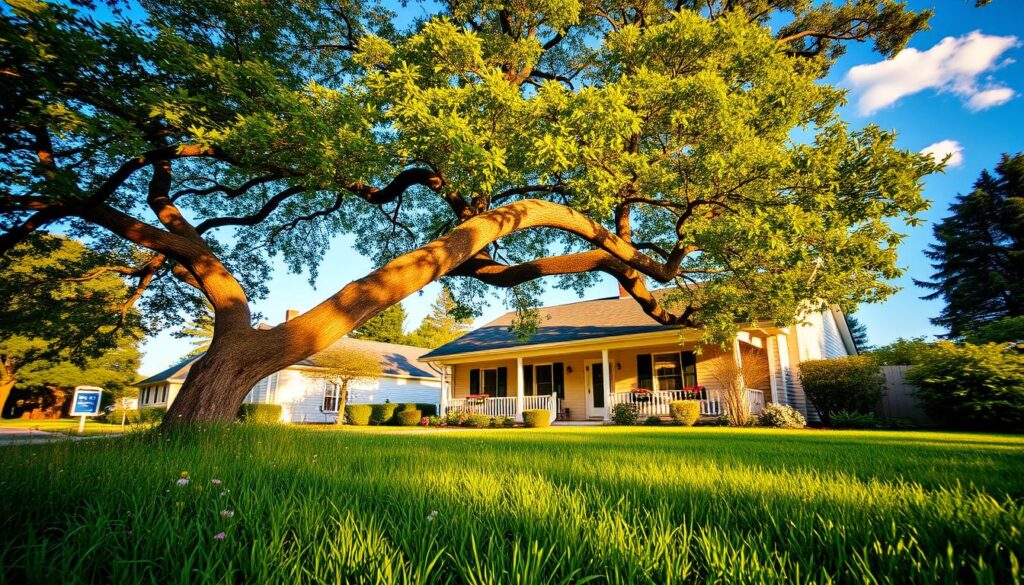
Why trees in Centurion start leaning towards homes
In Centurion suburbs, a gradual tilt often begins long before anyone notices a problem. We see a small cause on site and trace it back to local activity or weather.
Root disruption is common. Trenching for fibre, new paving, irrigation runs or driveway widening can cut anchorage and trigger a whole‑tree lean.
Heavy rains and Hennops River runoff leave soil waterlogged or washed away. When soil loses grip, roots cannot hold, and a trunk may shift under repeated wind load.
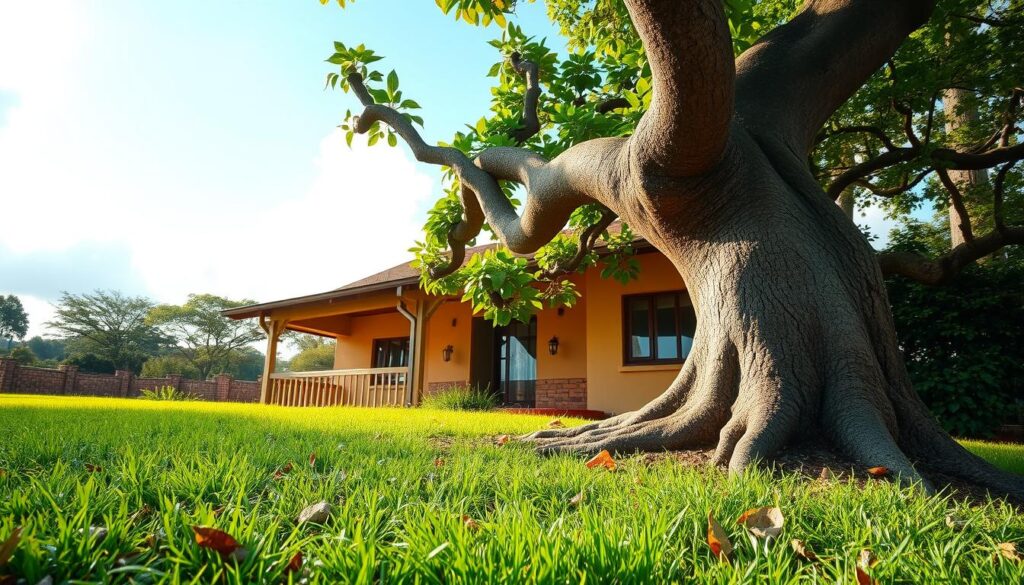
Wind and storms seldom topple everything at once. Repeated gusts nudge trunks over months or years.
Phototropism causes curved growth when a stem bends toward light beside a double‑storey or high wall. That bend often indicates growth response rather than root failure.
“A straight trunk with a whole‑tree lean usually signals root or soil failure; a bend part‑way up shows growth compensation.”
| Cause | Typical sign | Likely fix |
|---|---|---|
| Root cutting (paving, trenching) | Lean with straight trunk; exposed roots | Root protection or removal |
| Waterlogged / washed soil | Soft ground; lifted root plate | Soil stabilisation or removal |
| Phototropism | Curved trunk above a shaded base | Selective pruning or replanting |
| Decay / pests | Hollow sound; fungal fruiting bodies | Safety removal |
Understanding the cause guides the correct solution — pruning, support or safe removal — rather than guessing.
How to tell if a leaning tree is an emergency
We define an emergency as any situation where a leaning specimen could fail soon and pose immediate danger to people, vehicles, roofs or boundary walls. If life or property may be hit within hours, act as an emergency.
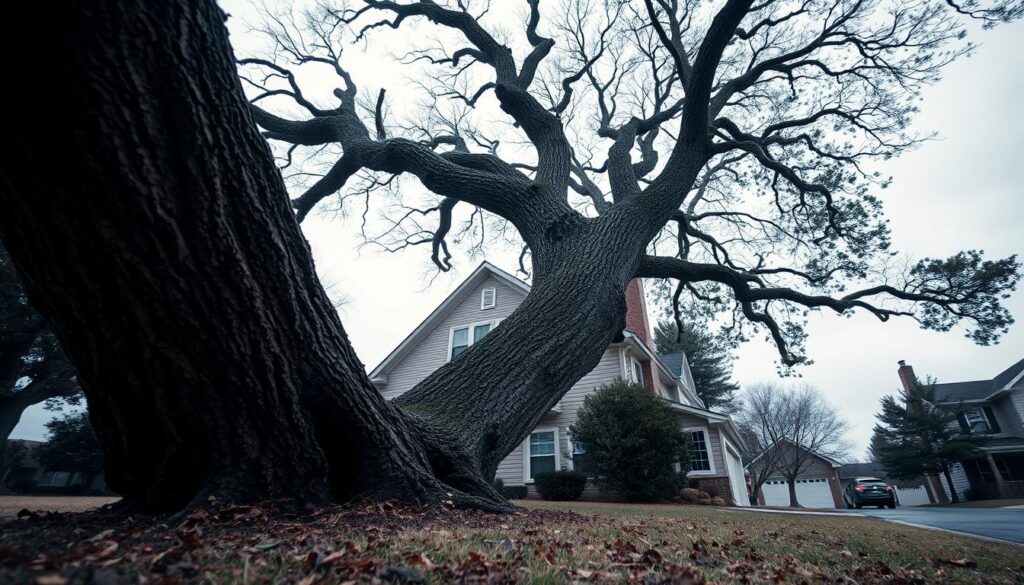
Sudden change in angle over days or weeks
If the trunk shows a rapid move in a short period, especially after a storm, that fast change is one of the clearest red flags. A quick new lean raises the risk of collapse and counts as urgent.
Cracked soil, heaving ground and a lifted root plate at the base
Check ground level for cracked soil radiating from the base, bulging or heaving turf, or a lifted root plate where roots pull up like a hinged mat.
Splits in the trunk, hanging limbs and dead branches over the property
Fresh splits, long vertical cracks in the trunk and heavy deadwood hanging above a driveway or roof often precede breakage. These signs increase damage risk and reduce safety margins.
- Compounding factors: wet ground plus strong winds — common near Centurion Lake — raise the danger.
- Simple rule: if you see a lifted root plate or active cracking, stop, step back and treat it as an emergency.
“If in doubt, keep clear and call qualified help — rapid failure is possible.”
Immediate safety steps when a tree leans towards your roof, driveway or boundary wall
When a large specimen starts to tilt over a roof or driveway, quick action keeps people and property safe. We act to minimise risk, reduce immediate damage and buy time until professional help arrives.
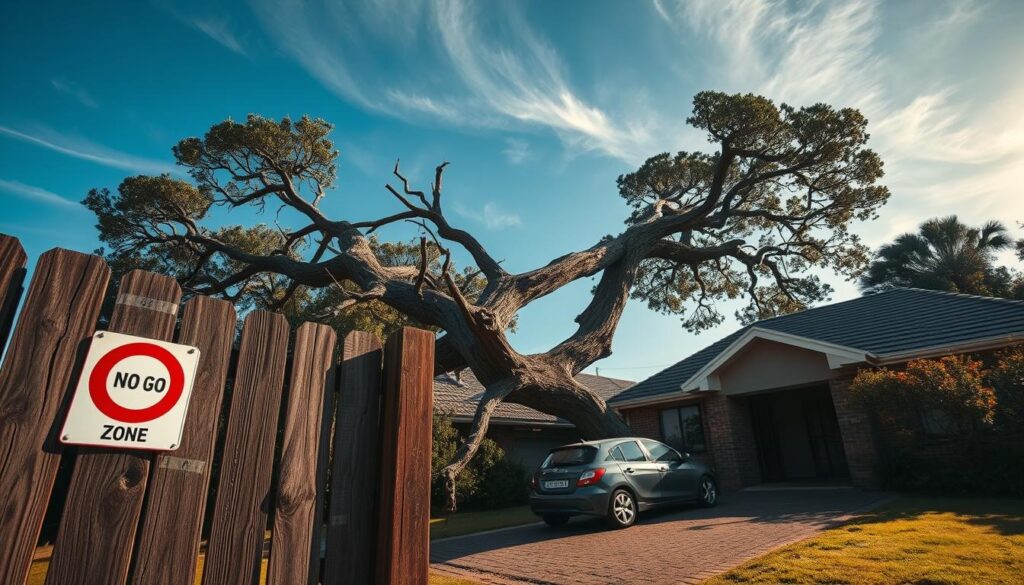
Creating a no-go zone and clearing the fall path
We set a clear exclusion area as our first move. Estimate the possible fall path — at least the height of the trunk where possible — and keep children, pets and visitors well away.
- Move vehicles off the driveway and park them away from the likely impact zone.
- Shift furniture, braais, trampolines and pot plants out from under the canopy.
- If the specimen leans toward house structures, switch off and avoid areas near boundary walls and roofs.
- Mark the danger area with cones, tape or bins so everyone sees the risk.
What we do not want you to do
No ladder work, no chainsaw use, and no attempts to secure a failing trunk with ropes tied to cars. Makeshift support can worsen damage and injure people. These are stopgaps at best; only a qualified tree service should plan stabilisation or removal.
| Immediate action | Why it matters | Who should do it |
|---|---|---|
| Establish no-go zone | Prevents injury and reduces property damage | Home occupants / we assist on arrival |
| Clear vehicles and outdoor items | Removes targets in fall path | Home occupants |
| Mark visibility | Keeps family members out of harm’s way | Home occupants |
| Wait for qualified help | Ensures safe, controlled work and correct support | Certified arborist or tree service |
Assessing risk like an arborist in the present day
We assess a leaning specimen the way an arborist would, using simple tools and steady observation to separate low‑risk from urgent cases. Our present‑day approach blends on‑site checks with short monitoring to catch movement before it becomes failure.

Estimating lean severity and tracking movement over time
We estimate severity with a visual plumb line and by comparing the trunk to a vertical reference. As a guide, less than 15° we monitor; 15–30° needs professional assessment; beyond that we act fast.
To track change, mark a reference point on the trunk and photograph from the same spot weekly. Small increases in angle over weeks matter more than a single snapshot.
Why direction matters more than lean alone
A specimen that leans away from targets often presents lower immediate risk than a smaller one that leans directly over a roof, garage, pool or play area. We map likely impact zones and score urgency by what the tree could hit.
Species, root‑zone and trunk checks we carry out
Fast growers with weaker wood (such as poplars and willows) raise concern when combined with root damage. We inspect for exposed roots, recent digging, compaction from parking, waterlogged soil and changes to drainage after landscaping.
Trunk and canopy checks focus on cavities, long cracks, included bark, imbalanced crowns and deadwood. A lifted root plate or large cavity pushes us to recommend an on‑site inspection.
| Check | What we look for | Action |
|---|---|---|
| Lean angle | Measured with visual plumb line; marked reference | Monitor or call an arborist |
| Direction / targets | Proximity to roofs, garages, pools, play areas | Prioritise high‑risk cases |
| Root‑zone | Exposed roots, soil compaction, waterlogging | Soil repairs or professional stabilisation |
| Trunk & canopy | Cracks, cavities, deadwood, crown imbalance | Detailed assessment by certified arborist |
We recommend an on‑site inspection around Irene Village and Centurion Lake when a specimen leans over structures, when wind exposure is high, or when soil conditions look altered. Our arborists will advise support, pruning or removal based on the real level of danger.
tree leaning towards house: what to do next (step-by-step)
Before any work begins, we take a methodical approach to protect people, property and future options. Follow our ordered flow so decisions are clear and documented.
- Make safe: cordon the fall path and move vehicles and belongings out of harm’s way.
- Document: photograph the whole specimen, the base, any cracks and recent ground changes; note dates and recent storms or building work.
- Assess cause: check for root damage, soil movement or trunk defects to score urgency.
- Decide urgency: act immediately if signs worsen; otherwise book a professional inspection in good time.
- Choose remedy: match the fix to risk and health—pruning, support or removal.
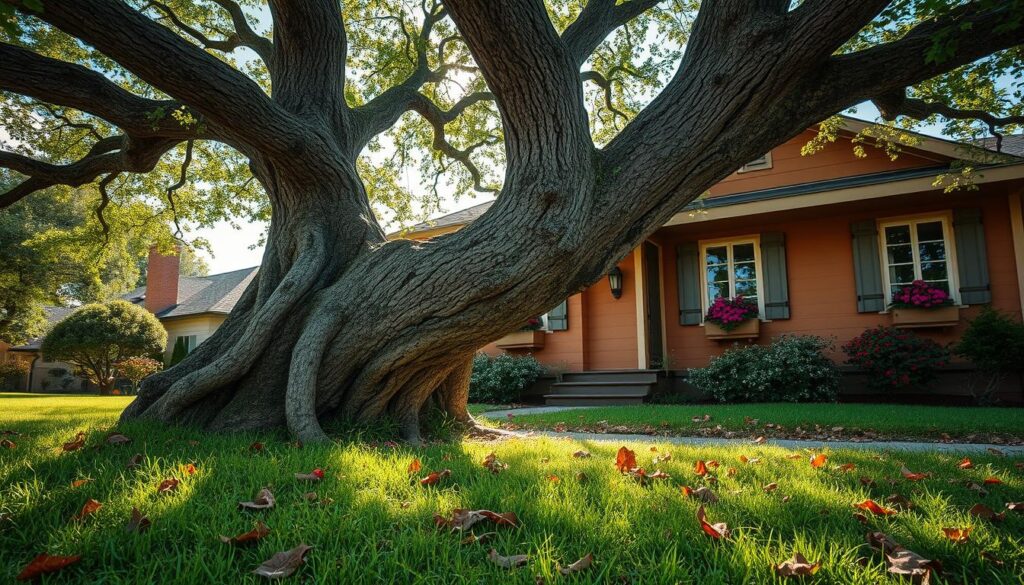
Documenting the problem for decisions and insurance
Take clear images of the full specimen, the base, lifted soil and any splits. Note dates, weather and recent digging. Insurers may view failure as neglect without records.
What not to do
Do not cut large limbs, dig at roots or try to winch or pull it straight with a bakkie. These DIY moves increase the risk of sudden failure and extra damage.
Short-term stabilisation and why it is temporary
Limited guying or bracing can reduce movement for a short period. It is only a stopgap. Compromised roots or saturated soil still need a long-term fix.
Deciding between pruning, support or full removal
We weigh movement over time, root integrity, trunk defects and what lies under the fall path. For active damage risk we favour removal or sectional work; for healthy specimens with intact roots we may choose pruning or cabling as part of ongoing tree care.
| Action | When we pick it | Benefit |
|---|---|---|
| Pruning | Minor imbalance; sound roots | Reduces weight and wind sail |
| Support (cabling/bracing) | Good trunk, intact roots, moderate risk | Buys time and stabilises crown |
| Removal | Severe lean, root plate lift, decay | Eliminates immediate danger |
“If signs worsen, act now; if stable, schedule a pro assessment rather than waiting for the next storm.”
Repair options that may save the tree
When instability is caught early, sensible repairs can restore balance and safety without full removal. We assess cause, health and the likely targets before we recommend a course of action.

Selective pruning to reduce weight and rebalance the crown
We use selective pruning to reduce sail area and weight on the lean side. This rebalances the crown and increases clearance from roofs and driveways.
We avoid over‑thinning; the aim is safety and long‑term growth, not cosmetic shaping.
Bracing and cabling for healthy specimens
Engineered cabling and bracing offer external support when roots and trunk are sound. These systems reduce movement and lower the risk of split failure.
They are a medium‑term solution while we monitor stability and plan further care.
Correcting young-tree issues: replanting and staking
For recent plantings, replanting can correct poor alignment if done carefully to protect the root ball.
We recommend minimal staking to allow some trunk movement for strength. Remove stakes after about one year, or within 1–2 years at most.
“Phototropic curves rarely straighten; we manage canopy and risk rather than chase an impossible correction.”
| Repair | When to use | Benefit |
|---|---|---|
| Selective pruning | Minor imbalance; sound roots | Reduces weight; improves clearance |
| Cabling / bracing | Good trunk; intact roots | Limits movement; prevents split failure |
| Replanting young trees | Recently planted, poor alignment | Restores root orientation; improves future growth |
| Temporary staking | Loose soil or high winds | Stabilises while roots establish; remove after ~1 year |
When removal is the safest option in Centurion
There are moments when careful pruning is not enough and removal is the only responsible choice.
High‑risk scenarios we never ignore
- Lifted root plate with the base clearly moving out of the soil.
- Severe and worsening lean that puts roofs, garages or walls in the fall path.
- Significant trunk decay or large cavities that weaken structure.
- Repeated failures in storms and visible structural defects.
Why severe lean plus targets is decisive in Centurion
In tight suburban plots a single failure can cause major property damage. Close buildings, narrow gardens and parked cars raise the stakes.
How we carry out safe removal
We prefer controlled sectional dismantling, working piece‑by‑piece to protect roofs, boundary walls and nearby trees.
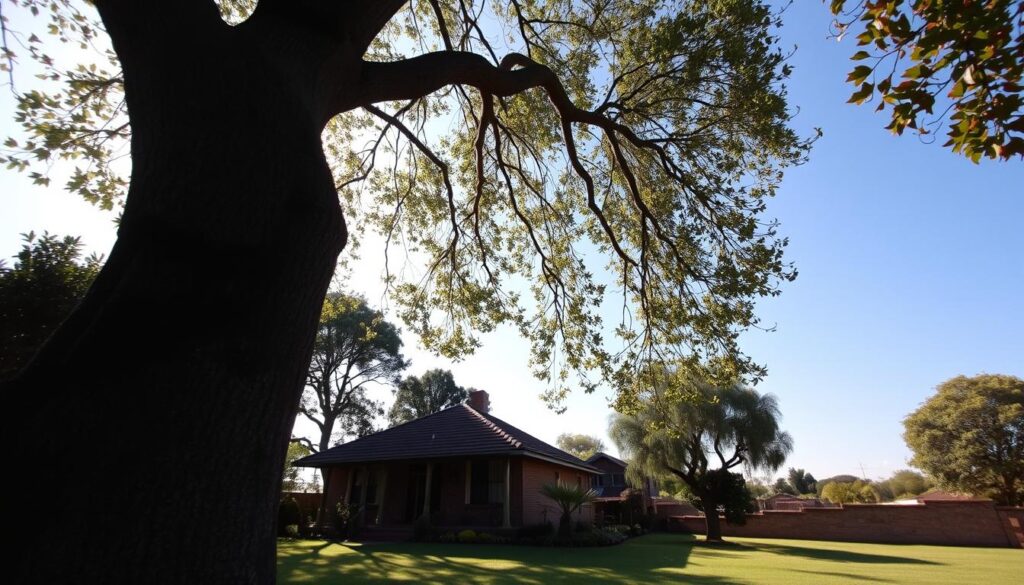
We plan rigging routes, use careful lowering and keep clear working zones near power and utility lines.
| Stage | What we do | Benefit |
|---|---|---|
| Site protection | Mark and cordon fall path; protect surfaces | Minimises property damage |
| Sectional dismantle | Cut and lower limbs and trunk in controlled pieces | Safe near structures and utilities |
| Utility coordination | Plan clearances; avoid lines | Reduces danger and delays |
| Aftercare | Stump grinding, debris removal, restore soil | Leaves the site ready for reuse |
“We place safety first and then focus on tidy, practical aftercare and replanting advice.”
Aftercare and replanting include stump management, restoring soil around base and removing debris. For replanting, choose water‑wise, indigenous species suited to Centurion conditions. We often recommend plants seen near Rietvlei Nature Reserve and suggest giving roots space from paving and foundations.
Tree Felling Centurion handles removals with a safety‑first plan; we protect the site, use controlled rigging and leave the property tidy for immediate use.
Don’t Risk Your Roof – Secure Your Home Now
Minor movement can become urgent quickly when structures lie in the fall path. A tree lean is only safe when the stem is stable, the crown is balanced and no target sits under the sway.
Remember, sudden angle changes, cracked or heaving ground, lifted root plates and fresh trunk splits or hanging limbs are emergency signs. Keep people clear and document the condition with photos and dates for insurance.
Direction matters as much as degree: a specimen leaning toward a roofline or boundary wall carries greater risk than one angled into open space. We use present‑day options — monitoring, selective work, engineered support or removal — chosen to protect your property and the long-term health of your trees.
If you are near Irene or Centurion Lake and you are unsure whether a tree leaning towards a structure is urgent, book an on‑site assessment with a qualified arborist or certified arborist sooner rather than later.

