
Council Rules: Sidewalks vs Private Property
If you are planning to cut a tree near Centurion CBD, tree removal permission Centurion is often the deciding factor between a straightforward job and a legal headache.
Could one simple check save you from fines or neighbour disputes? Local rules vary: municipal approval may be enough for a verge, while an extra national licence can be needed for protected or indigenous specimens under the DFFE.
We explain in plain terms what a permit can mean, why locations matter, and when a large or notable specimen may trigger extra controls. Unauthorised work can lead to heavy fines and enforcement action.
Tree Felling Centurion is the local specialist we mention here; after that, we use we to guide you. Our brief will help homeowners, landlords, complexes and small developments across Tshwane and South Africa to check status, avoid delays, and act confidently.
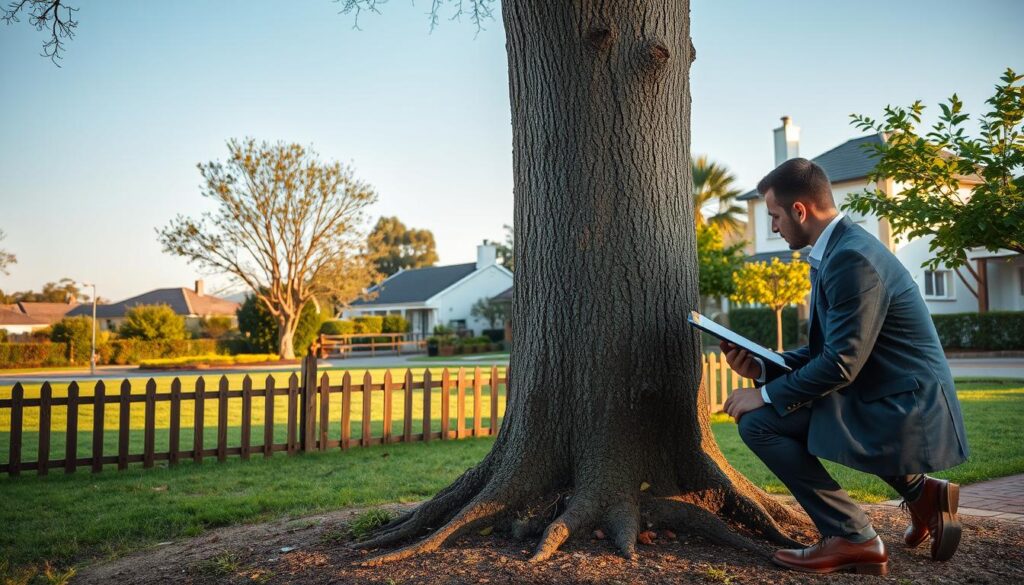
Next: a practical checklist of steps to follow before any cutting, so you can be safe and compliant – Get My Free Quote
Understanding when you legally need permission in Centurion (City of Tshwane)
Legal triggers for works near Centurion CBD depend on land ownership, species and nearby infrastructure. We outline when municipal or national approvals are likely required and when minor work is usually straightforward.

Public verges and council-owned planting
Street and verge planting beside Centurion CBD are usually municipal assets. Even if the specimen sits outside your boundary, the council often controls any major works.
Key point: changes that affect sightlines, sidewalks or services typically need approval from the City of Tshwane.
Protected or indigenous species (National Forests Act)
Certain indigenous species are covered by national law and may need a DFFE licence. Major felling or significant cutting of listed species triggers national oversight across south africa.
Heritage, large specimens and development-linked cases
Notable or heritage specimens, or those on a building site, can be flagged in planning conditions. Approval may form part of development compliance.
Routine pruning versus full felling
Light pruning, basic trimming and small maintenance on private property is often lower risk. Heavy pruning, sectional dismantling or full felling may still need checks — especially if the species is protected or close to power lines.
- Check ownership, species status, location and any development ties.
- When in doubt, confirm first — it costs less than an enforcement action.
tree removal permission Centurion: the quickest way to check your situation
Before booking any job, a three-step check will tell you if the work is routine or if formal approval is required.
Confirm land ownership
First, identify whether the specimen sits on a private stand, sectional-title common property, or a municipal verge. Complexes and HOAs in suburbs like Irene or Zwartkops often require internal approval even for minor work.
Identify the species and protection status
Note leaf shape, bark texture and any common names you know. If you cannot identify the tree species with confidence, treat that as a red flag and get a professional to check.
Remember: protected status hinges on species and context, not just size.
Assess proximity risks: boundaries, structures and power lines
Photograph distances to boundary walls, driveways, parked cars, sidewalks and overhead power lines. Power lines are a hard stop for DIY — clearance and coordination are essential for safety and compliance.
Decision outcome: these three checks tell us whether to proceed with routine pruning, seek municipal approval, or start a national licence process. They save time, prevent failed bookings and reduce neighbour conflict.

| Check | What to do | Likely outcome |
|---|---|---|
| Ownership | Confirm title: private, sectional, or municipal verge; consult HOA rules if needed | Proceed, get HOA sign-off, or apply to council |
| Species | Record identifying features; call a professional if unsure | Routine work allowed, or national licence required |
| Proximity &risks | Measure and photograph clearances to structures and power lines | Safe DIY pruning, professional job, or coordinated power company work |
Centurion-specific scenarios that commonly trigger approvals
Location often decides whether a job needs formal sign-off. High-traffic corridors, park edges and estate common land attract closer council and environmental checks.

Verge and street sites near Centurion Mall and Gautrain station
Street planting beside the mall and Gautrain station sits in busy pedestrian and vehicle zones.
That means municipal permit and traffic management are usually required before any removal or major trimming.
Visibility and public safety matter: works can affect drivers, taxi ranks and foot traffic, so we plan closures and signage to reduce risk and downtime.
Watercourses and open spaces by Lake Centurion and the Hennops River
Trees on riverbanks and in open space need careful assessment for erosion, habitat and aftercare.
Environmental sensitivity often raises scrutiny and may require habitat mitigation or rehabilitation as part of approval.
Estate rules in Irene, Zwartkops and surrounding suburbs
HOAs often add a second layer of controls on property within estates.
Approved contractors, working hours, waste services and disposal rules can apply even when the council does not require a permit.
“Storm-damaged specimens may be an emergency, but land ownership and power lines still shape how we act.”
We plan work around public risk, access limits and compliance steps so jobs proceed without costly stoppages.
How the permit and licence process works in Tshwane (from inspection to sign-off)
A smooth application starts with good evidence and sensible risk checks — here is how we do that.
Site inspection, photos and measurements
We record clear photos of the whole specimen, trunk close-ups, canopy spread and several scale shots. Basic measurements — height and diameter — make an application-ready file.
Risk assessment for neighbours and traffic
We evaluate neighbour impact, road exposure, boundary-wall risk and protection for buildings, vehicles and gardens.

Submitting to local or national authorities
There are two pathways: apply to the City of Tshwane for municipal works, or submit a National Forests Act licence to DFFE for protected species.
Feedback, conditions and likely waiting times
Expect weeks for responses. Incomplete files delay decisions more than complexity does.
Work to conditions and final sign-off
Approvals may require traffic control, specific working hours, mitigation planting or limits on methods and equipment. We finish with compliant debris handling and documented proof for your records.
“Good evidence and a clear risk plan cut time and avoid costly stops.”
- Timeline: assess → apply → wait → remove → sign-off/records.
- Our professional team liaises with authorities and carries public liability insurance for safety and peace of mind.
Why using Tree Felling Centurion (and why we handle the paperwork) saves time and stress
Hiring qualified professionals removes the guesswork and keeps your project on schedule.
Tree Felling Centurion knows the local rules and the likely approval route. We spot protected species early and advise the correct path so you avoid costly enforcement.

Avoiding heavy fines and legal trouble
Unauthorised work can lead to steep fines and prosecution. Removing protected or council-managed specimens without approval is an expensive risk.
We make sure the job follows law and council requirements. Prevention is far cheaper than fixing issues later.
Species checks, compliant applications and liaison
We identify species, compile clear photos, measurements and risk notes, and prepare a clean application pack for the City of Tshwane or national offices.
We follow up, manage traffic and neighbour communication, and plan safe drop zones and access routes to reduce conflict and downtime.
- Services: species ID, paperwork, council liaison and on-site planning.
- Safety: public liability insurance and proven methods for built-up areas in south africa.
- Time: correct permissions first mean fewer stoppages and fewer visits.
| Task | What we do | Benefit |
|---|---|---|
| Species check | On-site ID and documentation | Correct approval route advised |
| Application pack | Photos, measurements, risk notes compiled | Faster, cleaner council response |
| Site liaison | Neighbour notice, traffic plan, safe drop zones | Minimal disruption and lower legal risk |
| Insurance & safety | Public liability cover and safe working procedures | Client protection and peace of mind |
Safe cutting and felling in built-up Centurion: equipment, methods and insurance
In built-up Centurion suburbs, tight plots and nearby buildings change how we approach any felling job. We plan so that safety, speed and minimal disruption come first.
Controlled felling vs sectional dismantling for tight spaces
Controlled felling works when we can establish a clear fall zone. It is quicker but needs an open area free of vehicles and structures.
Sectional dismantling is our choice in complexes, narrow drives or near boundary walls. We remove limbs and trunk sections in stages to protect property.
Working near power lines, roads and neighbouring properties
Overhead power lines and busy roads force stricter exclusion zones. We set up spotters, signage and often contact the local power authority before any cutting near live services.
Near neighbours we manage access, noise and safe drop zones so gardens, walls and parked cars stay undamaged.

Public liability insurance and on-site safety procedures
Our crews use certified equipment: rigging ropes, lowering devices, chainsaws, pole saws and chippers. The right kit reduces damage and speeds clean-up.
On site we run pre-start briefings, wear full PPE, mark exclusion areas with barrier tape and keep a controlled lowering plan for each cut.
“Emergency situations prioritise rapid stabilisation, then safe dismantling to remove immediate risk.”
- Built-up sites demand staged methods, not just dropping into a free fall zone.
- Working near power requires spotters, exclusion zones and coordination with power teams.
- We carry public liability insurance and document every step for client records.
| Situation | Method | Key equipment |
|---|---|---|
| Tight driveway or boundary | Sectional dismantling | Rigging ropes, lowering devices, chainsaws |
| Open verge with clear fall zone | Controlled felling | Chainsaws, wedges, traffic cones |
| Near overhead services or roads | Coordinated work with exclusion zones | Pole saws, spotters, signage |
Safety planning is part of compliance and cost control. Accidents and property damage are what make work expensive and stressful. We mitigate those risks through planning, professional services and insured crews.
Costs to plan for: tree removal, stump grinding and emergency call-outs in Centurion
Costs change with access and complexity, so a preliminary check is essential. We set expectations early so homeowners can budget and avoid surprises.
What affects price: size and height, canopy spread, species hardness, site access, proximity to buildings or power lines, and whether sectional dismantling is needed. Larger specimens require more rigging, more time and greater labour — this is why the final cost often depends on tree size and complexity.

Typical South African price ranges and emergency uplift
Nationally, prices commonly fall between R995 and R9,950. In Centurion, small jobs often start around R1,000 but can rise steeply for large or complex work. Emergency call-outs typically add 20%–50% due to rapid mobilisation and schedule disruption.
Optional add‑ons and cost drivers
- Stump grinding — faster, less ground disruption; typical R900–R4,500+ depending on size.
- Stump removal — full excavation is pricier and more disruptive than grinding.
- Palm work — palms need specialist kit and can be charged differently due to height and frond volume.
- Debris clean‑up and disposal — loading, hauling and green‑waste fees can lift the final quote, especially for large volume jobs.
Best time to book
Winter (June–August) is often ideal in South Africa. Trees are more dormant, there is less foliage to handle and seasonal demand falls. Booking in this window can reduce cost and scheduling delays.
| Service | Typical South African range | Centurion guidance |
|---|---|---|
| Small specimen work | R995 – R2,500 | Often from ~R1,000 |
| Medium job (sectional dismantle) | R2,500 – R6,000 | Depends on access and rigging |
| Large complex jobs | R6,000 – R9,950+ | High rigging and time costs |
| Stump grinding | R900 – R4,500+ | Grinding preferred for minimal ground disruption |
| Emergency uplift | +20% – +50% | Rapid response fees and priority scheduling |
“Clear site info and photos cut quoting time and reduce hidden costs.”
Partner with Centurion’s Top Tree Felling Experts Today
An early inspection of location, species and access keeps projects compliant and quick.
Make sure you confirm land ownership, identify species status and check site risks before any work. These three steps decide whether a local permit or a national licence is needed and save time and fines.
Common triggers in the area include verges and street specimens near Centurion Mall and the Gautrain station, and sensitive zones around Lake Centurion and the Hennops River in the Centurion CBD. Such sites often need extra checks.
Routine pruning on private property is usually straightforward, but protected specimens and high‑risk locations still require care to avoid costly removal penalties.
We prioritise safety and compliance: the right method, kit and insured services protect neighbours and your property. If you are unsure, we can assess, advise on the correct permit route and complete the work with full documentation. Tree Felling Centurion helps homeowners and complexes handle permissions, safe felling and clean‑up with less stress and lost time.

