
The Difference: Cut Only vs Cut & Cart Away
As homeowners around Centurion Lake often ask, we regularly weigh up how tree removal vs tree felling cost shows on a quote and what that actually covers.
We work across Centurion’s mix of suburbs, estates and complexes, so access and risk often matter more than size alone. Tree Felling Centurion appears on many listings because sectional dismantling and working near roofs or power lines change the final price.
In plain South African terms, felling means cutting the canopy down in sections; removal means hauling trunks, grinding stumps and clearing debris. Both terms can appear on the same quote when different services are needed.
We’ll show typical price bands, explain what drives totals — sectional dismantling, stump grinding, debris hauling and work near walls or lines — and teach you how to compare quotes like-for-like.
Professional methods cut property risk and liability compared with rushed DIY work. Next we set out A (felling) versus B (removal), then a prices table and a practical quote checklist – Get My Free Quote
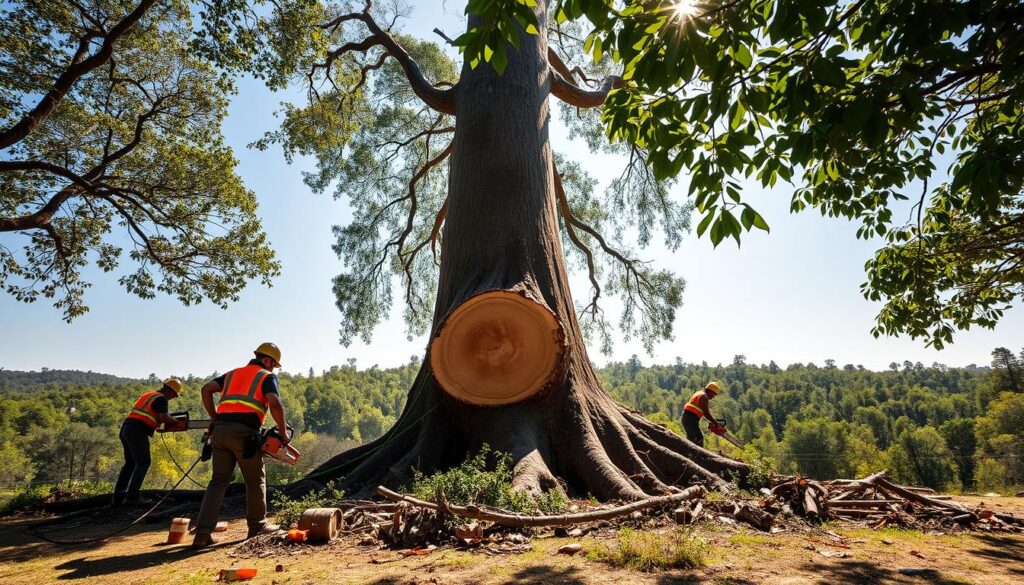
Centurion Tree Prices: Factors for Estates & Suburbs
From townhouse courtyards to estate gardens, local factors set the price we quote. At Tree Felling Centurion we focus on safety, neat clean-up and predictable pricing for homeowners and estate managers around Centurion Lake.
How We Calculate Your Tree Felling Quote
We price the actual job in front of us — assessing access, proximity to buildings and lines, clean-up needs and equipment. This means a single property may need more time or specialist kit, so a flat per-item rate rarely reflects reality.

Why Centurion’s mix of complexes, estates, and busy routes affects cost
Location matters. Tight side passages, boundary walls and parking bays in complexes increase labour and rigging work. Busy arteries near Centurion Mall or routes around SuperSport Park can slow crew staging and require traffic control.
- Centurion snapshot: clients want safe clearing, tidy clean-up, minimal disruption and clear pricing.
- Fair pricing shows inclusions (cutting, sectional lowering, load and clean) and lists add-ons (stump work, disposal).
- Two tree fellers can give different totals because one may include site protection and debris hauling and the other may not.
- Budget reality: when people ask “how much tree” work costs, access and safety come before any cutting.
As a guide, wider South African ranges sit from about R800 to R8,500+ depending on job size and complexity. We always explain what we include so the final cost is clear.
Cost Comparison: Felling (Cut Down) vs. Full Removal
Simple height or species notes do not tell the whole story. A tree location beside a roof in Wierda Park or in a tight complex lane off the Centurion Mall corridor often dictates method and price.

What “tree felling” typically includes in South Africa
Tree felling usually means a controlled fall or sectional cut, leaving a stump unless stump work is added. A basic felling service is best where a straight fell is safe and access is clear.
What “tree removal” usually means (and why it can cost more)
Tree removal is wider in scope: dismantling, lowering timber, hauling green waste and leaving the site tidy. It often needs more crew, rigging and time, which raises costs.
Stump work and safety choices
Stump grinding chips the remaining wood below ground level. Full stump removal is more invasive and labour-heavy.
“Where risk is high, we recommend the safer method even if the upfront price is higher.”
- Choose a straight fell for quick clearance and best value.
- Choose sectional dismantling near roofs, pools or boundary walls for safety.
Tree Removal Prices in Centurion (Size & Complexity)
We give clear bands so you can budget before an on-site check. These ranges are guides, not fixed fees — access, nearby buildings and required rigging change the final figure.
Small (up to 5 m): R1,000 – R3,100
The Small Tree Removal Prices (Under 5m)
Small work generally means a height under 5 m and straightforward access. In an open yard by Centurion Lake this often sits at the lower end of the band.
Medium (5–10 m): R3,100 – R8,100
The Medium size and practical notes
Medium size means 5–10 m. A medium specimen in an estate plot near the Hennops corridor can be easier than a compact specimen jammed beside a townhouse wall.
Large (over 10 m): R8,100 – R19,000
Why large jobs jump in price
Large work takes more planning, longer labour and sometimes high-reach kit or specialist rigging. Those factors explain the sharp rise in the band.
- Compare these Centurion bands to broader SA estimates (R800–R8,500+): national guides may look cheaper but often exclude complex dismantles and full site clean-up.
- The headline price only matters when you know what it includes — cutting only, or cutting plus haulage and tidy-up.
- Use these ranges as a baseline; we always confirm the final price after an on-site assessment.

“A tight suburban plot often behaves like a bigger job because safety measures add time and kit.”
Hidden Cost Factors: Access, Risk & Equipment
In Centurion, narrow driveways, estate working-hour rules and overhead lines often change a quote more than height does. We break down the main components so you know where costs come from.
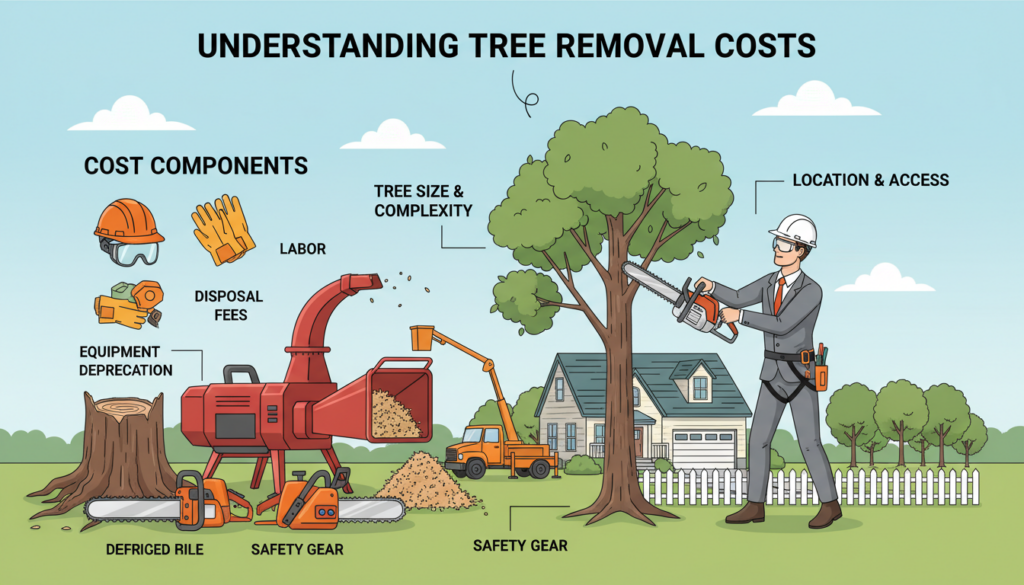
What makes a quote
A typical removal quote splits into labour hours, crew size, a cutting plan, loading and hauling, disposal and site protection. Each line can rise with complexity or limited access.
Why complex jobs take longer
Working around carports, narrow parking bays or walls means controlled lowering and careful sequences. That increases labour time and safety measures.
Specialist kit for tight spaces
- Rigging ropes and lowering devices
- Chippers and compact haul units
- Occasional high-reach solutions if access allows
Debris options and stump add-ons
We offer leave-it-stacked, full haul-away or on-site chipping. Each choice affects final costs. Stump removal typically ranges from R800 to R4,400 depending on root spread and access. Stump grinding is a less invasive option.
Emergency premiums
Storm work or urgent hazards attract higher call-out fees because of short-notice mobilisation and extra controls. Combining removal and disposal in one visit usually saves money.
Site Access & Safety: Working in Centurion Complexes
A quick site walk usually tells us more about complexity than height measurements ever will. We note the exact location of the tree, what it can hit, and the safest routes to move timber off the property.

Working near walls, carports and parking bays
Boundary walls and carports often force sectional work rather than a straight fall. In tight townhouse bays we plan controlled lowering and precise stacking to protect paving and parked cars.
Access constraints around Centurion Mall and narrow lanes
Busy corridors near Centurion Mall need traffic timing and compact equipment. Narrow service lanes limit vehicle placement and increase manual handling.
Estate rules, gates and working hours
Estate living means approvals, gate access and noise windows. These rules affect crew timing and can extend the job duration.
Slopes and wet ground near the Hennops River corridor
Slopes or soggy banks restrict heavy equipment and raise manual labour needs. We use ground protection and controlled drop zones to keep property safe.
| On-site factor | What we check | Impact on job |
|---|---|---|
| Location on property | Proximity to roofs, pools, walls | May require sectional lowering |
| Access | Gate width, lane space, traffic | More labour or compact kit |
| Ground conditions | Slopes, wet soil near Hennops | Limit equipment, increase manual work |
| Estate rules | Noise windows, approvals, gate times | Influences scheduling and duration |
Risk factors that change removal vs felling decisions
A clear risk check drives our method choice. We map the fall zone first and note anything that might be hit. That tells us whether a straight fell is safe or if sectional dismantling is needed.

Power lines and service lines: why safety planning matters
Power lines near a job change everything. Exclusion zones, insulated rigging and sometimes utility coordination are needed. These steps add time and specialist equipment and raise final costs.
Close roofs, pools and outbuildings
Mature trees beside tiled roofs or family pools demand very controlled work. Small slippage or an unexpected drop can mean expensive claims. We plan lowering paths and protect surfaces to reduce risk.
Dead, storm-damaged or leaning specimens
Storm-damaged and leaning specimens have unpredictable fibres and weight. Cutting becomes slower and more cautious. Near the N1/N14 corridors wind exposure often increases urgency after storms.
- How we decide: if the fall zone is clear we may fell; if not, we dismantle section by section.
- Tell us hazards early: disclose lines, roofs, pools or damage so our quote matches real risk.
| Risk factor | Typical control | Impact on job |
|---|---|---|
| Power lines | Exclusion zones, liaison with utilities | Higher labour, specialist kit, permit time |
| Roofs & pools | Sectional lowering, surface protection | Slower work, more crew, added costs |
| Dead or leaning specimens | Slow cut sequences, extra rigging | Increased planning and safety measures |
“We plan to reduce risk through method and training, not through haste.”
Add-On Services: Stump Grinding & Palm Trimming Costs
Optional extras turn a basic job into a full tidy service that suits estate standards and private gardens.
What you’re paying for is clear when we list add-ons as menu items. These convert a simple fell into an end-to-end solution with tidy-up, follow-up maintenance and safe disposal.

Stump Grinding vs. Root Removal: Price Difference
Stump grinding is faster and less disruptive. It chips the stump below ground level and is cheaper and quicker to finish.
Stump removal digs roots out and suits landscaping or building work; it is more invasive and sits in the R800–R4,400 range stated earlier.
Palm trimming and regular maintenance
Palms are common in Centurion gardens and estates. Palm trimming typically runs R199–R299 per palm and covers dead fronds and safe shaping.
Tree trimming and pruning (hourly)
We bill pruning at roughly R150–R250 per hour. Height, density and access influence hours and equipment needs.
Hauling, chipping and green-waste disposal
Choose on-site chipping for a quick clean finish or stack wood for later use. Debris removal options affect final price and convenience.
| Service | Typical price | What it covers |
|---|---|---|
| Stump grinding | R800–R1,800 | Grind below ground, faster finish |
| Full stump removal | R1,800–R4,400 | Roots and stump dug out for landscaping |
| Palm trimming | R199–R299 per palm | Dead frond removal, shaping, basic tidy |
| Pruning / trimming | R150–R250 per hour | Shaping, thinning, access-dependent |
Regular maintenance for palms and shrubs often prevents emergency work and keeps estates looking neat.
What a professional service includes that DIY does not
When a job looks simple from the gate, hidden risks often tell a different story on arrival. We treat every call as an assessed task, not a quick fix, so clients get a controlled outcome rather than a gamble.
Safety standards, PPE, and controlled rigging methods
We use strict safety protocols: full PPE, pre-job risk checks and defined drop zones. Controlled rigging and lowering keep timber on planned paths and limit surprises.
Insurance and liability considerations for property protection
Insurance matters. Working above roofs, cars or close to boundary walls carries real liability. Our cover and documented procedures reduce your exposure and mean claims are less likely.
Site protection to reduce damage to paving and landscaping
Proper equipment and ground protection prevent cracked paving, torn lawns or ruined irrigation. Chippers, rigging gear and protective matting speed work and protect neat Centurion gardens.
DIY risks vs professional outcomes: DIY often underestimates hinge control and how branches swing. A small-looking specimen can be complex when wedged between structures.
Paying for a professional service is about controlled outcomes, not just getting the specimen down; it can be cheaper than repairing avoidable damage.
Table: Felling vs Removal Cost Comparison
A concise price guide makes it easier to match the work needed with the true scope on a quote. Below we show baseline felling bands and note where full removal typically adds to the final bill.
| Size / Complexity | Typical felling prices | When removal raises the total |
|---|---|---|
| Small (up to 5 m) | R1,000 – R3,100 | Stacking, haul-away or stump work adds R800–R1,800 |
| Medium (5–10 m) | R3,100 – R8,100 | Sectional dismantle near roofs increases labour and kit |
| Large (over 10 m) | R8,100 – R19,000 | High-reach, rigging and full disposal often push costs well above felling price |
When a simple fell is best value
Choose a straight fell where there is a clear drop zone and minimal tidy-up. This gives the lowest price and fastest completion.
When full removal is worth it near busy routes
Full removal is sensible where hazards exist: parking bays, close boundary walls, or busy corridors like the SuperSport Park routes. Controlled lowering, extra crew and traffic planning justify higher costs.
- Use the table to sanity-check whether a quote matches the stated inclusions.
- Remember stump work and debris disposal are separate lines and change the total.
Compare scope, not just the figure; select the service that matches your access and finish requirements.
Checklist: How to Get an Accurate Tree Felling Quote
An accurate on-site brief makes comparing quotes far simpler and fairer. We recommend a short checklist you can send with photos so suppliers quote the same scope.
What to measure
Quick measurement guide:
- Approximate height, trunk thickness and canopy spread.
- Whether there is a safe drop zone or tight neighbours.
- Note any visible decay or lean that may change approach.
Record the location and access
Write down gate widths, side passages, stairs, parking rules and nearby structures. In Centurion estates confirm gate times and booking requirements.
Questions to ask so quotes are comparable
- Is debris removal included or extra?
- Does the quote include stump or stump removal?
- What does “site clean” mean and what are expected timelines?
- How are scope changes (hidden decay, extra branches) priced?
How many quotes to collect
Gather 2–3 quotes for small jobs and 3+ for complex estate work. Look for apples vs oranges: one price may include disposal and protection while another covers only cutting.
Good quotes reduce surprises and protect your property.
Why Hire Insured Professionals in Centurion?
Picking the right local crew matters more than price when complexity or tight access is involved.
What reputable tree fellers provide: a clear scope, a written method statement, realistic timelines and a safety plan that matches site limits. We expect teams to outline how they will protect paving, walls and gardens.
Credentials, experience, and proof of insurance
Ask for evidence of insurance and public liability cover. Confirm teams have experience with sectional dismantling near roofs, pools and estates.
Good crews explain their equipment — rigging, controlled lowering gear and chippers — and show a portfolio of similar work in Centurion.
Red flags that often lead to surprise costs
- Vague inclusions or no written scope.
- Quotes that exclude clean-up or stump work without clarity.
- Pressure to pay in cash or refusal to discuss safety controls.
- Unrealistically low prices that ignore access or specialist equipment.
How surprise costs happen: items often billed later include stump work, disposal, or extra labour for tight access. Avoid surprises by confirming the exact finish — remove everything, on-site chipping, or stacked wood — before the crew starts.
In tight Centurion complexes, safety competence is the best value — not the cheapest cut.
Get a Free Tree Removal Quote Today
Budgeting sensibly starts with a simple assessment of space, access and nearby structures. Choose felling when there is a clear drop zone and low risk; choose sectional work or full removal where roofs, pools or tight passages demand control.
Use the felling bands as a baseline and remember stump work sits in the R800–R4,400 range. Check what’s included — disposal, clean-up and stump options change the final cost more than headline prices do.
Measure height and spread, note gate widths and hazards, then ask for 2–3 like-for-like quotes. Good pruning, trimming and regular maintenance often prevents emergency work and saves money over time.
In Centurion estates and busy lanes, planning and safety are worth paying for. We focus on safe outcomes and clear scope so you get a reliable result.

