
Structural Threat: When to Remove
Our Tree Too Close to House assessment helps homeowners determine when a beloved tree may be encroaching on their property. In Centurion, many of us relish leafy gardens, but we also need clear facts about when a specimen becomes a genuine risk to property.
Most trees never cause problems, yet spotting exceptions early saves stress and expense. We look at size, health and distance from foundations. We check how soil behaviour and species water demand affect roots and drains.
This is a practical, step‑by‑step guide that helps us protect our home without rushing into removal. We will explain options in plain language and show when action is sensible.
Tree Felling Centurion handles local assessments and we outline the signs that suggest an urgent inspection rather than ordinary garden nuisance like leaf litter – Get My Free Quote

Opening: when a tree near your home becomes a real concern in Centurion
In our area a tree too close to house becomes a real concern when roots or branches start affecting gutters and drains around Centurion Lake and the Hennops River, and we see this often near Centurion Golf Club. These are common, manageable issues rather than automatic removal scenarios.
Local context around Centurion Golf Club and waterways
Established specimens, variable soil types and seasonal storms combine here. Clay patches can magnify movement as moisture changes, while high water‑use species raise the odds of subsidence‑like shifts.
What this guide helps you decide
We give clear, practical steps. Use the checklist below to judge urgency and plan action without panic.
- Quick checks for above‑ and below‑ground signs.
- Distance rules and monitoring plans for ongoing safety.
- Options: pruning, barriers, drain repairs, or removal when needed.
tree too close to house: quick checks to judge whether you’re at risk
We start with a fast visual sweep that any homeowner can do. These checks show whether minor nuisance issues or real structural concerns deserve further attention.
Above-ground warning signs
Look up for overhanging branches that touch or scrape the roof and for constant gutter blockages that trap moisture.
After a storm, note any recent limb breakage near parked cars or windows — those are immediate damage risks.
Below-ground clues
Watch for visible roots lifting paving, new cracks near walls and any soil heave beside foundations.
Cracks at window or door corners, stepped patterns or widening gaps over time point to a structural concern rather than a surface problem.
Moisture, shade and pests
Persistent moss, mould or damp patches on shaded walls or eaves signal excess moisture linked to canopy shade.
Branch bridges — overhangs that let ants and other pests cross onto roofs — are an overlooked access route.
“If roots, cracks and roof overhang appear together, arrange a proper assessment — the combined signs raise the risk.”

| Check | What to look for | When to act |
|---|---|---|
| Roof & gutters | Branches touching roof, blocked gutters, debris build-up | Persistent scraping or repeated blockages |
| Paving & roots | Lifting slabs, exposed roots, soil displacement | New or growing movement near foundations |
| Moisture & pests | Moss, mould, damp spots, branch access for ants | When damp persists after dry weather or pests enter |
Why distance matters: roots, branches, drains and foundations
How far a specimen stands from our building shapes the real risks for foundations, drains and roofs.
Root spread basics
Roots do not stop at the canopy. They can extend well beyond the dripline in search of water and oxygen. In practice, tree roots often reach under lawns and paving as they spread.
Foundation and wall movement
Clay soils in our region shrink and swell as moisture changes. That movement can pull at foundations and lead to cracks or subtle shifting over time.
We should not panic, but we must watch for joint widening and new cracks near corners and strip foundations.
Patios versus buildings
Paving often lifts within roughly 1 m of the trunk buttress. That surface movement is common and does not always mean structural damage to a house.
Roots may be blamed for blocked drains, but leaking pipes attract roots. Diagnosis matters before we remove or cut major roots.
- Keep canopy clear of roofs to reduce storm abrasion.
- Manage moisture around foundations to limit soil movement.
- Reduce crown load if distance is tight to lower damage risk.

| Issue | Typical cause | Action |
| Paving lift | Surface roots, buttress zone | Repair slabs; keep paving ≥1 m from trunk |
| Foundation cracks | Soil moisture swing, high water uptake | Monitor cracks; manage drainage; seek assessment |
| Blocked drains | Leaking pipe attracting roots | Inspect and repair drains before root removal |
Soil, moisture and species: what makes Centurion properties more vulnerable
What sits under the surface often matters more than what we see above ground when assessing risk to property.
The hidden multiplier is soil type. Sandy patches drain and settle differently, while heavy clay around Centurion can shrink in dry spells and swell after rain. That movement amplifies any effect from roots and alters how moisture behaves near foundations.

Water demand by species
Plants vary widely in how much water they draw. High-demand species can lower moisture well beyond the trunk, increasing risk where clay soils prevail.
- High demand: Eucalyptus, willow (Salix), poplar (Populus), oak (Quercus) — these often feature in published cases of subsidence elsewhere.
- Intermediate: Most urban specimens sit here; context, distance and size decide the outcome.
- Lower demand: Magnolia, pine (Pinus), spruce (Picea) — generally lower-risk options, though height and proximity still matter.
“On clay soils, a thirsty species can be the difference between minor cracking and costly repair.”
| Factor | Effect | Action |
|---|---|---|
| Heavy clay | Shrink/swell with moisture | Monitor moisture and manage drainage |
| High water uptake | Soil drying and wider influence | Consider distance or species change |
| Seasonal cycles | Summer drying, storm stress | Regular inspections after hot months and storms |
How far is “too close”: practical distance guidelines we use on-site
We judge proximity by simple measures that match species water use, size and soil behaviour. These on-site rules help us decide whether a visit is urgent or routine.
Rule of thumb by water demand
High water demand: assume drying influence can reach roughly the full height of the specimen.
Intermediate / low demand: influence often sits closer to half the height.
Size and maturity
A small planting may be harmless now, but as size and canopy weight grow over years the risk increases. Roots explore further with time and can affect foundations or drains later.
Distance bands for quick checks
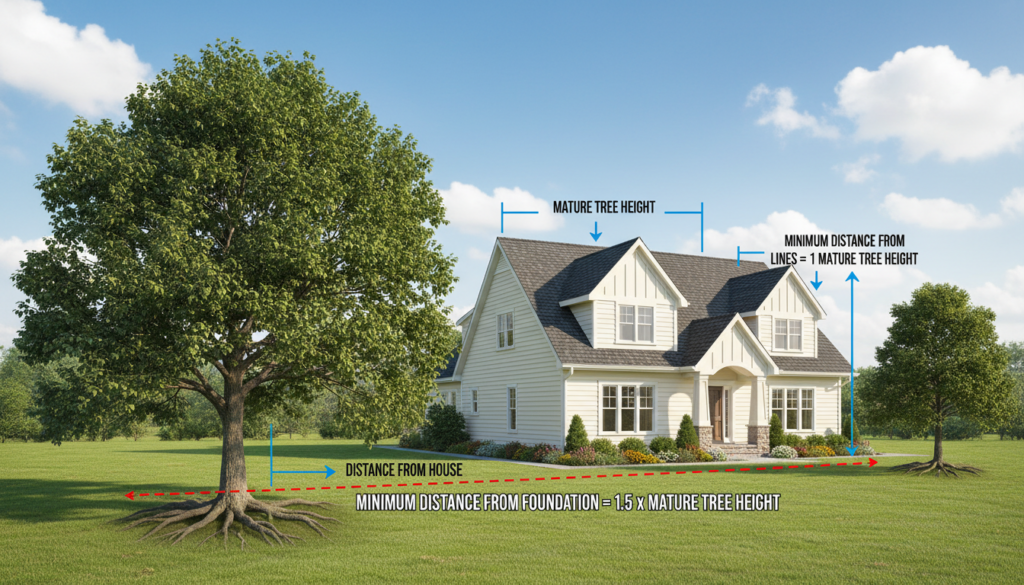
| Size | Approx distance | Action |
| Small (under 6 m) | ≥3–6 m | Monitor growth annually |
| Medium (6–12 m) | ≥6–12 m | Photograph and check after storms |
| Large (12 m+) | ≥height or more | Arrange professional inspection |
- Estimate height: sight along a broom handle or compare with nearby walls.
- Use the bands as a prioritising tool, not a guarantee of damage.
- Give extra attention where clay soil and thirsty species coincide.
Step-by-step: how we assess your tree and your house before recommending work
We follow a simple, evidence-led process so any action we suggest is proportionate. First, we document the situation clearly. Then we assess canopy and roots, inspect the building, and review any neighbour or liability concerns before proposing fixes.

Photographing and mapping
We take photos from multiple angles: the full specimen, trunk base, canopy over the roofline and a clear shot showing distance to the building. We also map positions relative to walls, drains and paved areas.
Checking crown weight and weak unions
We look for heavy, imbalanced crowns and weak unions where limbs may fail in a storm. These are common causes of sudden branch loss and roof damage, so we note any obvious defects.
Looking for structural symptoms
Our building check targets cracks near windows and doors, stepped cracking on walls and any visible foundation movement. We record patterns over time rather than rely on a single snapshot.
Drain considerations
Roots often exploit leaking pipes. We CCTV or inspect drains where practical and distinguish between blocked pipes and genuine root-driven damage before recommending root removal.
Neighbour and liability awareness
We consider whether the specimen is “materially contributing” to damage in neighbour cases. If a concern is raised, we document findings, advise notification of insurers where relevant, and recommend timely remedial steps.
- Document: photos, distances and notes from all angles.
- Diagnose: crown balance, unions, cracks and drain condition.
- Decide: evidence-led remedy that aims for least disruption.
Solutions that protect the property without overreacting
Effective solutions balance risk reduction with the long‑term health of the landscape. We favour measured steps that fix immediate hazards and keep options open.
Pruning for clearance and risk reduction
Pruning helps when we need branches off the roof, lower end‑weight on long limbs, or reduce wind sail in exposed spots. Small, targeted cuts lower the chance of storm damage while keeping health intact.
Not every cut solves movement or root issues. Pruning cannot reliably stop moisture‑driven soil change, so we pair it with other measures where needed.
Crown reduction vs crown thinning
Crown thinning removes interior branches and improves light, but it rarely reduces the moisture influence that can affect foundations or structure. Crown reduction changes overall mass and is the method we use when movement is the proven concern.
Meaningful reduction and ongoing cycles
Where movement is confirmed, effective work may require around a 70% crown volume reduction. That is substantial and affects appearance and health, so we repeat work on a cycle—often about every three years—rather than a one‑off cut.
Root barriers and transplanting
Root barriers often disappoint: they must be very deep, roots can bypass them, and trenching can attract roots by exposing moisture and air.
Transplanting is realistic mainly for young, small specimens. Once a plant has an extensive root system near foundations, relocation is seldom successful.
Drain fixes, removal and post‑removal care
Lining drains can seal leaks and remove the attraction for root ingress. Replacing unsound pipes is the most permanent cure when leaks recur.
Removal is the definitive solution when evidence shows a specimen is the main contributor to damage. We plan sectional dismantles near tight structures to protect roof and walls. On clay soils, note that removing a high water‑use specimen can cause ground heave as moisture rebounds, so we stage changes carefully.

“Practical, staged work reduces risk without needless removal.”
Tree Felling Centurion offers these options and we plan each job with safety and long‑term outcomes in mind.
Ready to Remove a Tree Too Close to Your House? Get a Free Centurion Quote!
A clear, local decision rests on combining soil behaviour, species habits and where the specimen stands relative to buildings.
We summarise the key factors: soil type, species water demand, simple distance/height rules and visible warning signs guide whether action is needed.
After a storm, prioritise safety: check for hanging branches, fresh cracks or sudden lean before treating the matter as routine garden maintenance.
Assess first, then choose proportionate action — monitoring, targeted pruning, drain repair or full removal when evidence supports it.
On clay soils and with high water‑use species we take extra care, since moisture swings can affect foundations and overall structure behaviour.
Document findings for tricky neighbour cases so decisions rest on facts and not on opinion.
If you need a local inspection in Centurion — including around Centurion Lake and the Hennops River — Tree Felling Centurion can assess risk and recommend the least disruptive fix.

