
Health & Safety: Knowing When a Tree Must Go
When deciding when to fell vs trim, is that old oak in your garden a candidate for pruning, or must we remove it before the next storm?
We’ll set clear expectations. This short guide helps homeowners in Centurion choose between careful pruning and full removal. Our aim is simple: protect people and property first, then the long-term health of your trees.
We explain the real difference between selective branch work and whole-tree removal. We list the quick checks we use on-site: visible hazards, trunk integrity, failing branches, and how close a tree sits to driveways, boundary walls and the Hennops River.
Centurion gardens can be tricky after summer storms, especially near Rietvlei Nature Reserve and Centurion Mall. Many problems are solved with a sensible pruning plan, but some cases demand professional felling or tree felling for safety.
Read on for a practical, homeowner-friendly framework: observe, assess, decide, then act. We’ll signpost the decision table and clear steps that follow – Get My Free Quote
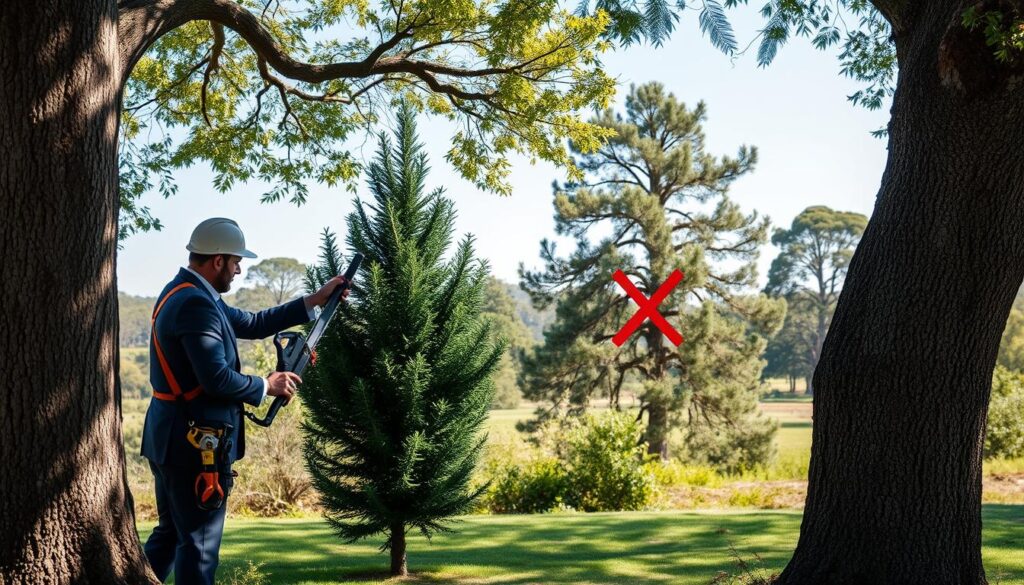
Opening: how we help Centurion homeowners decide what their trees need
Homeowners often ask about when to fell vs trim a mature specimen near Centurion Lake, The Bridge and busy streets; Tree Felling Centurion is the local reference for clear, practical advice. We use a short on-site checklist that helps people make a safe decision for gardens and communal areas.
Local context matters: family gardens around the lake, complexes by The Bridge and houses on busy streets need different care. Visibility, branch clearance over footpaths and risk to parked cars are everyday concerns in our area.
Our first-look checklist covers immediate safety, signs of poor tree health and any property risk such as roofline or wall damage. Pruning every 1–3 years keeps most trees healthy, while fast-growing species benefit from more frequent trimming.
Long-term maintenance means setting a pruning rhythm, preventing repeat breakages and managing growth so small faults do not become costly damage. Storm-hit trees or repeated branch failures raise the risk quickly and often shift the decision.
Disclaimer: this is practical advice. High-risk cases need an on-site assessment by our expert team with the right equipment to finalise the decision and recommended services.

when to fell vs trim: a clear decision framework you can follow
Our guiding principle: preserve mature specimens where safe, act fast when hazards create a clear risk. We follow a simple walk‑around process that helps homeowners in Centurion make a sound decision.
Start with the canopy
Look over the crown for cracked or hanging branches and uneven growth. Broken limbs after storms or branches over driveways raise immediate concern.
Inspect the trunk and base
Check for cavities, fungal fruiting bodies and soft spots that suggest decay. A sudden lean or deep split often tips the choice toward felling.

Assess surroundings and roots
Note proximity to buildings, boundary walls and walkways. Roots lifting paving or affecting pipes may hide serious problems that need a professional tree opinion.
Factor future plans
Plan for the next five to ten years: sunlight needs for gardens, planned renovations and maintenance rhythms. Corrective pruning often saves good specimens; permanent removal suits advanced decline.
| Signs | Action | Urgency | Notes |
|---|---|---|---|
| Hanging or cracked branches | Pruning or trimming | High | Clear over driveways and paths |
| Compromised trunk or large cavities | Consider tree felling | Immediate | Risk to people and structures |
| Root damage lifting paving | Assess with a professional tree | Medium | Hidden issues may force felling |
| Overcrowded or poor shape | Pruning plan | Low | Improves growth and appearance |
Use this framework as a repeatable process. Start at the canopy, move down the trunk, check the base and then review the wider site and future plans before making a final decision.
When trimming (pruning) is the best option for tree care and appearance

Pruning is often the first sensible step for a garden specimen that is fundamentally sound. We favour selective work because it protects neighbours, property and long‑term tree health.
Removing dead, diseased or damaged branches
Priority pruning targets dead diseased limbs and storm damage first. That lowers the chance of falling branches over patios, driveways and play areas.
Improving airflow and sunlight
Thinning the canopy lets sunlight reach lower growth and improves airflow. Better light and ventilation reduce fungal disease and support steady growth.
Shaping, clearance and lines
We shape canopies to guard roofs, gutters and garden beds. Near busy streets in Centurion we clear branches for visibility and safe passage. Work near power lines needs specialist controls and should follow safety rules.
| Goal | Action | Frequency |
|---|---|---|
| Safety | Remove hazardous branches | Immediate to 1 year |
| Health | Thin canopy, remove diseased wood | 1–3 years |
| Shape & clearance | Prune for size and lines | 1–2 years for fast growth |
After pruning: a well‑pruned tree shows balanced shape and no harsh cuts. Our routine maintenance reduces future damage and lowers ongoing maintenance needs.
When felling is the safest solution for people, property and surrounding trees
A clear decision to remove a tree comes when hazards outweigh any benefit it still gives the garden.
Dead or dying trees become brittle and can drop large limbs without warning. That behaviour makes them a public and private safety concern, especially near buildings and play areas.
Structural instability shows as deep cracks, a severe lean or a trunk that no longer bears weight safely. Repeated limb failures often point toward internal weakness that pruning cannot fix.
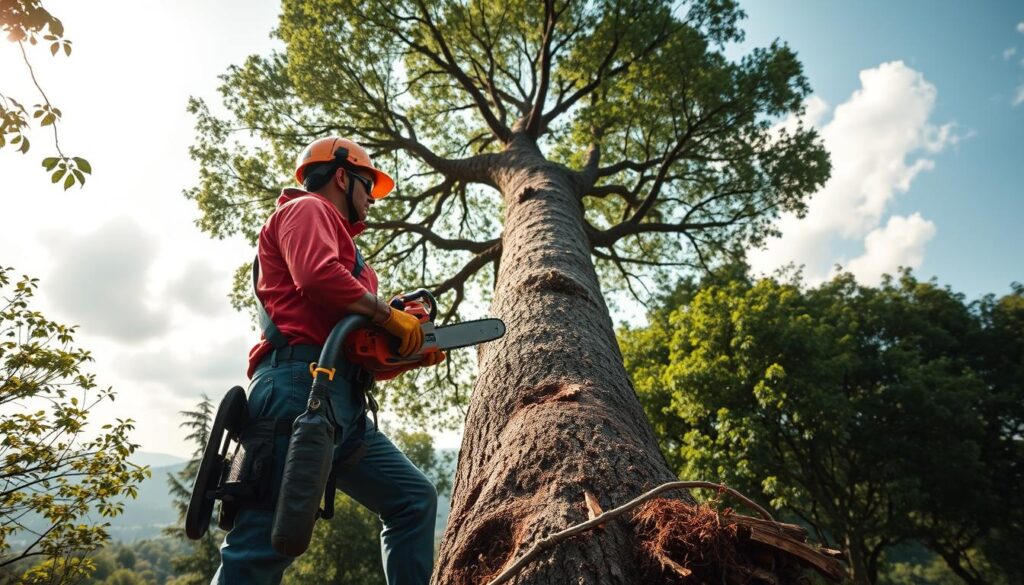
Advanced disease and decay means the main structural wood is compromised. At that stage, preservation is unrealistic and removal is the practical choice to protect nearby trees and structures.
Problem roots can lift paving, damage foundations or foul underground services. Root issues often persist even after heavy crown work and may justify removal for long‑term protection of buildings.
| Issue | Typical action | Local note |
|---|---|---|
| Dead or dying tree | Removal by a professional team | High priority in small residential stands |
| Severe structural failure | Sectional felling and dismantling | Controlled work near Gautrain corridors and busy routes |
| Roots damaging structures | Removal and replacement planting | Consider impact on underground services |
Overcrowding can harm remaining trees. Removing one specimen may improve light, airflow and soil resources for the rest.
Professional process includes a risk assessment, identifying hazards such as power lines, setting safe cutting zones and controlled dismantling with full clean‑up.
Tree Felling Centurion can assess whether trimming is enough or if safe removal is the responsible call, and we can provide a written quote on request.
Permissions and compliance vary by land type. Private land often allows removal with fewer restrictions, while public or protected areas may need municipal or environmental consent. We advise checking local rules before any work begins.
Ready to Decide? Get a Free Tree Assessment Today
Choosing the right path for a garden tree balances safety, long‑term health and your property plans.
Scan for hazards: check branches, trunk and roots, note proximity to buildings and power lines, then weigh pruning against removal. Regular pruning and good tree trimming support steady growth and reduce damage risk.
Tree felling or removal is necessary where a specimen is dead, unstable, severely decayed or harming structures. For lower‑risk issues, pruning often restores shape and health on a 1–3 year cycle.
Tree Felling Centurion and we can carry out an on‑site check, offer practical advice and provide a written quote for safe services. If you are unsure, getting expert eyes on the issues is the responsible choice for Centurion homeowners.

